Gene Therapy Saves 6-Year-Old From Rare Blindness
Saffie Sandford couldn't see in the dark or daylight until a groundbreaking one-time treatment restored her vision. Now she's thriving at school and experiencing simple joys like trick-or-treating for the first time.
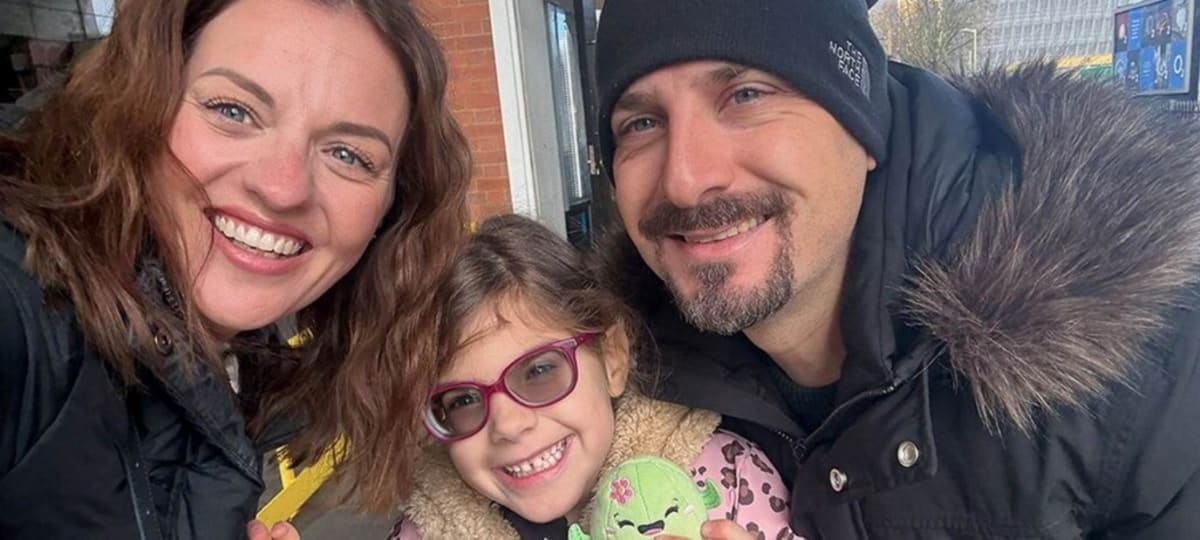
Six-year-old Saffie Sandford from Stevenage, UK, can now see the world clearly for the first time in her life, thanks to a revolutionary gene therapy that reversed her rare congenital blindness. The treatment has opened up a world of possibilities that her family never thought they'd experience together.
Saffie was diagnosed with Leber's Congenital Amaurosis (LCA), a rare genetic condition caused by mutations in the RPE 65 gene. Both her parents unknowingly carried a copy of the faulty gene, which combined to cause Saffie's condition.
LCA makes it nearly impossible for children to see in low light and severely limits their daytime vision too. The condition starts at birth and progressively worsens, typically leading to complete blindness by early adulthood.
When Saffie arrived at Great Ormond Street Hospital in London on referral from Moorfields Eye Hospital, doctors had recently developed a treatment called Luxturna. The therapy delivers a healthy copy of the RPE 65 gene directly into both eyes in just two doses.
Saffie received her first treatment in April 2025 and her second in September. The results transformed her daily life almost immediately.
"Having the treatment has been life-changing, it's like someone waved a magic wand and restored her sight in the dark," said her mother, Lisa. The family can now take Saffie trick-or-treating and out to restaurants in the evening, activities that were impossible before.
Her daytime vision improved dramatically too. Saffie can now see hazards around her, and her performance at school has soared.
Sunny's Take
What makes Saffie's story even more hopeful is that she's not alone. Great Ormond Street Hospital recently published results showing that 7 out of 10 children with LCA showed meaningful vision improvements after receiving Luxturna.
The study included children as young as 15 months to as old as 12 years. Doctors used a new harmless test that measures electrical signals from the retina to the brain, making it possible to objectively measure vision improvements even in babies who can't complete traditional eye tests.
"For the first time, we've been able to show objectively that gene therapy can strengthen the visual pathways in babies and young children," said Rob Henderson, consultant ophthalmologist at GOSH. "For many families, even small improvements in their child's ability to see the world around them make a profound difference."
For Saffie, those improvements mean she can live a normal childhood, and her future looks brighter than her parents ever dared to hope.
More Images
Based on reporting by Good News Network
This story was written by BrightWire based on verified news reports.
Spread the positivity!
Share this good news with someone who needs it