Georgetown Students Win Big East Prize for Autism Research
Two Georgetown undergrads took first place at a major academic competition for their groundbreaking work studying genes linked to autism. Their research using fruit flies could help identify future therapy targets for people with autism.
Before the Big East basketball championship tipped off, Georgetown students were already celebrating a victory of their own.
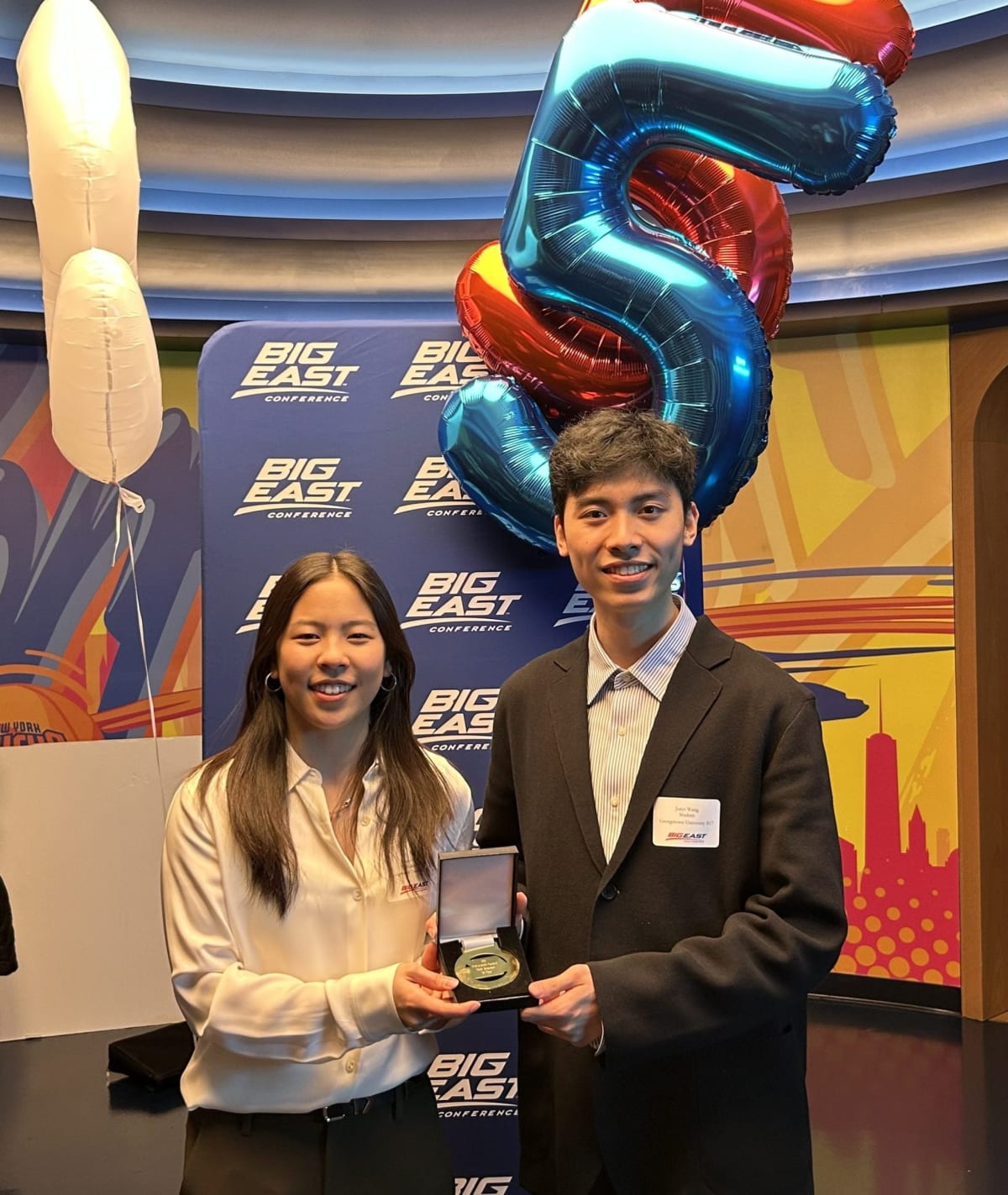
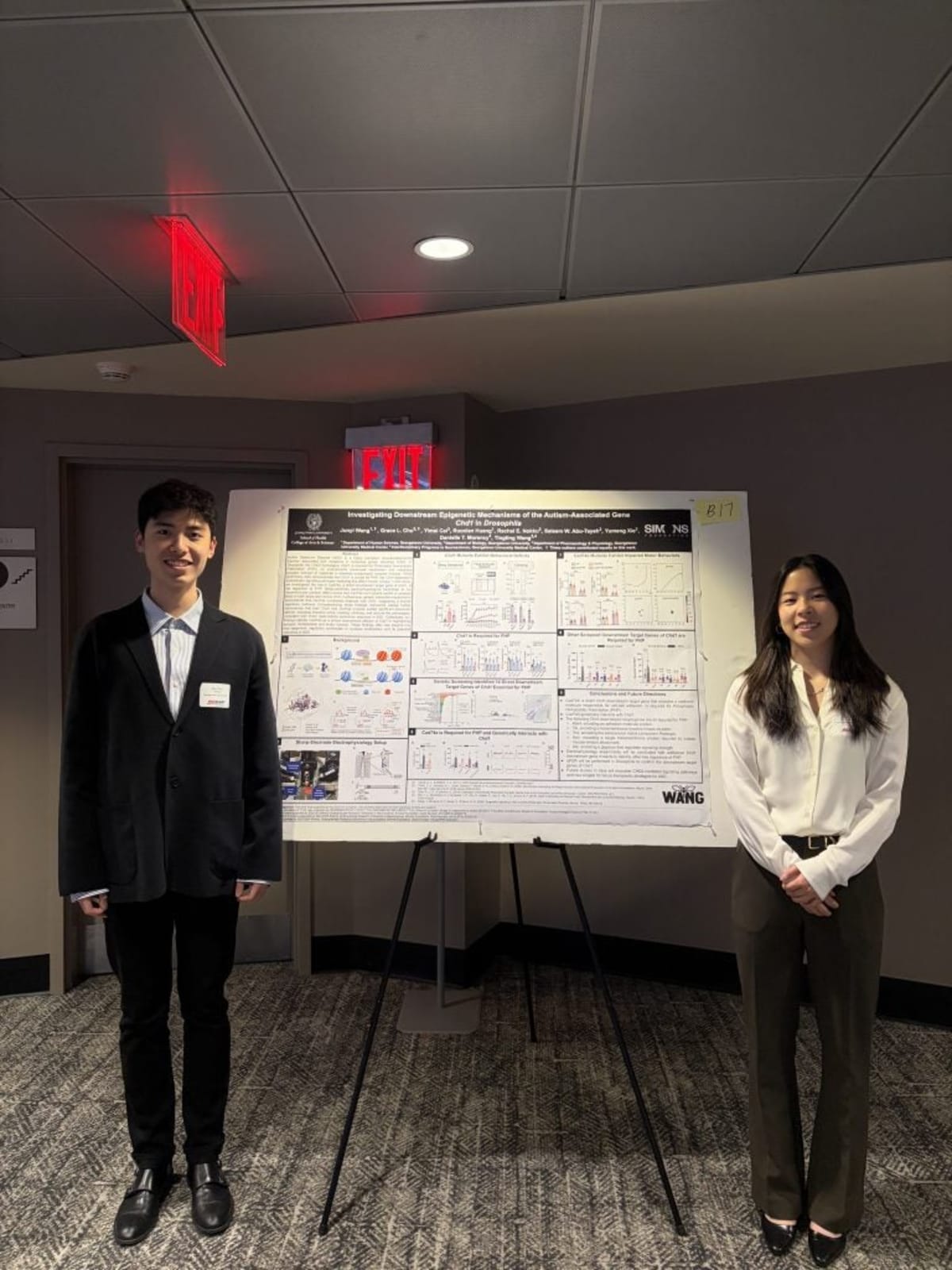
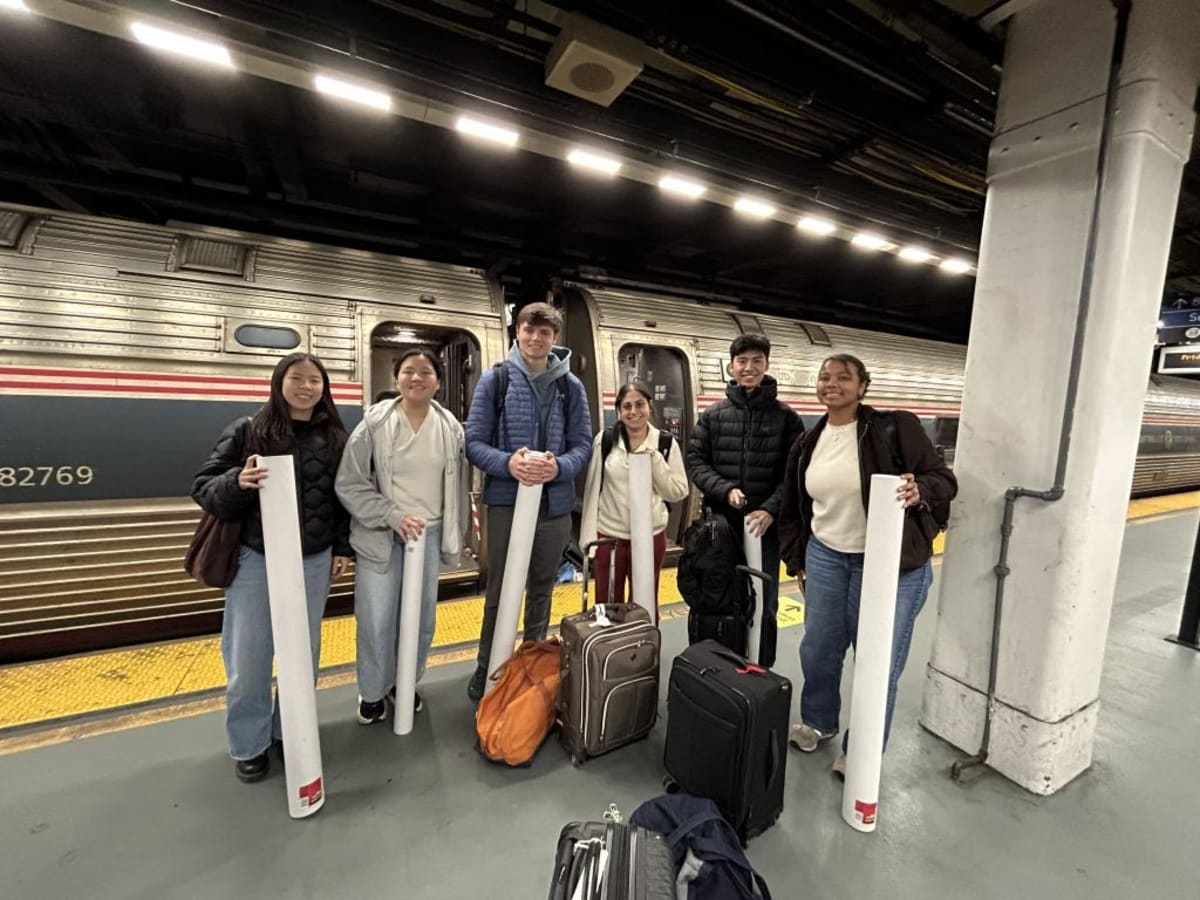
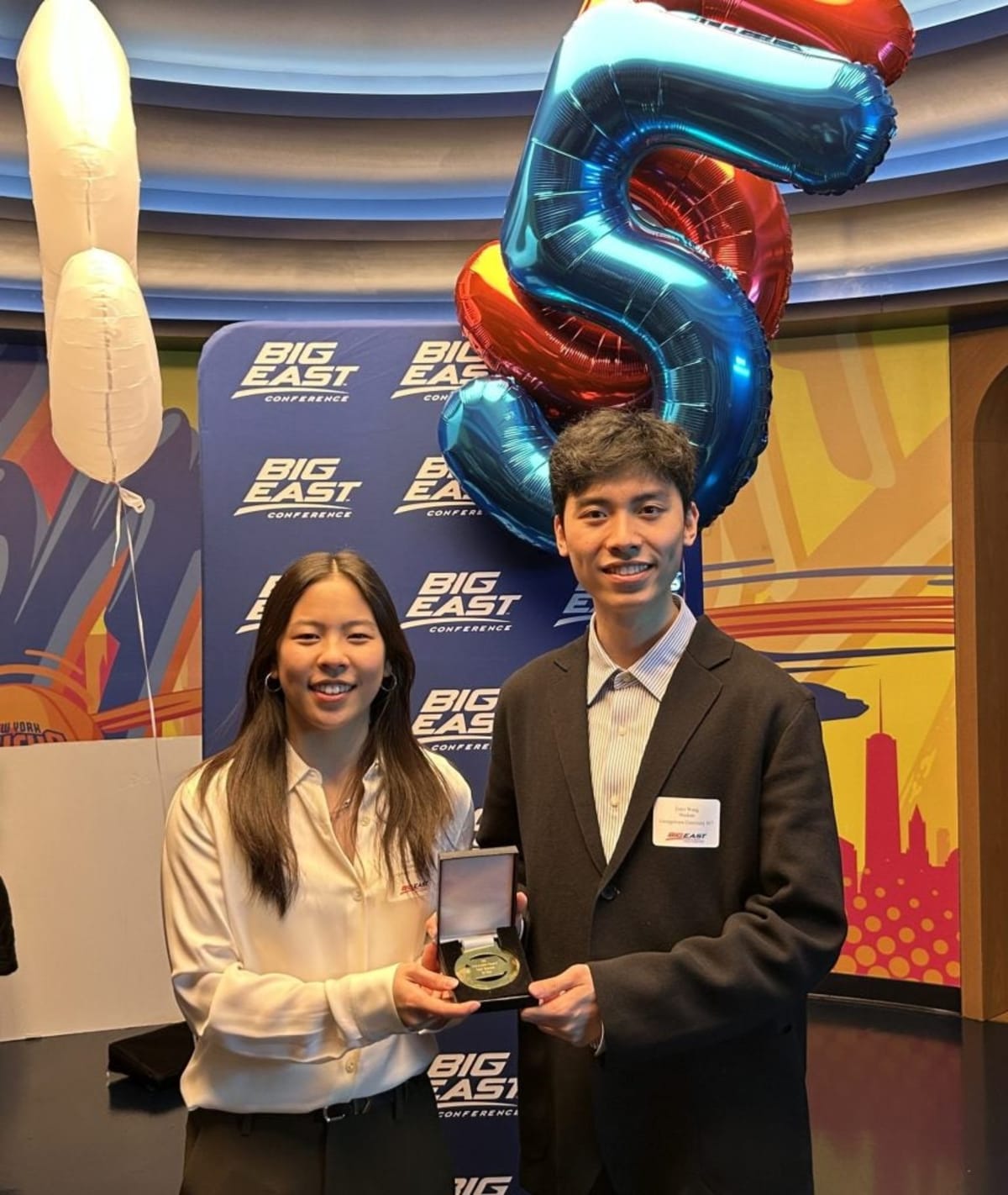
Senior Jim Wang and sophomore Grace Chu won first place in the health sciences category at the Big East Undergraduate Research Poster Symposium on March 14 in New York City. Their research explores how specific genes connected to autism affect the nervous system.
The two students studied what happens when a gene called CHD2 gets disrupted or mutated. When people carry this mutation, they may show autistic behaviors, increased seizure risk, and other symptoms.
Working in Associate Professor Tingting Wang's lab at Georgetown's School of Medicine, Chu and Wang used fruit flies to understand how the gene affects brain function. Chu discovered that flies with the disrupted gene crawled slower and showed less coordination, mirroring symptoms seen in humans with the same mutation.
Then the team broke new ground. In a first-of-its-kind study, they identified other genes that CHD2 controls that are also critical for nervous system function.
"Ultimately down the line, those genes that we identify can be used as potential targets for future therapies for individuals with autism," Chu explained.
The Ripple Effect
This research victory marks the second year in a row Georgetown students have taken top honors at the annual competition, which brings together undergraduates from all 11 Big East universities. The recognition extends far beyond a medal and bragging rights.
For Wang, who immigrated to the U.S. from China in 2018, the achievement validated years of lab work. He's now been selected to mentor other undergraduate neuroscience students through the Simons Foundation fellowship program.
Chu plans to continue identifying more genes and their connections to autism while preparing her own fellowship application. Both students are headed to medical school, equipped with research experience that taught them they can tackle complex scientific questions.
"It felt incredibly rewarding, not just because of the recognition, but also because it made me feel like all the time our lab has put into this project really means something," Wang said.
Their work proves that undergraduate researchers can make real contributions to understanding autism and potentially improving lives.
More Images
Based on reporting by Google News - Championship Win
This story was written by BrightWire based on verified news reports.
Spread the positivity!
Share this good news with someone who needs it