German Mathematician Gerd Faltings Wins Abel Prize at 71
Gerd Faltings just received mathematics' Abel Prize for solving a puzzle that stumped experts for 61 years. His proof about curves and equations reshaped an entire field and continues inspiring breakthroughs today.
A mathematician who cracked one of math's toughest puzzles four decades ago just got honored with one of the field's highest awards.
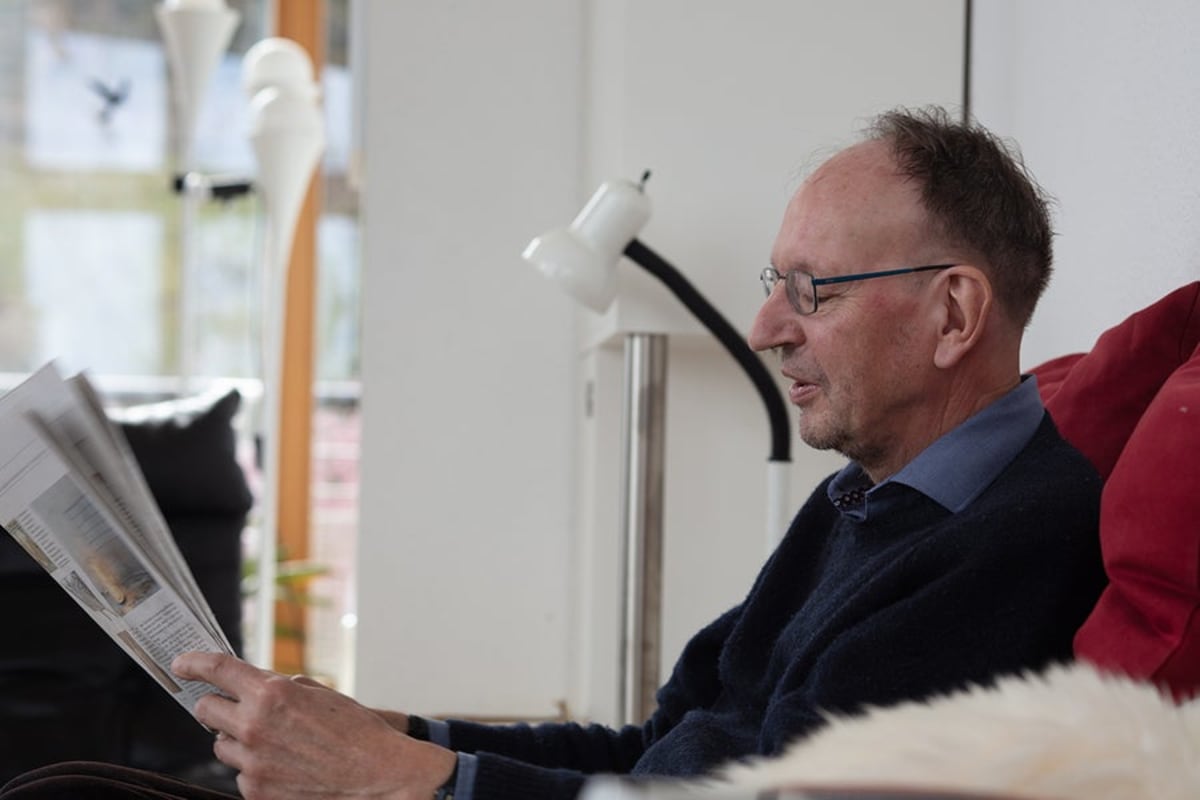
Gerd Faltings, 71, won the Abel Prize this week for proving the Mordell conjecture in 1983. The Norwegian Academy of Science and Letters created this award to mirror the Nobel Prize for mathematics.
The conjecture, posed in 1922, dealt with a beautiful mystery: special points on curves where coordinates are whole numbers or fractions. Mathematicians wanted to know which curves had infinite points and which had just a finite number.
Faltings discovered the answer. Any curve with equations raising variables to powers higher than three must have a limited number of these special points. Only simple curves like lines, circles, and cubic equations could have infinite points.
His proof opened doors that mathematicians are still walking through. Just weeks ago, researchers announced they'd found actual limits on how many rational points curves can have, building directly on Faltings's work.
"It's absolutely fundamental," says Noam Elkies, a Harvard mathematician. "The fact that Mordell's conjecture is now a theorem has informed a lot of work in nearby fields."
The theorem named after him represents just one highlight in Faltings's remarkable career. He won the Fields Medal at 32, math's most prestigious prize. He later expanded his theorem to cover multidimensional shapes and made major contributions to methods that help mathematicians study complex equations.
Why This Inspires
Faltings waited 61 years between Mordell's original question and his breakthrough answer. His patience reminds us that some problems worth solving take time, and the solutions can keep giving for generations.
The mathematician himself stays humble about his achievements. "I'm old, and many things have happened in my life, so I don't jump around," he says. "But it's a very nice thing."
He jokes about receiving major prizes at opposite ends of his career. "Near the beginning, I got the Fields Medal. And near the end, I'm getting the Abel Prize. It's a nice duality."
Today's mathematicians face fiercer competition than Faltings did. "Now it seems, on everything interesting, there's an enormous bunch of people who do things," he observes. "I'm sort of happy that I don't have to compete with them."
The Abel Committee made their decision during a January winter storm in Princeton, New Jersey, snowed in with dwindling hotel supplies. Committee chair Helge Holden calls Faltings "a towering figure in arithmetic geometry" whose ideas reshaped the field.
Some puzzles take decades to solve, but their solutions can illuminate mathematics for generations to come.
More Images



Based on reporting by Scientific American
This story was written by BrightWire based on verified news reports.
Spread the positivity!
Share this good news with someone who needs it