German NGO Brings Borneo Rainforest Back From the Brink
A small German nonprofit is reversing decades of logging damage in Borneo using science-based reforestation that lets nature do the heavy lifting. Their surgical approach has reconnected fragmented forests on a shoestring budget.
In the lowland forests of Borneo, a team of conservationists is proving that smart science can outperform big budgets when it comes to healing one of Earth's most damaged ecosystems.
The Rhino Forest Fund, a German nonprofit running on just $230,000 to $470,000 in annual donations, has spent 15 years mastering the art of forest restoration in Sabah, Malaysia. Their secret weapon isn't massive tree-planting campaigns but rather understanding exactly how nature wants to heal itself.
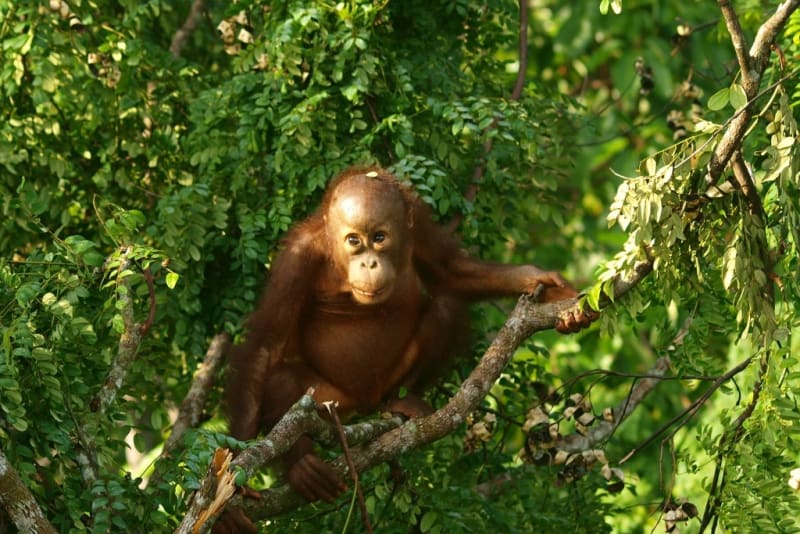
Founder Robert Risch and his team focus on dipterocarp trees, the towering hardwoods that form 80 percent of Borneo's forest canopy. These giants can reach 100 meters tall and create the closed canopy that orangutans, gibbons, and rare species like the flat-headed cat need to survive.
The problem is that after decades of industrial logging, young dipterocarp seedlings get choked out by competing vegetation that thrives in the sunlight. Even when mother trees survive, their offspring can't grow into a new forest without help.
The Rhino Forest Fund's solution is precise and patient. They plant just 33 clusters per hectare, with five seedlings at each point, using samples collected from surrounding healthy forests. Then they maintain those trees for five years, returning every few months to cut back the creepers and weeds that compete for sunlight.
The seedlings grow in local community nurseries and include not just dipterocarps but also endangered tree species and wild fruit trees. Fig species that provide year-round food for wildlife become living lunch counters scattered throughout the recovering forest.
The team even keeps oil palm trees from abandoned plantations standing because the shade-seeking seedlings can use them as temporary canopy. They purchase degraded land outright and pressure governments to protect what remains, creating wildlife corridors and tunnels under highways to reconnect fragmented habitats.
The Ripple Effect
What started as a mission to save 50 to 100 endangered rhinoceroses has become a blueprint for landscape-scale restoration. While no rhinos remain in the area today, the organization's focus on combating habitat fragmentation protects entire ecosystems.
Borneo hosts as many tree species per hectare as all of Europe combined in forests up to 140 million years old. Between 1985 and 2000, the island exported more timber than Africa and South America combined, leaving wildlife like elephants trapped in isolated forest islands surrounded by plantations.
By waiting for the canopy to close and shade out competing plants naturally, the Rhino Forest Fund works with forest ecology rather than against it. Their vision is simple: connect what's left and let the forest remember how to be whole again.
Each restored hectare becomes a bridge for elephants to cross, a highway for gibbons to swing through, and a home for the proboscis monkeys and bay cats clinging to survival in the lowlands.
One small team with surgical precision is proving that even the most damaged landscapes can find their way back to life.
Based on reporting by Google News - Reforestation
This story was written by BrightWire based on verified news reports.
Spread the positivity!
Share this good news with someone who needs it