German Rescue Robot Climbs Stairs and Opens Doors Solo
A new rescue robot combines four different abilities into one tough machine that could save lives in disasters. Athena can climb steep stairs, lift heavy objects, and navigate rubble without needing a whole fleet of specialized robots.
When disaster strikes, sending in rescue robots usually means deploying multiple machines for different jobs. German researchers just changed that with a single robot that does it all.
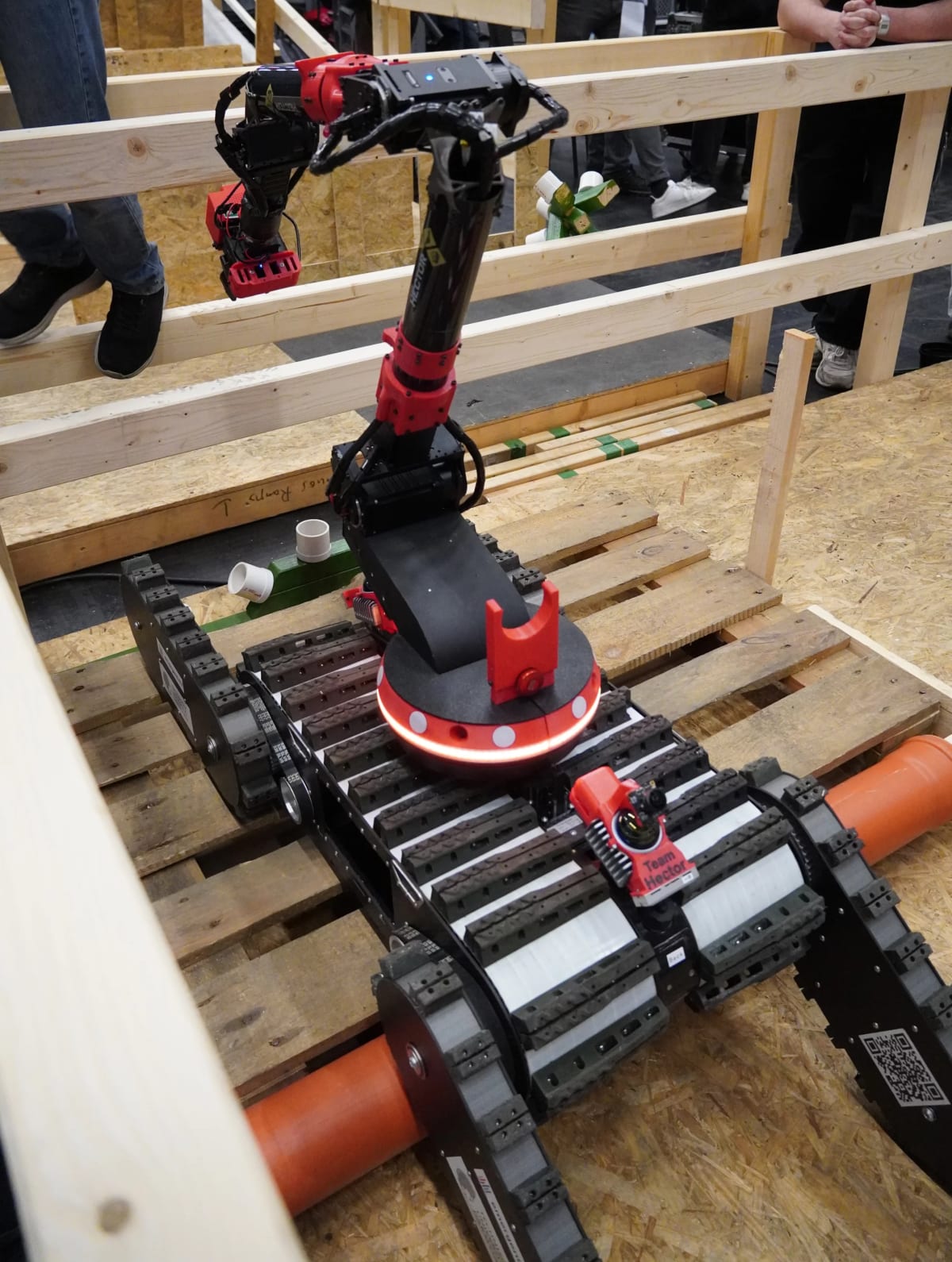
Meet Athena, a 110-pound rescue robot built by the Technical University of Darmstadt that tackles the biggest challenge in disaster response: every emergency is different. Some sites need climbing power, others need delicate manipulation, and most need both.
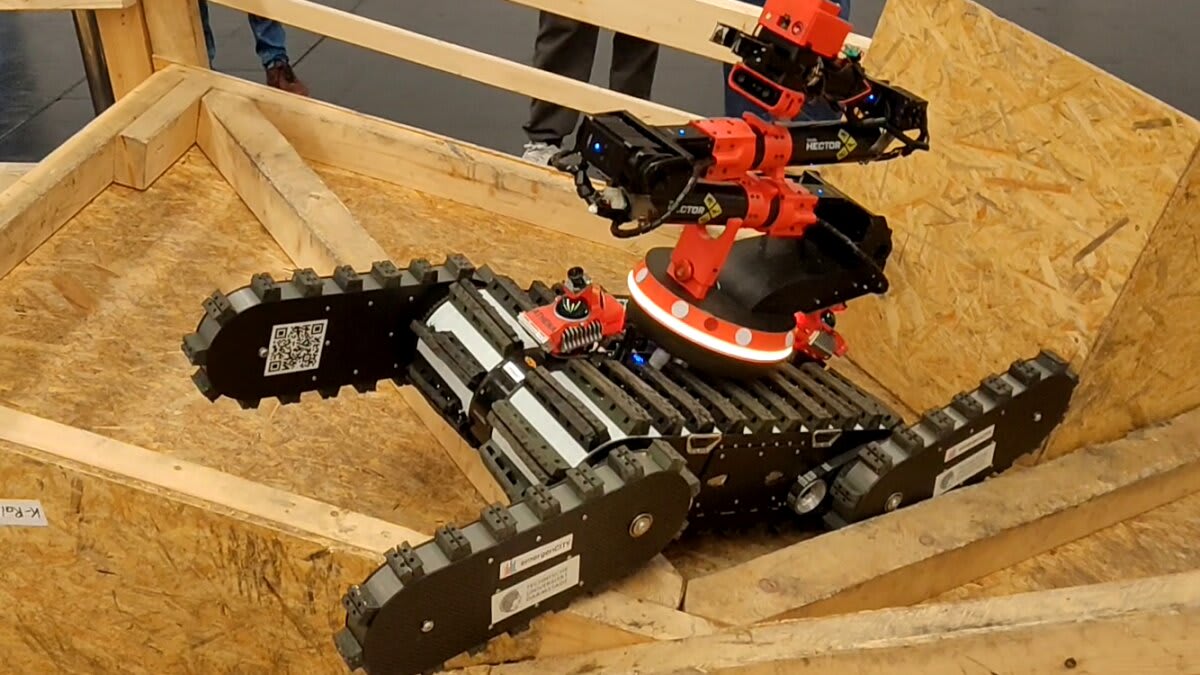
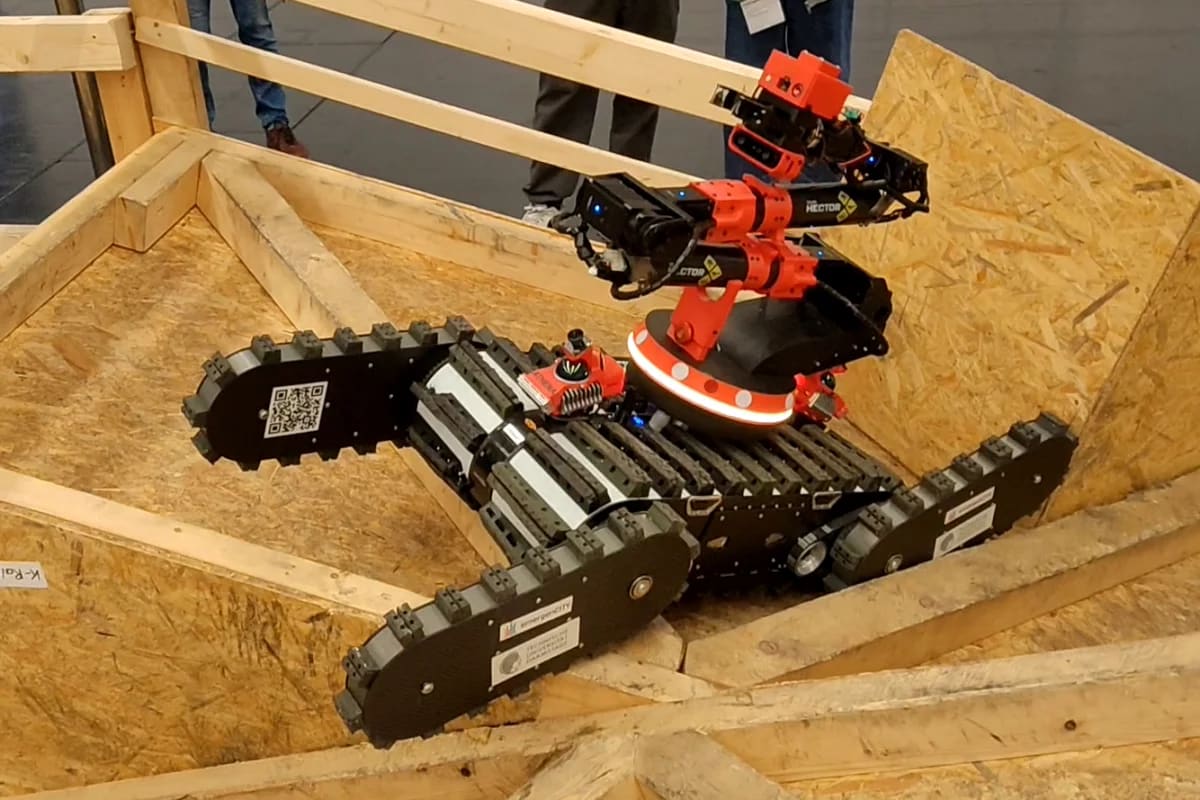
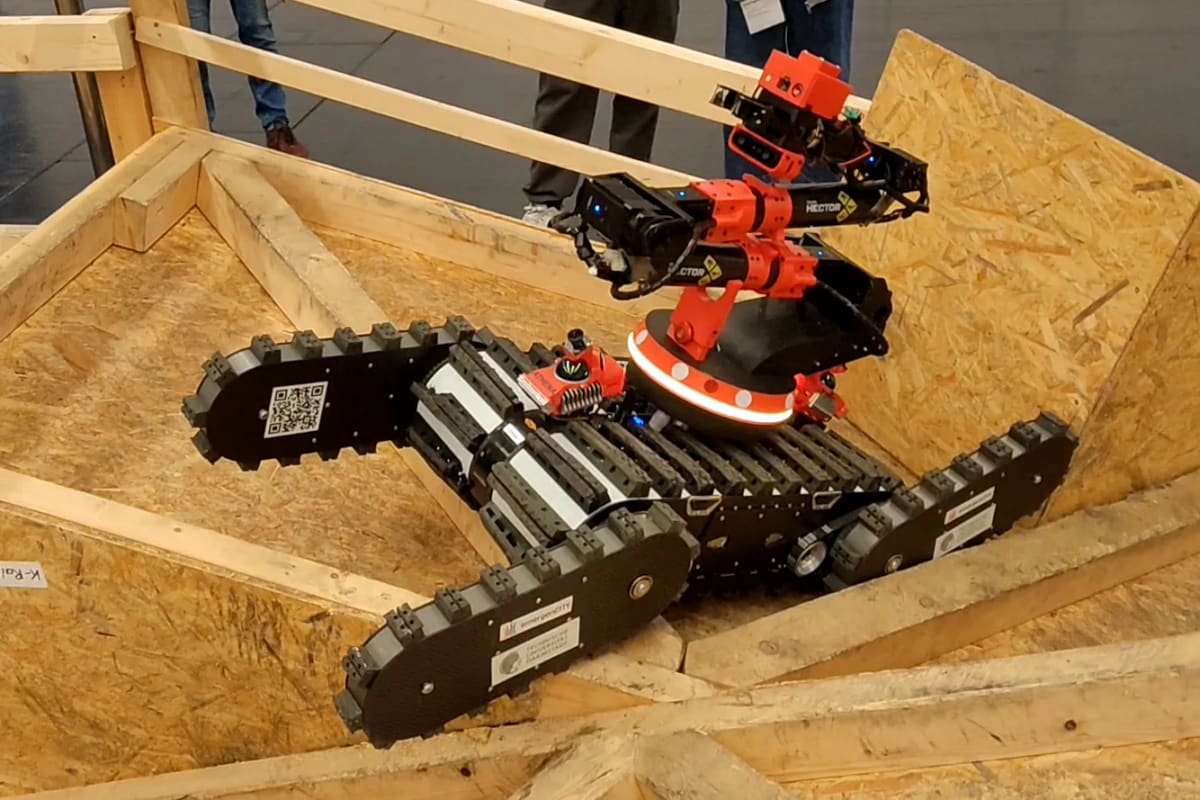
The robot solves this with a clever design. Four independently moving flipper arms with tank-style tracks let it reconfigure its shape on the fly. On flat ground, the arms tuck in and Athena moves like a normal tracked vehicle. When it hits stairs or obstacles, the front flippers extend upward to hook onto ledges and pull the whole machine up.
The results are impressive. Athena can scale 16-inch steps (more than double the height of standard stairs) and climb slopes angled at 45 degrees. The robot stretches from 28 inches to over 4 feet long when fully extended, yet still folds small enough to fit in airline luggage.
Navigation is only half the battle. A seven-jointed robotic arm mounted at the center gives Athena human-like manipulation skills. The arm reaches over 59 inches and can lift 16 pounds close to its base, enough to open doors, turn valves, press buttons, and collect samples.
When missions demand it, the arm can work around obstacles thanks to its redundant joints, which offer multiple positioning options for the same task. A gripper at the end applies 38 pounds of force, and sensors detect when it meets resistance.
Athena sees the world through multiple cameras, including thermal imaging, depth sensors, and LiDAR. High-power LED lights cut through darkness and smoke. An onboard computer runs the show, while a second processor handles heavy visual tasks. The whole system runs on rechargeable batteries or can plug into external power for extended missions.
The Ripple Effect
Since robots first helped clean up Chernobyl in 1986, rescue technology has saved countless lives by going where humans can't. But each disaster has required different specialized machines, creating logistical nightmares. By combining navigation, manipulation, and sensing into one adaptable platform, Athena could help emergency teams respond faster with less equipment. The robot recently competed at the RoboCup German Open, where it demonstrated these combined capabilities.
The team built Athena on open hardware, meaning other researchers and rescue teams worldwide can adapt and improve the design for their own needs.
More Images
Based on reporting by New Atlas
This story was written by BrightWire based on verified news reports.
Spread the positivity!
Share this good news with someone who needs it