German Solar Cell Hits 26% Efficiency in Space Conditions
Scientists created a solar panel that survives the brutal temperature swings of space while generating more power than ever before. The breakthrough could power satellites more reliably and bring the technology closer to everyday use.
Scientists just solved one of the biggest problems holding back next-generation solar panels, and the solution could light up both satellites and homes.
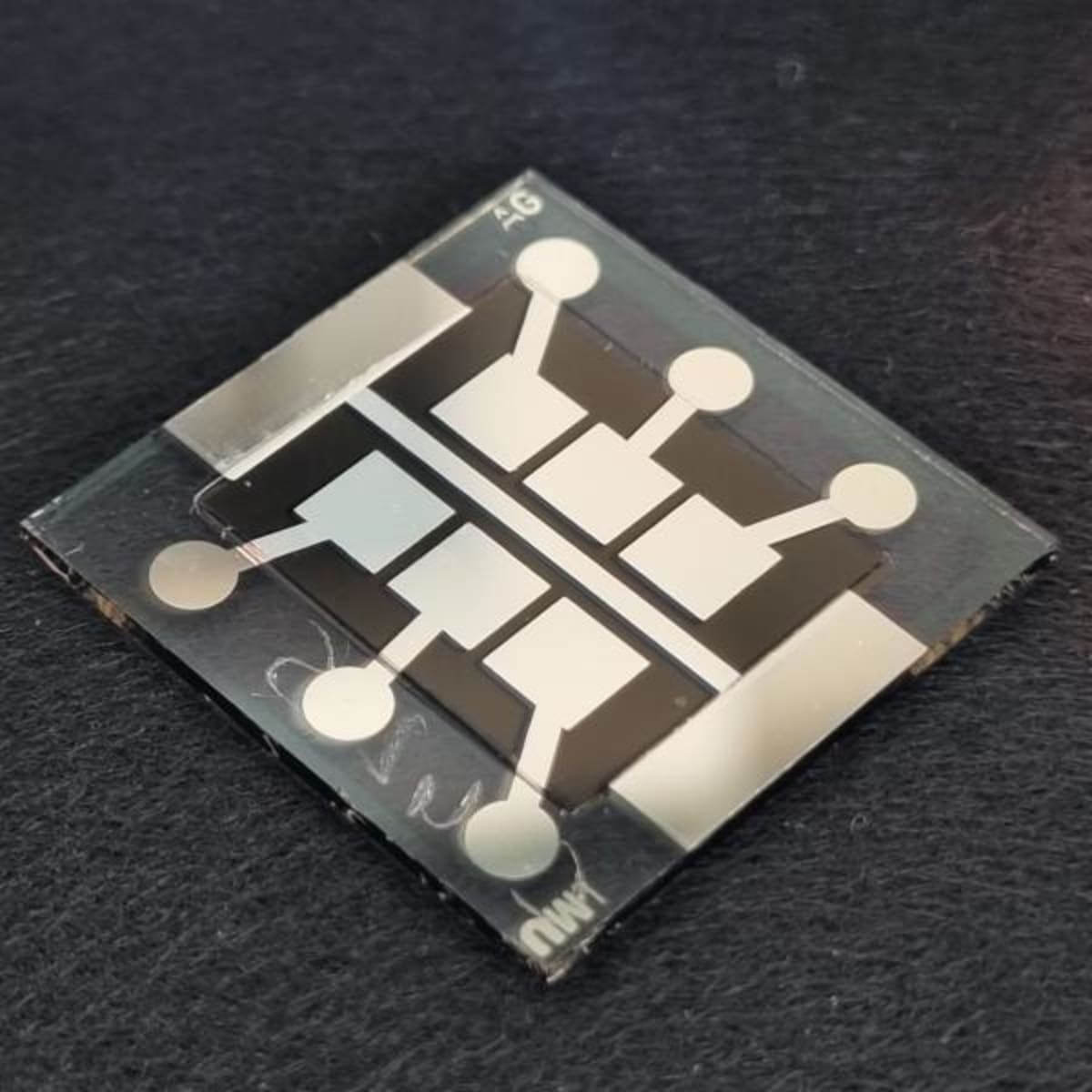
A research team at Ludwig-Maximilians-Universität München in Germany built a solar cell that can handle the temperature extremes of space. Their perovskite panel maintained 84% of its power output after surviving 16 cycles between -80°C and 80°C, conditions that destroy most solar cells.
The challenge was massive. In low Earth orbit, satellites swing from freezing cold to scorching heat every time they move between shadow and sunlight. Regular perovskite solar cells crack and fail under this stress because their crystal layers and glass bases expand at different rates, like a cookie breaking off a frozen plate.
The team got creative with chemistry. They added a compound called α-lipoic acid during manufacturing, which forms molecular chains across the weak spots between crystals. Then they applied a sulfonium-based coating that chemically glues the whole structure to its base, creating what they call an "anchored net."
The reinforced cell achieved 26% efficiency, converting more than a quarter of sunlight into electricity. That's 3% better than unmodified versions and competitive with traditional silicon panels that dominate the market today.
"Our work shows that targeted reinforcement of grain boundaries and interfaces can substantially improve the mechanical stability of perovskite solar cells," said lead researcher Erkan Aydin. "This brings us one step closer to making this technology viable for real-world applications."
Why This Inspires
Perovskite solar cells have tantalized scientists for years with their potential for cheap, efficient energy. But fragility kept them locked in laboratories while older technology dominated rooftops and satellites.
This breakthrough tackles durability head-on. By protecting the material's vulnerable points, the team showed that perovskite panels can survive punishing conditions while delivering top-tier performance.
The applications stretch far beyond satellites. Buildings experience temperature swings too, just less extreme. Solar panels on roofs bake in summer sun and freeze in winter, cycling through expansions and contractions that gradually degrade performance.
A solar cell tough enough for space could last decades on Earth, generating clean energy more efficiently and affordably than current options. That means more homes powered by sunshine, lower electricity bills, and faster progress toward clean energy goals.
The research shows we don't have to choose between efficiency and durability anymore.
More Images
Based on reporting by PV Magazine
This story was written by BrightWire based on verified news reports.
Spread the positivity!
Share this good news with someone who needs it