Germany Opens Lab to Scale Ultra-Efficient Solar Cells
A new German lab is bringing breakthrough solar technology closer to reality, turning cells that capture 33% more energy into products factories can actually make. The innovation could help solar panels generate far more power from the same rooftop space.
Solar panels are about to get a major upgrade, and a new lab in Germany just took the biggest step yet toward making it happen.
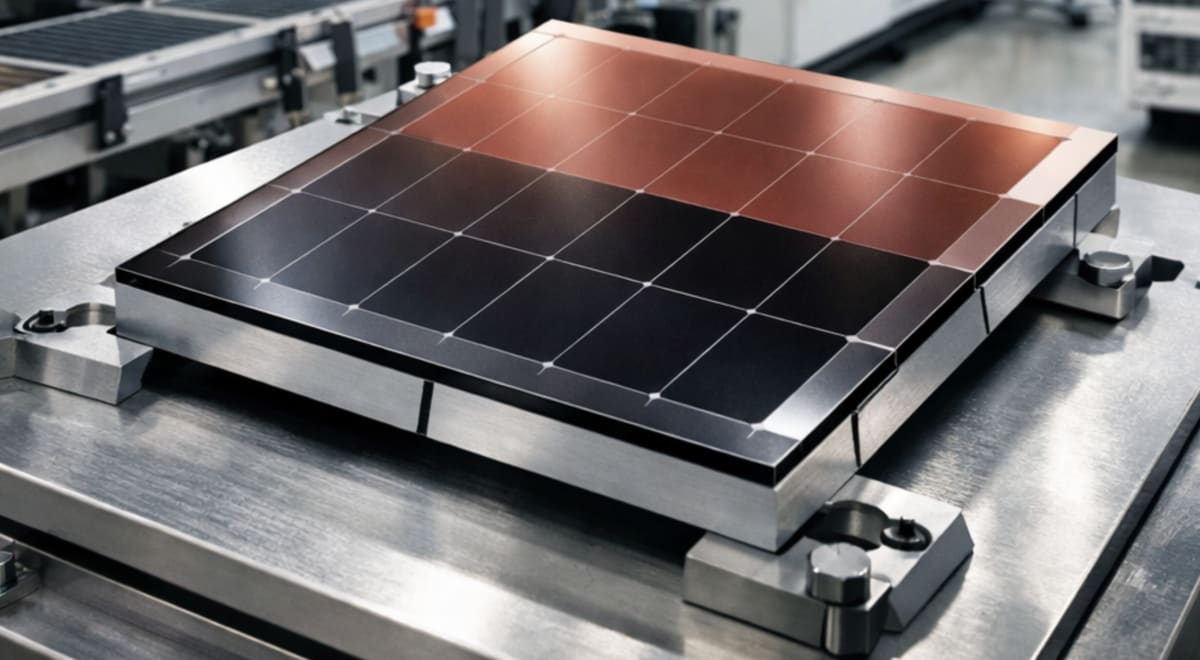
Fraunhofer ISE opened its Pero-Si-SCALE lab in Freiburg this month to scale up perovskite-silicon tandem solar cells for mass production. These next-generation panels layer an ultra-thin perovskite film onto standard silicon cells, boosting efficiency from about 29% to potentially 43%.
The lab has already achieved 33% efficiency in small prototypes. Now it's scaling the technology to industry-standard sizes that factories can actually use.
Here's what makes this exciting: adding just a 500-nanometer perovskite layer (thinner than a human hair) to existing silicon cells dramatically increases how much sunlight gets converted to electricity. That means homeowners and businesses can generate more clean energy from the same roof space, using less material overall.
The facility bridges a critical gap between laboratory breakthroughs and real-world manufacturing. It gives European solar companies access to equipment and expertise they need to compete globally, using production methods that work with their existing factory setups.
Professor Stefan Glunz, who leads the Photovoltaics Division at Fraunhofer ISE, emphasized that solar technology still has enormous room to grow. "Photovoltaics is far from being fully researched," he said, noting that tandem cells enable more solar energy in smaller areas with less material.
The timing matters. Europe aims to produce 30 gigawatts of solar panels annually by 2030, but faces stiff competition from Chinese manufacturers. This new research infrastructure helps level that playing field.
The Ripple Effect
The lab connects to a broader European push for energy independence and cleaner manufacturing. The facility builds on 20 years of solar research infrastructure, meaning innovations can transfer quickly to production lines.
Companies like JinkoSolar have already pushed tandem cell efficiency to 34.76% in lab settings. As this technology reaches factories, solar installations everywhere become more productive and affordable.
The German government's funding reflects growing recognition that solar innovation remains critical to climate goals. Better panels mean faster decarbonization using fewer raw materials and less land.
Each efficiency gain translates to real impact: more clean electricity from existing rooftops, lower costs for solar farms, and faster displacement of fossil fuels. When solar panels generate 40% more power from the same space, the math for going renewable gets dramatically better for everyone.
This lab represents more than technical progress—it's infrastructure for a cleaner energy future that's actually achievable with today's manufacturing capabilities.
More Images

Based on reporting by PV Magazine
This story was written by BrightWire based on verified news reports.
Spread the positivity!
Share this good news with someone who needs it