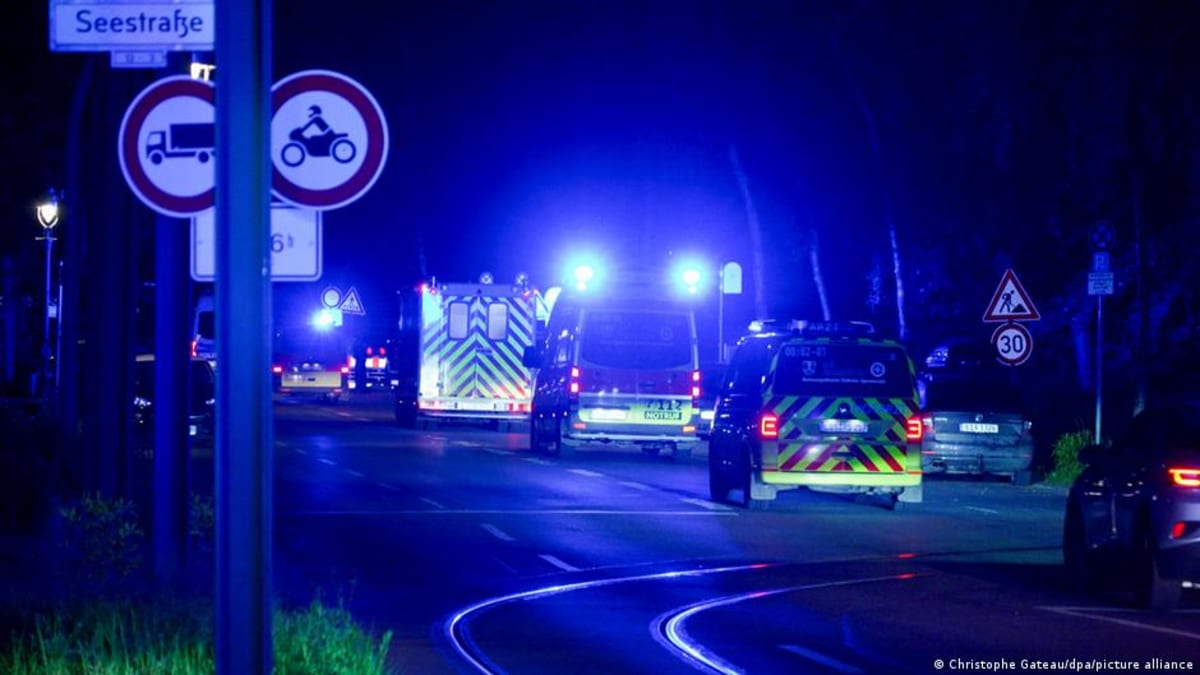
Germany Saves Lives by Treating Ebola in Elite Isolation Unit
A US doctor infected with Ebola in Congo is now receiving world-class care in Berlin, where Germany's specialized isolation units have helped drop survival rates from 50% to 80%. Seven high-tech facilities across the country stand ready to safely treat the world's deadliest diseases.
When every minute counts for an Ebola patient, Germany's medical teams are saving lives that might otherwise be lost.
A US doctor who contracted Ebola while working in the Democratic Republic of Congo arrived at Berlin's Charité hospital in May 2026. The US requested Germany's help because the shorter flight to Europe gave the critically ill patient a better chance of survival.
The decision highlights something remarkable. Germany has built seven elite isolation units specifically designed to treat the world's deadliest diseases. These aren't just regular hospital rooms with extra precautions. They're completely separate facilities where air is filtered, wastewater is neutralized, and staff wear protective suits with independent air supplies.
The Charité unit is the largest in Germany and can isolate up to 20 patients while the rest of the hospital operates normally. Staff train constantly for scenarios like this, and many have real experience treating infectious diseases in West Africa and other outbreak zones.
The preparation matters enormously. During West African Ebola outbreaks, mortality rates sometimes exceeded 50%. When patients receive treatment in European facilities like Germany's, that rate drops to around 20%. That's the difference between half of patients dying and four out of five surviving.
"For a patient suffering from Ebola disease in a precarious condition, you want a short flight route to a center with very high medical standards," said Dr. Thomas Pärisch, CEO of Pandemic Shield consultancy. The negative pressure rooms, advanced filtration systems, and interlocking doors ensure complete safety for both patients and the public.
Why This Inspires
Germany's readiness to help shows how medical expertise can cross borders when lives hang in the balance. The country has earned a strong international reputation through its STAKOB network, coordinated by the Robert Koch Institute, which connects all seven isolation facilities.
These cases are rare in Germany, but the infrastructure stays ready. When the 2014-2015 West Africa epidemic struck, Germany evacuated and successfully treated multiple patients. Each case requires enormous logistical effort, but the country maintains this capacity because saving lives matters more than cost.
The doctor's family members, considered close contacts, were also flown to Germany for monitoring. Even in extraordinary circumstances, Germany's system protects everyone while delivering the highest standard of care.
When the world's most dangerous diseases strike, knowing that places like this exist gives us all a little more hope.
Based on reporting by DW News
This story was written by BrightWire based on verified news reports.
Spread the positivity!
Share this good news with someone who needs it