Ghana Cocoa Farmers Build Schools for Their Communities
Eighty-two kindergarteners in rural Ghana once crammed into one room, sitting on logs to learn. Now they have modern classrooms with electricity and furniture, thanks to their own cocoa farming cooperative.
Eighty-two children sharing one classroom, many sitting on raw wooden logs because there weren't enough desks. That was the reality for kindergarteners at Edwenase M/A Basic School in Ghana's Ahafo Region until this month.
The Asunafo North Municipal Cooperative Cocoa Farmers Union changed everything. With support from Tony's Open Chain and the Chocolonely Foundation, the farmers' cooperative commissioned a modern classroom block on May 20, complete with proper furniture, offices, electricity for computer learning, and ceiling fans to beat the afternoon heat.
The school serves six remote farming communities where infrastructure has always lagged behind need. For years, teachers avoided postings there because there was nowhere to live, and students struggled without basic learning materials.
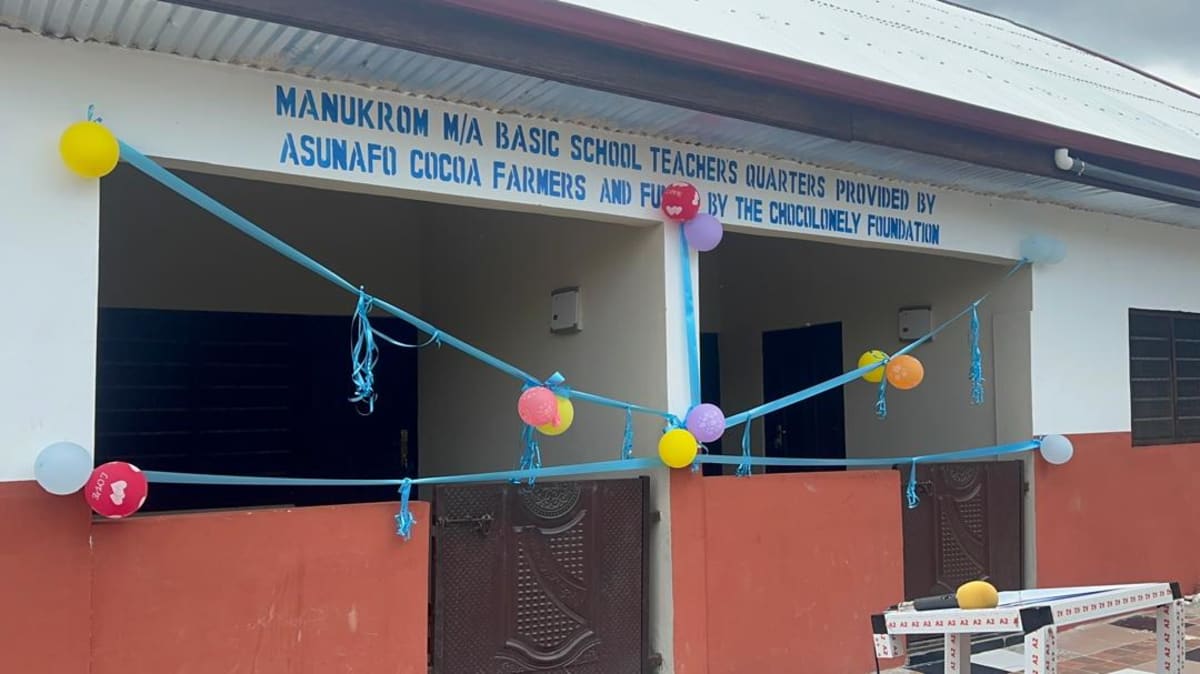
This wasn't a one-time gift. The same Union previously built a three-classroom block for Anwianwia Methodist Junior High School and constructed modern housing for four teachers in Manukrom, solving the accommodation crisis that kept educators away.
Mr. Samuel Jatong Laar, the municipal education director, praised the group for going even further. They've drilled water wells, distributed educational supplies and tricycles for transportation, and donated a multipurpose printer to the education office.
The model works because everyone benefits. The chocolate companies invest directly in the communities that grow their cocoa, and farmers pledge reliable supply in return. Research shows this approach reduces child labor because when schools are accessible and quality improves, families keep their children in classrooms instead of fields.
The Ripple Effect
The Union has grown from 17 farmer societies in 2008 to 41 societies across 26 communities today. Manager Erasmus Kumah Hemans says they're working to close the income gap among members by 2030.
Studies by the International Cocoa Initiative found that infrastructure investments like these effectively boost farmers' net incomes by reducing household costs. When communities have schools, water, and housing, families spend less on necessities and keep more of what they earn.
Municipal Chief Executive Joseph Akparibo noted that government can't do it alone, especially as foreign aid declines. This partnership shows what's possible when companies invest where their products come from.
Other communities are watching, and the classroom deficit remains severe across the municipality. But 82 children who once sat on logs now have proper desks, lights to read by, and fans to keep them comfortable while they learn.
Based on reporting by Myjoyonline Ghana
This story was written by BrightWire based on verified news reports.
Spread the positivity!
Share this good news with someone who needs it