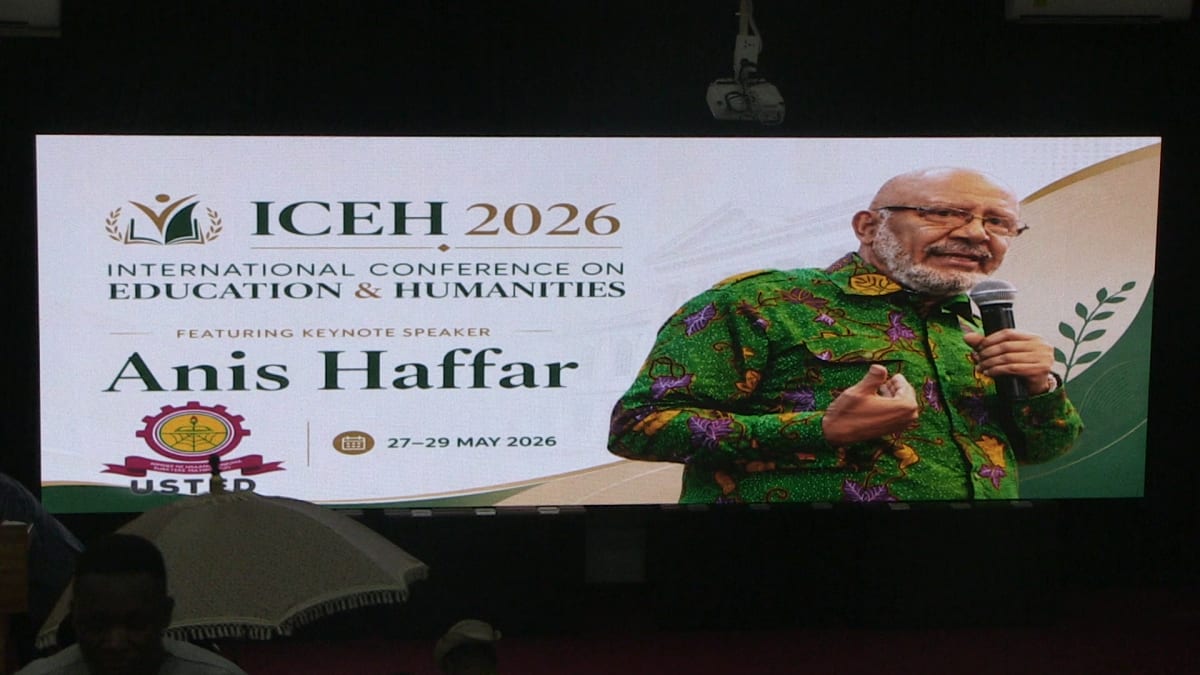
Ghana Conference Unites 400 to Blend Humanities With Skills
Over 400 educators from six countries gathered in Ghana to reimagine education by fusing critical thinking with practical skills training. The landmark conference at USTED in Kumasi tackled how to prepare students for real-world challenges while keeping human values at the center.
Students who can both think deeply and build solutions are becoming the future of education in Ghana and beyond.
The University of Skills Training and Entrepreneurial Development in Kumasi hosted its first International Conference on Education and Humanities, bringing together 250 participants and 150 presenters from Nigeria, South Africa, Cameroon, India, the USA, and Ghana. The gathering focused on ending the false divide between theoretical learning and hands-on skills.
Anis Haffar, founder of the Gifted and Talented Education Institute, challenged the outdated either-or approach to education. "The Humanities pose the relevant thoughts of the times; the thoughts define the work that has to be done, and the work informs the skills fit for the purpose of living a better life," he said, arguing that in Ghana, humanities and skills must function like "Siamese twins."
The conference highlighted a growing global shift toward practical learning. Schools worldwide are opening Innovation Labs and Idea Spaces where students transform knowledge into tangible products that solve community problems.
Haffar emphasized that humanities education remains critical because it teaches students how to ask the right questions. While technical skills provide answers, humanities training develops the critical thinking needed to identify which problems deserve solving in the first place.
Traditional leaders joined the conversation, with Nana Adu Gyamfi Kumanin Berimah Kessie I calling for stronger support of Technical and Vocational Education and Training programs. "Many young people have been made to believe that TVET is inferior to academic education," he said. "This mindset must change."
The chief pointed to unemployment as proof that Ghana needs more investment in practical skills training. He urged traditional authorities to partner with schools and government to make TVET accessible in communities where leaders understand local needs best.
The Ripple Effect
The conference promises to return annually, creating a permanent platform for educators across Africa to share innovations. Professor Faith Ben-Daniels reported receiving over 200 proposals for the inaugural event, signaling strong demand for this conversation.
The gathering also addressed rapid technological change, stressing that digital literacy can no longer be optional for young people. Participants left with a shared commitment to lifelong learning and preparing students for jobs that may not yet exist.
By treating humanities and skills as partners rather than competitors, Ghana's educators are building a model where graduates can both understand human values and create practical solutions for better lives.
Based on reporting by Myjoyonline Ghana
This story was written by BrightWire based on verified news reports.
Spread the positivity!
Share this good news with someone who needs it