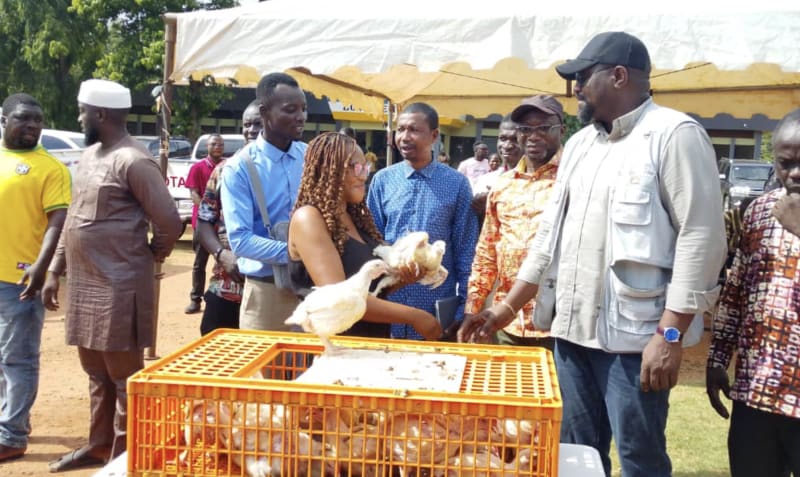
Ghana Delivers 110,000 Chickens to Boost Local Farming
Ghana's government just distributed 110,000 birds to poultry farmers across Bono East Region, complete with feed and medicine, in a bold push to revive local chicken production. The move aims to slash costly imports and create thousands of new jobs in agriculture.
Farmers across Ghana's Bono East Region just received a powerful boost: 110,000 chickens, delivered straight to their farms as part of the government's "Nkoko Nketenkete" initiative.
Deputy Minister of Food and Agriculture John Dumelo presented the birds at a ceremony in Techiman, announcing that each of the region's 11 districts would receive 10,000 chickens to distribute among local farmers. The government isn't just handing over birds and wishing farmers luck. They're also providing 48,833 bags of feed, 63,000 doses of antibiotics, and 44,000 packets of glucose to ensure the chickens thrive.
The program tackles a real problem: Ghana currently imports massive amounts of chicken each year, draining money that could stay in local communities. By rebuilding the domestic poultry industry, the initiative promises to keep those funds circulating among Ghanaian farmers and families.
Dumelo emphasized that the government remains committed to making Ghana's poultry sector competitive again. He urged farmers to care for their birds properly so the nation can see real results from the investment.
Regional Minister Francis Owusu Antwi praised the initiative's potential to ease economic pressure on ordinary citizens. He directed agricultural officials to closely monitor the birds' progress and support farmers throughout the process.
The Ripple Effect
This distribution represents more than just chickens changing hands. When local poultry production increases, entire communities benefit. Farmers gain steady income, feed suppliers find new customers, and families access affordable protein sources.
The program also creates employment opportunities across the supply chain, from hatcheries to transportation to veterinary services. As each farmer succeeds, they often hire helpers and train others, multiplying the initiative's impact.
The government plans to expand support through its Feed Ghana program, which will soon provide subsidized fertilizer, seedlings, and other farm inputs. This coordinated approach shows recognition that farmers need comprehensive support, not just one-time handouts.
Ghana's commitment to agricultural self-reliance could inspire similar programs across West Africa, where many nations face the same challenge of expensive food imports. When governments invest in local farmers with proper resources and support, communities grow stronger and more resilient.
Based on reporting by Myjoyonline Ghana
This story was written by BrightWire based on verified news reports.
Spread the positivity!
Share this good news with someone who needs it

%2Ffile%2Fattachments%2F2992%2F688635092_1403790941795291_6434669868162454614_n_856400.jpg)