Ghana Educators Unite to Tackle Exam Malpractice Crisis
Education leaders in Ghana are taking bold action after spotting a troubling pattern in national exam results. Their solution-focused dialogue has produced a concrete action plan to restore academic integrity and help students succeed honestly.
Students in Ghana are about to get the support system they deserve, thanks to educators who refused to accept declining test scores as the new normal.
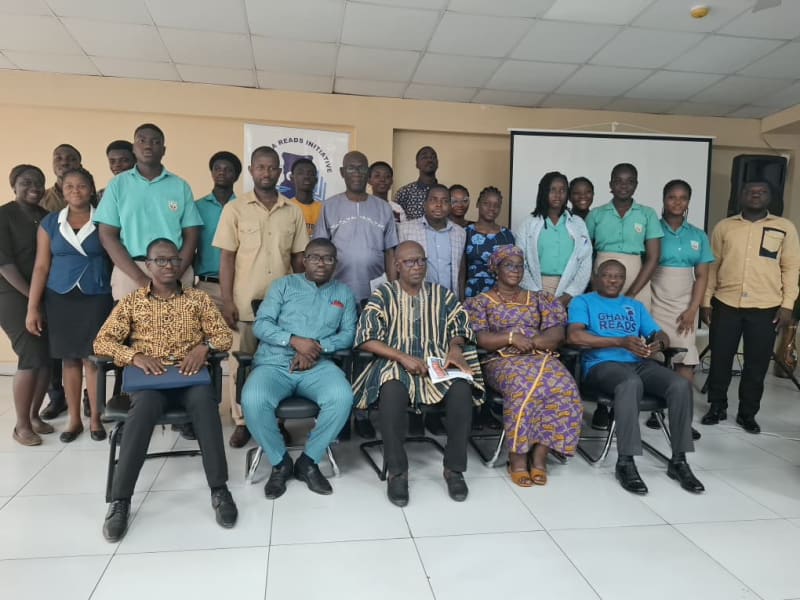
Education stakeholders gathered at the first Educational Times Dialogue to tackle head-on the challenges facing Ghana's West African Senior School Certificate Examination. The Ghana Reads Initiative partnered with Adwinsa Publications Limited to mark International Day of Education by doing something radical: creating real solutions instead of just talking about problems.
The news wasn't sugar-coated. Africa Education Watch revealed that malpractice affects over 70 percent of exam cases across five or more subjects. But here's the encouraging part: question leakages have already dropped thanks to tighter security measures, proving that focused reforms actually work.
Kwasi Nimo Jr., Programme Officer at Africa Education Watch, identified a fixable flaw in the system. Only 20 percent of exam supervisors come directly from the West African Examinations Council, while most work through the Ghana Education Service, creating conflicts of interest that undermine fair testing.
The group didn't just identify problems. They proposed concrete solutions: stronger consequences for teachers who enable cheating, better external supervision, strict phone bans in schools, upgraded exam facilities, and gradual adoption of digital testing.
Parent groups brought crucial perspective to the conversation. The National Council of Parent-Teacher Associations connected poor exam performance to weak foundational education, unmotivated teachers, and inadequate infrastructure—all challenges that can be addressed with proper investment and commitment.
Samuel Osei from the Ghana National Council of Private Schools pushed the conversation forward by advocating for multiple academic pathways. Instead of putting all the pressure on one high-stakes exam, he suggested diagnostic assessments that help identify each student's unique strengths.
The Ripple Effect
This dialogue represents something bigger than fixing test scores. It's about restoring a generation's faith in honest achievement and ensuring every Ghanaian student has the foundation they need to succeed.
Albert Koomson, National Director of the Ghana Reads Initiative, committed to compiling every proposal into a formal communiqué for the Minister of Education and Ghana Education Service. Even better: they're building in accountability measures to track progress on these reforms.
Tina Aforo-Yeboah, Chairperson of the Ghana Reads Initiative, called the 2025 results a "wake-up call" and urged stakeholders to adopt bold, non-partisan measures. The declines in Mathematics and Social Studies aren't being swept under the rug—they're being treated as a rallying cry for systemic change.
What makes this story hopeful isn't just the identification of problems—it's the collaborative spirit bringing together civil society groups, parent associations, private school operators, and government bodies to find shared solutions.
Ghana's students are getting a second chance to succeed in a system built for their achievement, not their failure.
Based on reporting by Myjoyonline Ghana
This story was written by BrightWire based on verified news reports.
Spread the positivity!
Share this good news with someone who needs it