Ghana Official Calls Mining Firms to Fund Public Health
A powerful speech is challenging Ghana's mining industry to save lives, not just extract gold. The administrator of Ghana's Medical Trust Fund says it's time for companies to invest in hospitals and equipment that keep mining communities alive.
Imagine a heart attack at 2 a.m. in rural Ghana, where no amount of wealth can get you to a hospital in time because the nearest life-saving equipment doesn't exist within 200 miles.
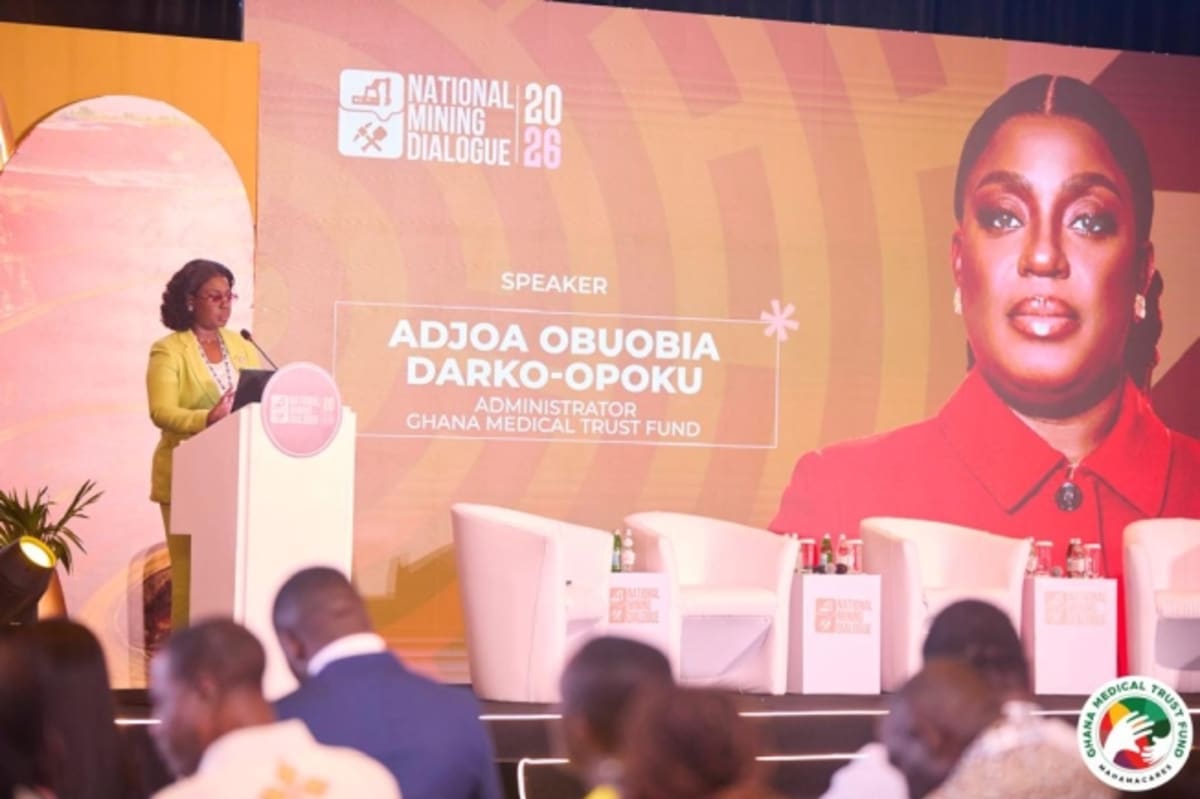
That's the reality Adjoa Obuobia Darko-Opoku painted for mining executives at Ghana's National Mining Dialogue 2026 in Accra. As administrator of the Ghana Medical Trust Fund, she challenged an industry worth billions to rethink what it owes the communities where it operates.
"At 2 a.m., money cannot buy time," Darko-Opoku told the room. "In a medical emergency, your wealth does not save you. The infrastructure nearest to you does."
She shared how families spend decades building modest lives, only to watch one cancer diagnosis drain their savings, force property sales, and send them borrowing desperately to keep loved ones alive. By the time rural patients travel across regions seeking treatment that exists only in major cities, families are financially ruined and patients are significantly weaker.
The statistics she revealed are stark. Ghana's public tertiary hospitals have just two functional MRI machines, five mammogram machines, and two cancer radiotherapy machines for the entire country. The entire northern sector has only two practicing cardiologists without proper equipment serving millions of people.
For years, mining companies have built schools, roads, and boreholes in host communities. Darko-Opoku says that's no longer enough for a true social license to operate.
The Ripple Effect
She's inviting mining companies to imagine a different legacy. Instead of being remembered only for gold extraction, what if a company could tell a community: "We built the regional cancer center that saved your mother. We installed the cardiac lab that saved your chief."
That kind of investment creates healthcare infrastructure that serves communities long after mining operations end. It transforms corporate social responsibility from something communities tolerate into something that measurably extends lives.
Darko-Opoku is asking companies to partner with the Medical Trust Fund to map healthcare needs in their operational areas, co-invest in urgently needed medical equipment, sponsor specialist training, and build hospitals that will outlast the mines themselves.
She reminded executives that history won't remember quarterly profits or ounces extracted. But families will remember the hospital that saved a father, and children will remember the equipment that helped a mother survive cancer.
"You do not extract value from the soil," she said. "You extract value through people."
Ghana's mining industry now has a clear invitation to build a legacy measured not just in gold extracted from the earth, but in lives saved above it.
Based on reporting by Myjoyonline Ghana
This story was written by BrightWire based on verified news reports.
Spread the positivity!
Share this good news with someone who needs it