Ghana PhD Student Fights for AI Workers' Hidden Labor
A Ghanaian researcher is exposing the invisible human workforce behind artificial intelligence and demanding they get the legal protections they deserve. His work reveals thousands of African data workers fueling AI with little recognition or safety nets.
Behind every AI chatbot answer and content filter, there's a real person doing work that's barely recognized by law.
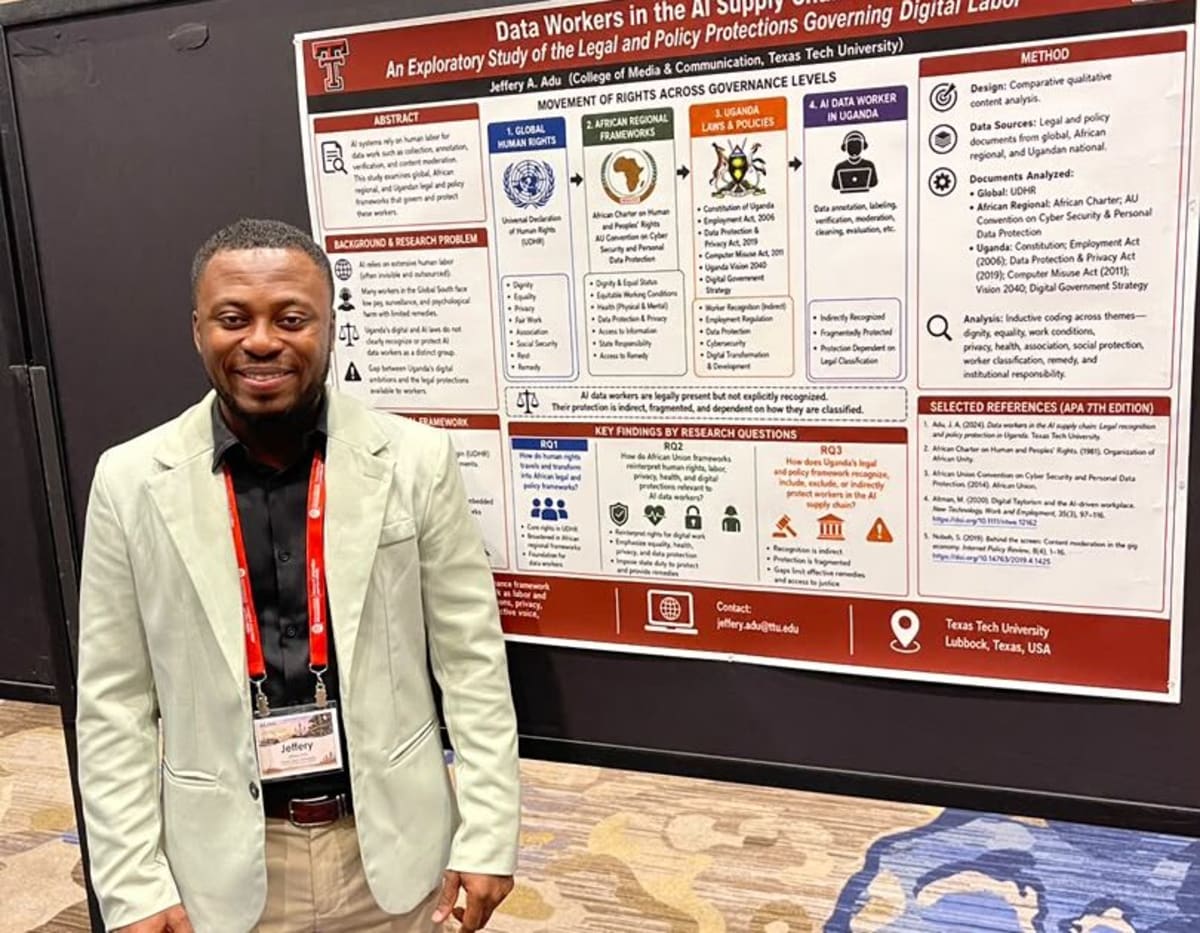
Jeffery Acheampong Adu, a PhD student from Ghana studying at Texas Tech University, just presented groundbreaking research that challenges how we think about artificial intelligence. At the 2026 Association for Education in Journalism and Mass Communication Conference in New Orleans, he revealed a troubling gap: the workers who make AI possible have almost no legal protection.
Adu's study focused on AI data workers, the people who annotate images, moderate content, clean datasets, and verify information that trains AI systems. These workers are often based in African countries like Uganda, doing essential work for global tech companies. Yet when he examined international, African regional, and Ugandan laws, he found they're not recognized as a distinct worker category.
Instead, these workers fall through the cracks. They're protected only indirectly as general employees or citizens, not as the specialized digital laborers they actually are. For freelancers and platform workers common in the AI industry, even basic protections under Uganda's Employment Act may not apply because they're not formally classified as employees.
The research shows AI isn't the fully automated technology most people imagine. Real humans spend hours labeling photos, reviewing disturbing content, and teaching algorithms what's appropriate. They're the hidden workforce making "smart" technology possible.
The Ripple Effect
Adu's work matters far beyond Uganda. As AI companies increasingly outsource data work to Africa for lower costs, millions of workers need clear legal standing. His call for explicit recognition of AI data work as legitimate labor could reshape how an entire industry treats its workforce.
He's pushing for protections that most workers take for granted: fair wages, safe working conditions, mental health support for those reviewing traumatic content, privacy rights, collective bargaining power, and access to courts when things go wrong. The problem isn't that laws don't exist. It's that existing protections are scattered across different frameworks and don't fit the reality of modern digital work.
His research adds crucial African perspective to global AI governance debates. While much attention focuses on protecting data and innovation, Adu reminds us to protect the people behind the systems. As AI continues reshaping economies worldwide, his work ensures the conversation includes those doing the actual labor.
The path forward requires countries to update their legal frameworks to match how people actually work in the digital age, giving AI data workers the recognition and security their essential contributions deserve.
Based on reporting by Myjoyonline Ghana
This story was written by BrightWire based on verified news reports.
Spread the positivity!
Share this good news with someone who needs it