Ghana Scientist Uses AI Chip to Speed Up Drug Discovery
A Ghanaian pharmacist has created a thumbnail-sized chip that runs drug experiments in days instead of months, using AI to analyze results that once required teams of scientists working around the clock. She's bringing the technology home to accelerate medical breakthroughs across Africa.
Dr. Ofosua Klozie Adi-Dako holds a transparent chip smaller than a credit card that's changing how quickly new medicines can reach patients who need them most.
The University of Ghana lecturer designed the tiny device to replace experiments that once kept researchers in labs overnight, monitoring tests one by one. Now, thousands of experiments run simultaneously inside channels thinner than a human hair.
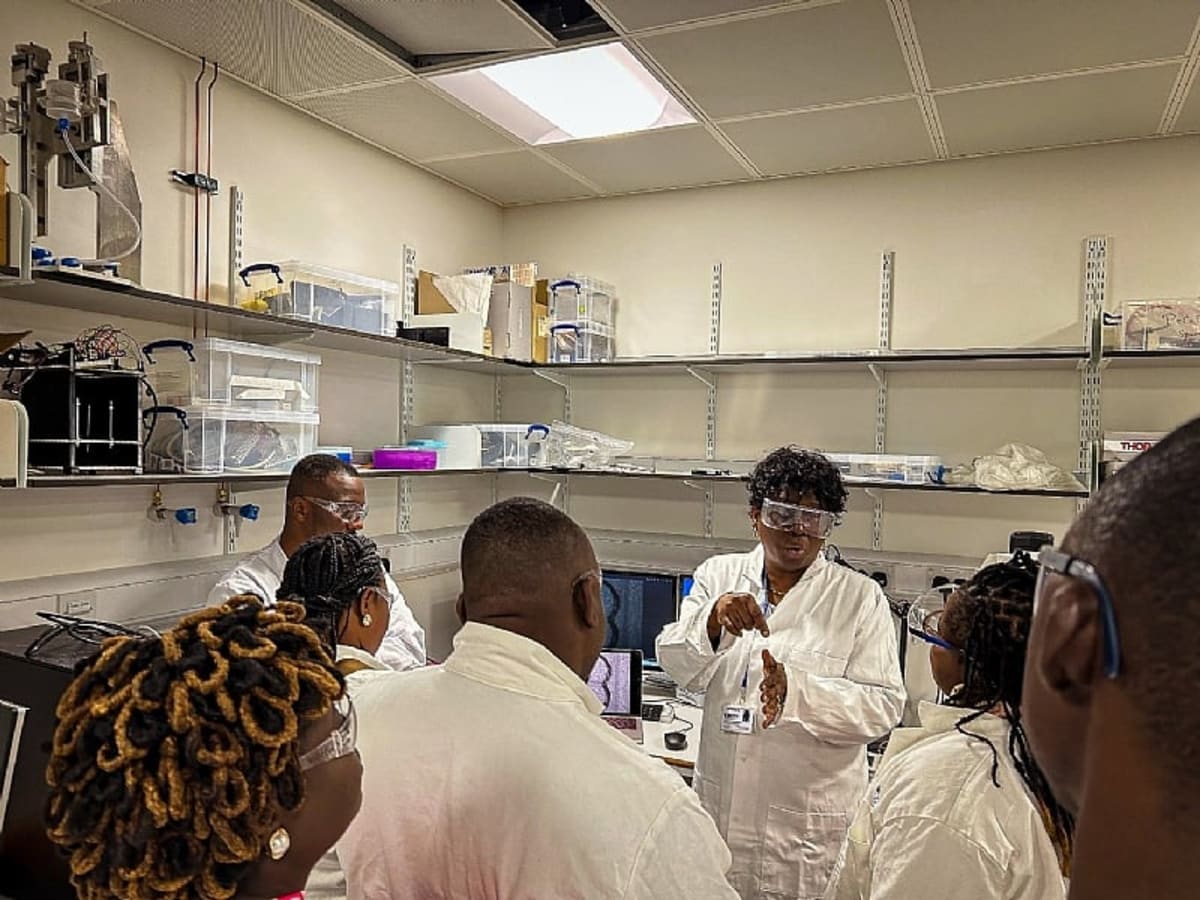
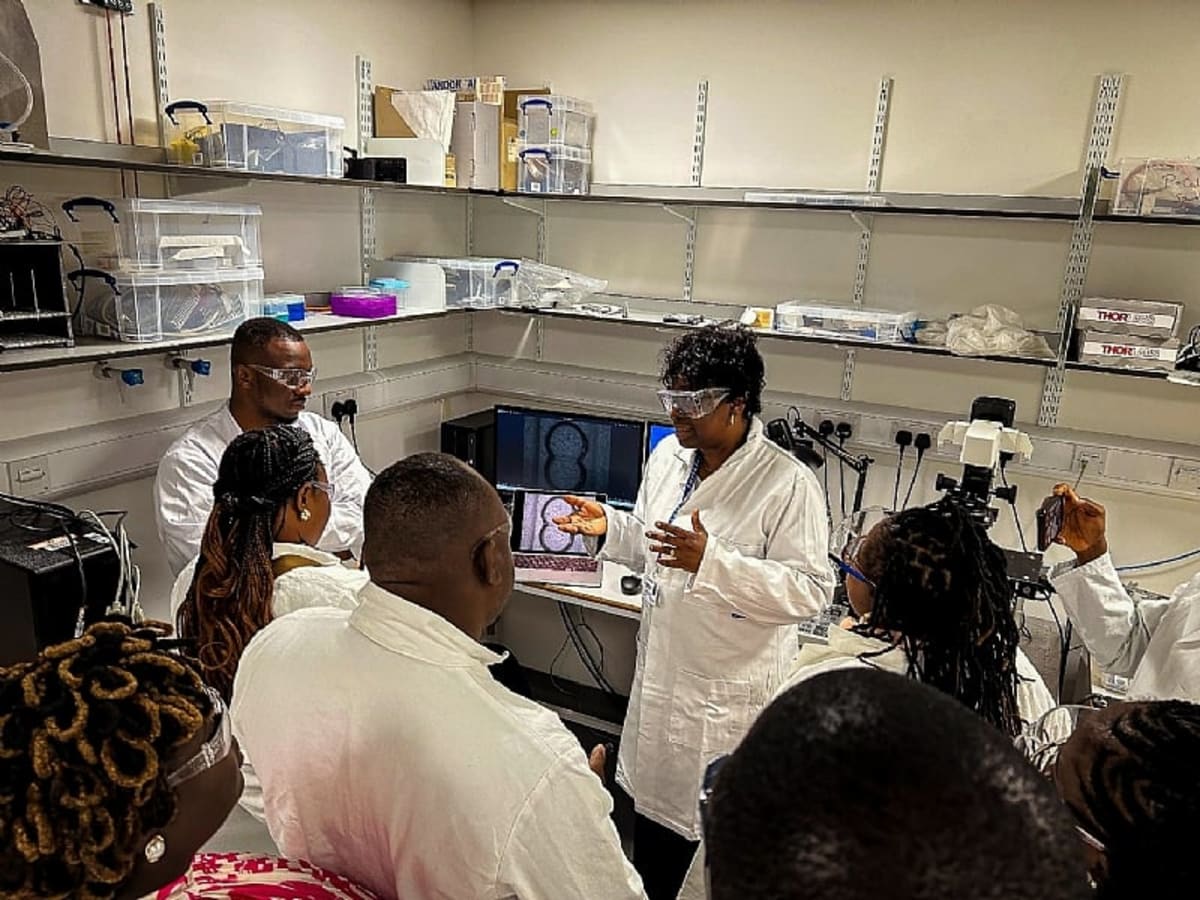
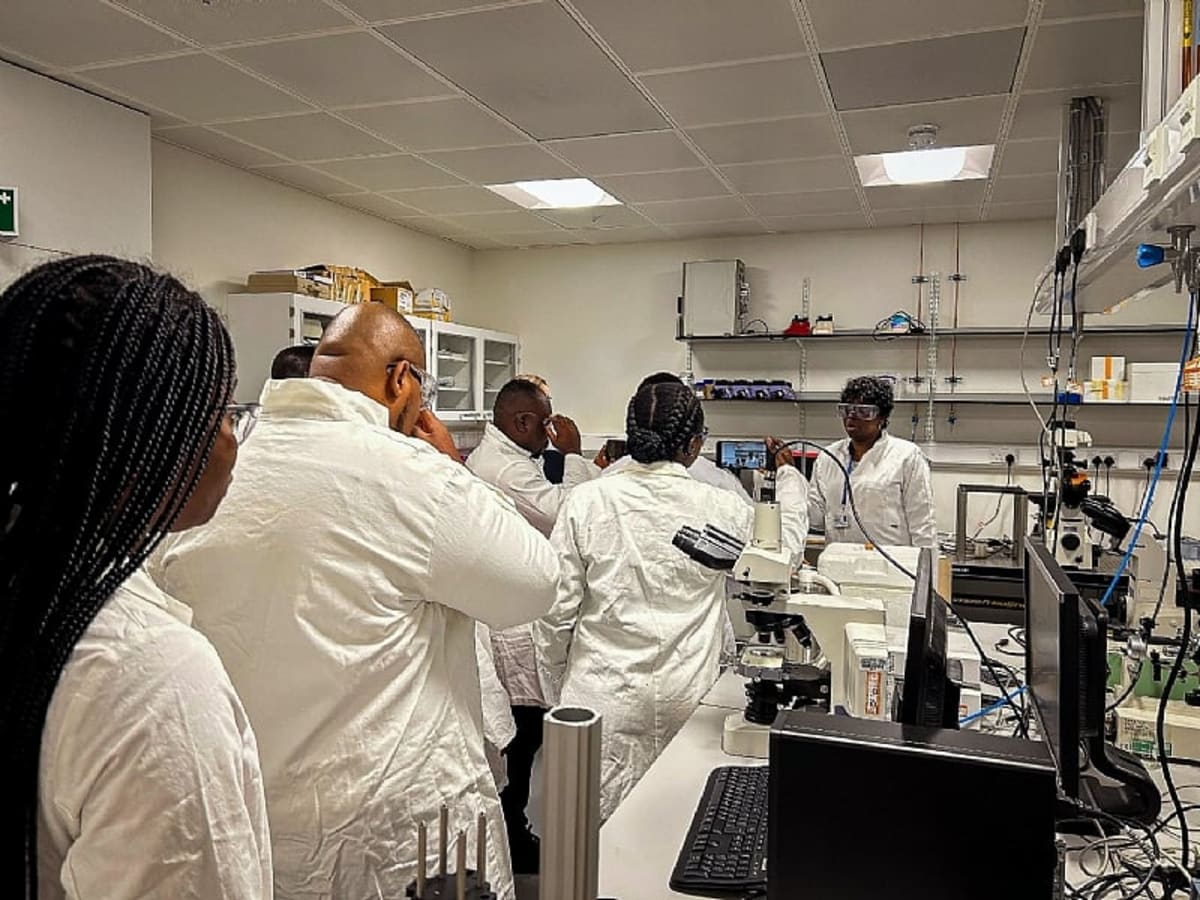
"With this chip, I can run many experiments at the same time, instead of doing one experiment manually and repeating it for weeks," Dr. Adi-Dako explains from her research station at Imperial College London. What once took ten scientists several months now happens in days.
Inside the chip's micro-pathways, she recreates the human intestine to test how well potential drugs move through body membranes. If a medicine can't cross these barriers properly, it won't work as treatment. Each well on the chip runs its own test, generating over a thousand data points in hours.
The real breakthrough comes when artificial intelligence analyzes those results. The AI detects patterns and anomalies invisible to human researchers, revealing which drug compounds show promise and which won't work before expensive animal testing begins.
Dr. Adi-Dako trained herself to handle droplets measured in nanoliters with steady precision, ensuring they don't fuse or break the delicate artificial membranes. Since arriving in London in September 2025 as a Schmidt Global Faculty Fellow, she's worked with programmers at the I-X Center for AI in Science to sharpen her modeling skills.
The Ripple Effect
The technology isn't staying in London. Dr. Adi-Dako is building a system to take back to her lab in Accra, where the same advanced experiments will run with continued international collaboration.
For Ghanaian researchers, this means testing natural compounds found locally without shipping samples abroad or waiting months for results. "It's cost-effective, accurate, and it brings speed," she says. The chip will help identify promising treatments earlier, before research teams invest in lengthy and expensive development stages.
Pharmacies across Ghana still face the familiar scene of patients arriving with prescriptions for medicines that aren't in stock. But the path those medicines travel from laboratory discovery to pharmacy shelf is getting shorter, thanks to a transparent chip that fits in the palm of one determined scientist's hand.
More Images

Based on reporting by Google News - Ghana Development
This story was written by BrightWire based on verified news reports.
Spread the positivity!
Share this good news with someone who needs it