Ghana's Central Bank Chief: We're Designing the Future
After recovering from 54% inflation, Ghana's central bank governor just told global financiers that emerging markets aren't following the West's playbook anymore—they're writing their own. It's a quiet power shift that could reshape how developing nations see themselves.
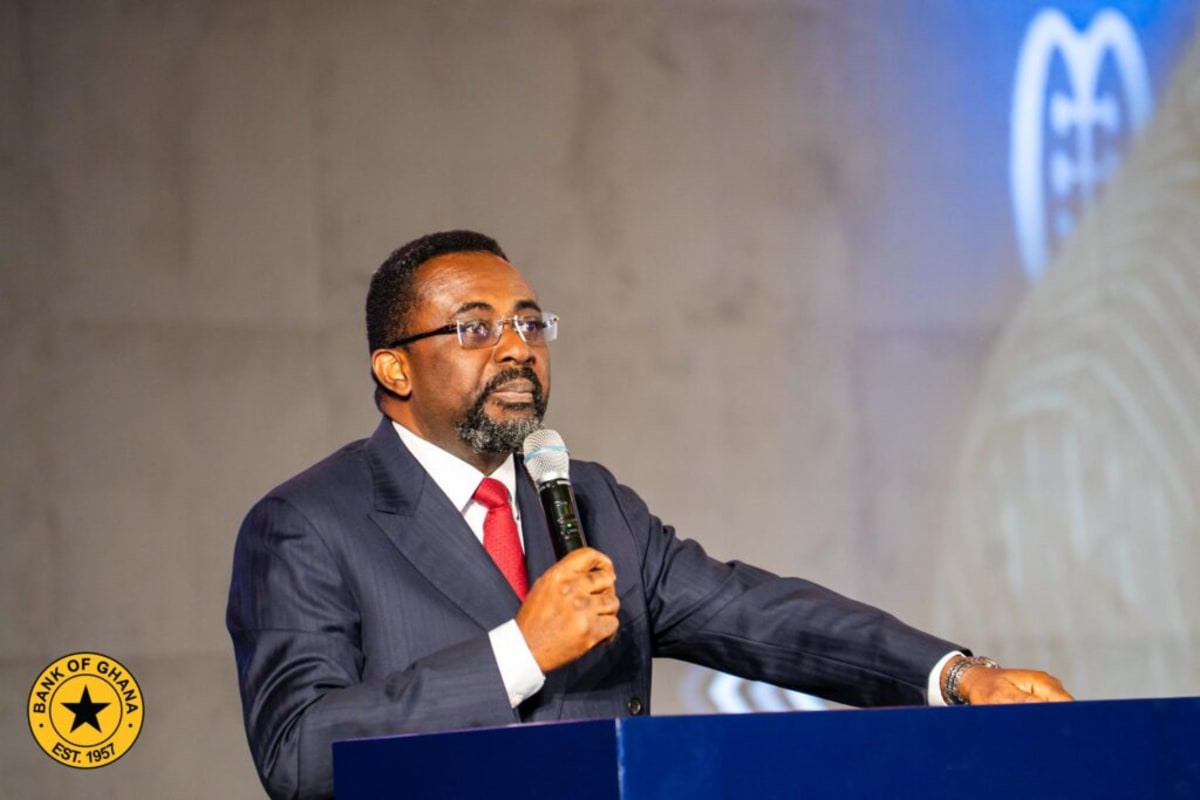
When Ghana's central bank governor walked onto the stage at a major financial conference in Accra this week, he didn't ask for permission or offer apologies. He offered a blueprint.
Dr. Johnson Asiama's message to the world's financial elite was simple but radical: emerging economies aren't waiting for wealthy nations to design their future anymore. They're building it themselves.
The timing makes his confidence all the more striking. Just four years ago, Ghana was in economic freefall. Inflation hit 54% in December 2022, and the country had to restructure its debt as citizens watched their savings evaporate.
But by April 2026, the picture had transformed completely. Inflation dropped to 3.4%, reserves climbed above $13.9 billion, and interest rates fell 1,400 basis points since early 2025.
Asiama barely mentioned those numbers. Instead, he used them as a launching pad for something bigger.
"Stability is not only good for financial market development," he told the ACI Financial Markets Association World Congress. "It is the infrastructure on which financial market development becomes possible."
That simple reframe carries weight. Stability isn't the finish line anymore—it's the starting block for innovation.
Ghana is already running with that idea. The country's digital currency, the e-Cedi, has cleared pilot testing and is moving toward cross-border applications. A new law regulating virtual assets passed in 2025 and is now being rolled out.
Asiama made a counterintuitive argument about regulation that challenges Silicon Valley's "move fast and break things" ethos. "Markets that lack credible regulatory architecture do not innovate faster," he said. "They fragment, they fail, and they erode the trust on which the next wave of innovation depends."
The governor is pushing for something even more ambitious: a connected African financial market. Ghana is working with regional partners on shared fintech licenses and harmonized payment systems that would let digital money flow across borders as easily as it does within them.
The Ripple Effect
What happened in Accra matters far beyond Ghana's borders. Hundreds of millions of people across Africa and other developing regions are getting their first bank account through their phone, not a branch. They're using mobile money for everything from school fees to medical bills.
The systems being built in places like Ghana aren't copied from London or New York. They're designed from scratch for people who never had formal banking in the first place, and they're working.
Other emerging economies are watching, adapting, and building on Ghana's frameworks. The student is becoming the teacher.
What stood out most in Asiama's speech was what he didn't say. He didn't ask the international audience for anything or position Ghana as needing their approval. The posture was different: collaborator, not supplicant.
Ghana stopped waiting for permission to shape its own financial future.
Based on reporting by Myjoyonline Ghana
This story was written by BrightWire based on verified news reports.
Spread the positivity!
Share this good news with someone who needs it