Giant Greenland Iceberg Survives Island Collision
A 76-square-kilometer iceberg broke from Greenland's Petermann Glacier in August, survived a dramatic collision with Joe Island, and is now floating through Arctic waters intact. Scientists are tracking the massive ice island as it carries freshwater nutrients to ocean ecosystems far from where it first broke free.
When a giant iceberg the size of St. Thomas slammed into a rocky island off Greenland's coast, scientists expected it to shatter into pieces. Instead, the 76-square-kilometer ice island survived the collision and continued its journey through Arctic waters, impressive proof of nature's strength and unpredictability.
The massive iceberg broke away from Petermann Glacier on Greenland's northwest coast in August 2026. It marked the largest calving event from any Arctic glacier since 2020, catching the attention of researchers worldwide who monitor these dramatic ice breakups.
Adam Garbo, a doctoral student in glaciology at the University of Ottawa, first spotted the break using satellite imagery on August 4. He and his team had been watching a different crack in the glacier, expecting an even bigger break. "What surprised us was that the calving instead followed a different fracture, producing a smaller ice island than we had originally anticipated," Garbo said.
The iceberg moved down Petermann Fjord at about 3 kilometers per day during its first week of freedom. It headed straight toward Joe Island, a small rocky outcrop that sits near the fjord's entrance like a gatekeeper to the open strait.
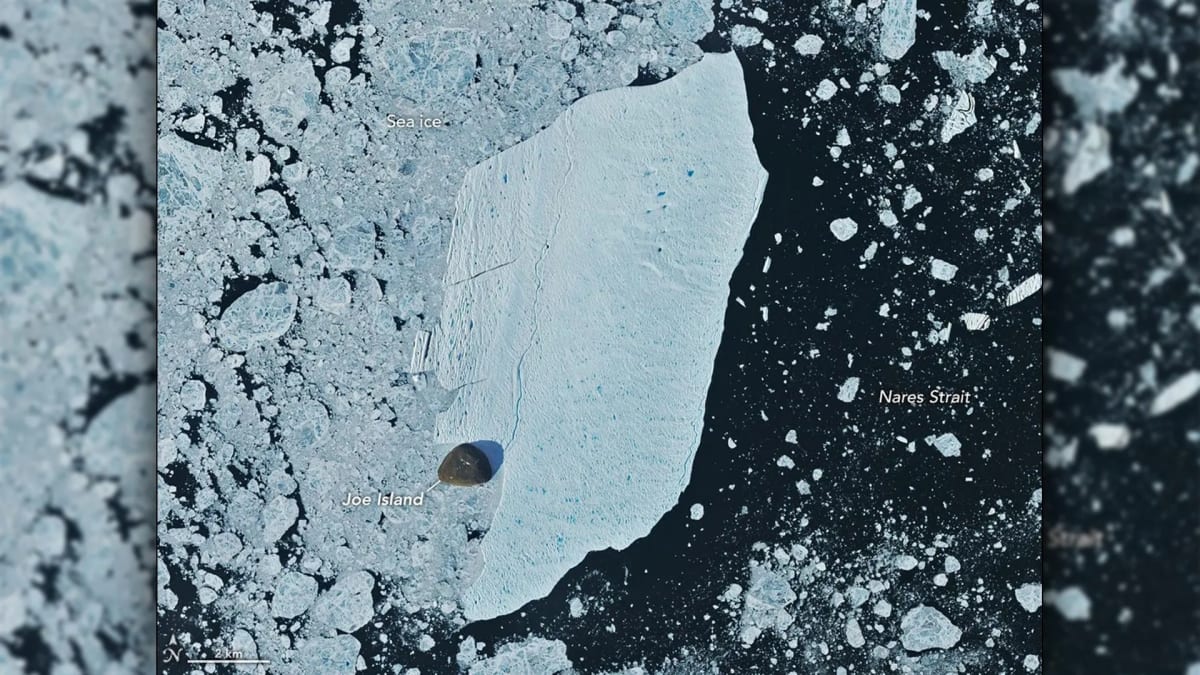
NASA's Landsat 9 satellite captured the dramatic moment on August 23 and 24 when the iceberg met Joe Island. Similar collisions have split other icebergs in two, particularly those from Petermann Glacier, which tend to be thinner and more fragile than icebergs from other Greenland glaciers or the massive bergs that break from Antarctica.
Despite being less than 150 meters thick, this ice island held together. "We were certainly watching closely as it interacted with Joe Island and were impressed that it survived the interaction without further fragmentation," Garbo said.
After pivoting away from the island, the iceberg continued southwest through Nares Strait. Winds, tides, and ocean currents now guide its path through Arctic waters, where it will gradually weaken and eventually break into smaller pieces.
The Bright Side
While iceberg calving is a normal part of glacier life cycles, these ice islands serve an important purpose beyond their dramatic presence. As they slowly melt during their journey, they release freshwater into surrounding waters, carrying nutrients and influencing ocean conditions far from their starting point.
Some Petermann icebergs travel remarkable distances before running aground near Coburg and Baffin islands. Along the way, they become floating ecosystems, affecting marine life and ocean chemistry across vast stretches of Arctic waters.
Scientists continue tracking two large rifts still visible in Petermann Glacier that could release new ice islands measuring 94 and 84 square kilometers, though no one knows exactly when those breaks will happen.
This resilient iceberg reminds us that nature still holds surprises, even under close scientific observation.
Based on reporting by Science Daily
This story was written by BrightWire based on verified news reports.
Spread the positivity!
Share this good news with someone who needs it