Giant Iceberg Sparks Massive Life Bloom in Atlantic Ocean
A 40-year-old Antarctic iceberg is creating an unexpected gift as it melts: a huge burst of microscopic ocean life that helps fight climate change. NASA satellites captured the stunning transformation happening right now in the South Atlantic.
A colossal iceberg the size of a small country is giving the ocean a final gift as it breaks apart.
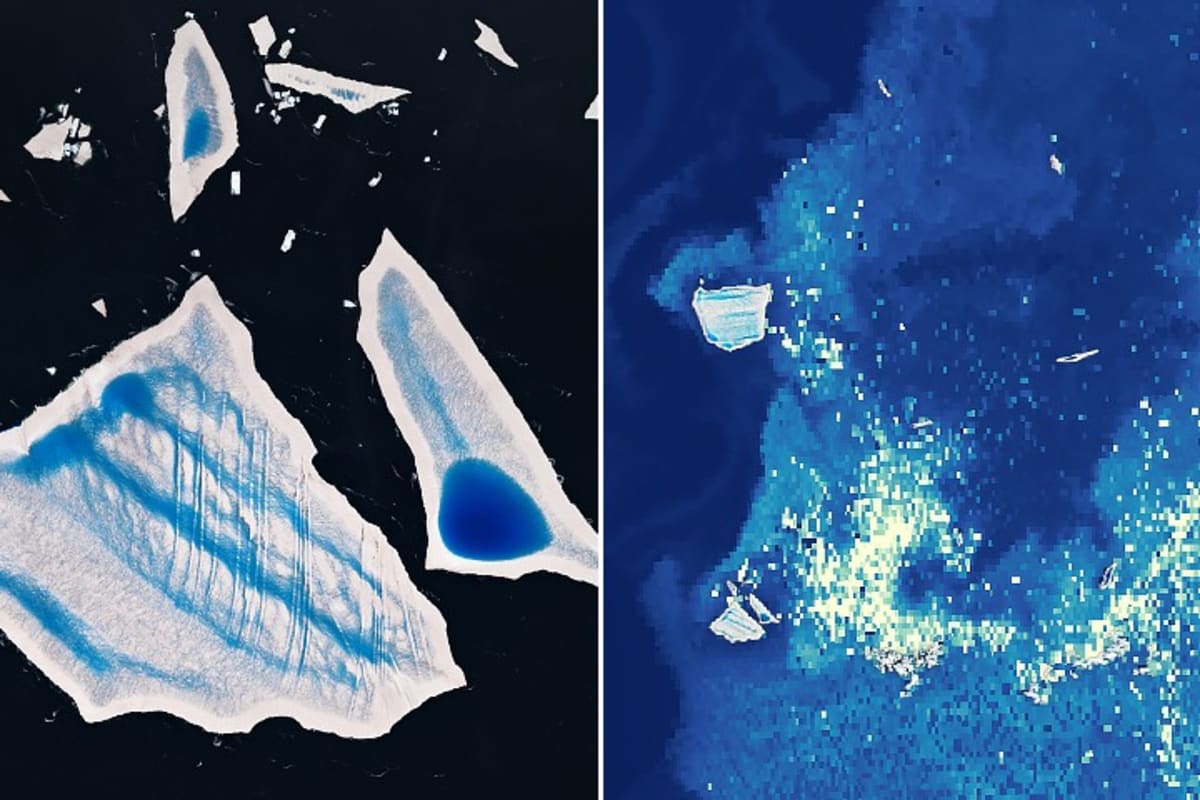
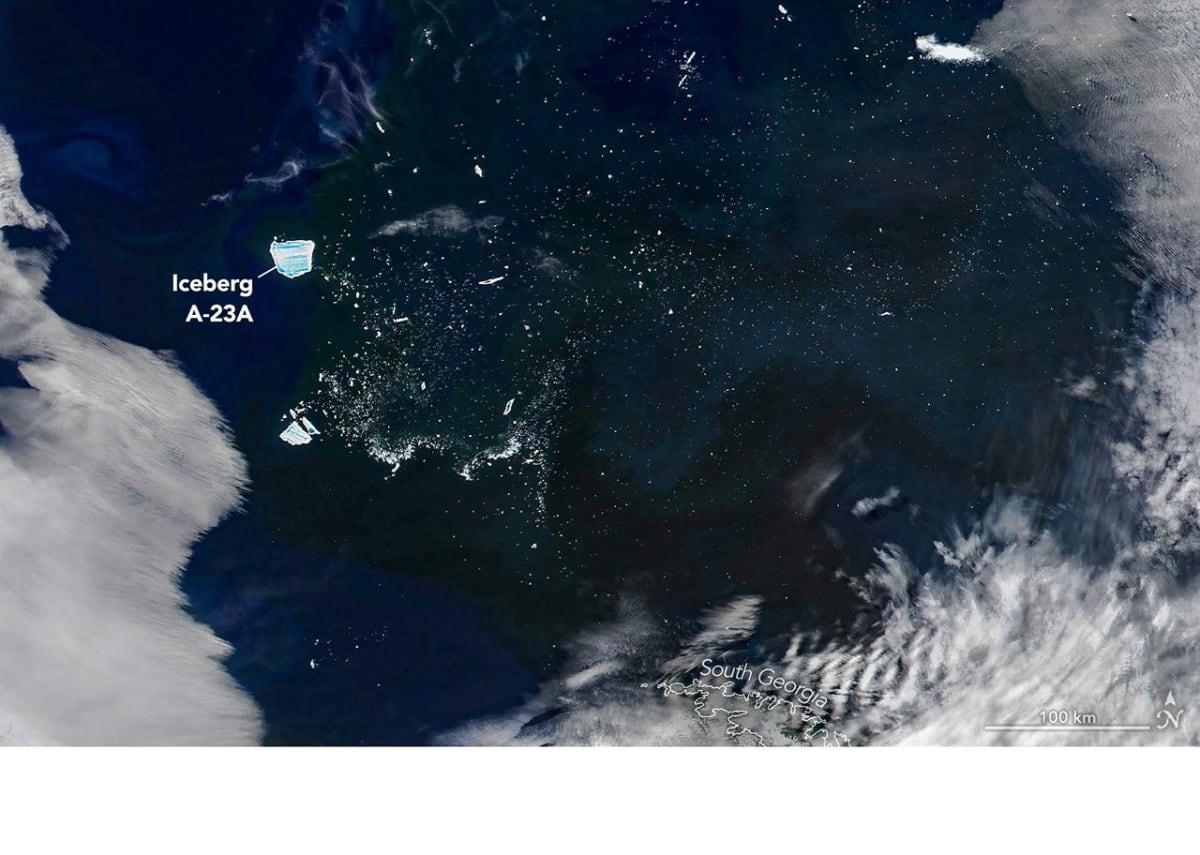
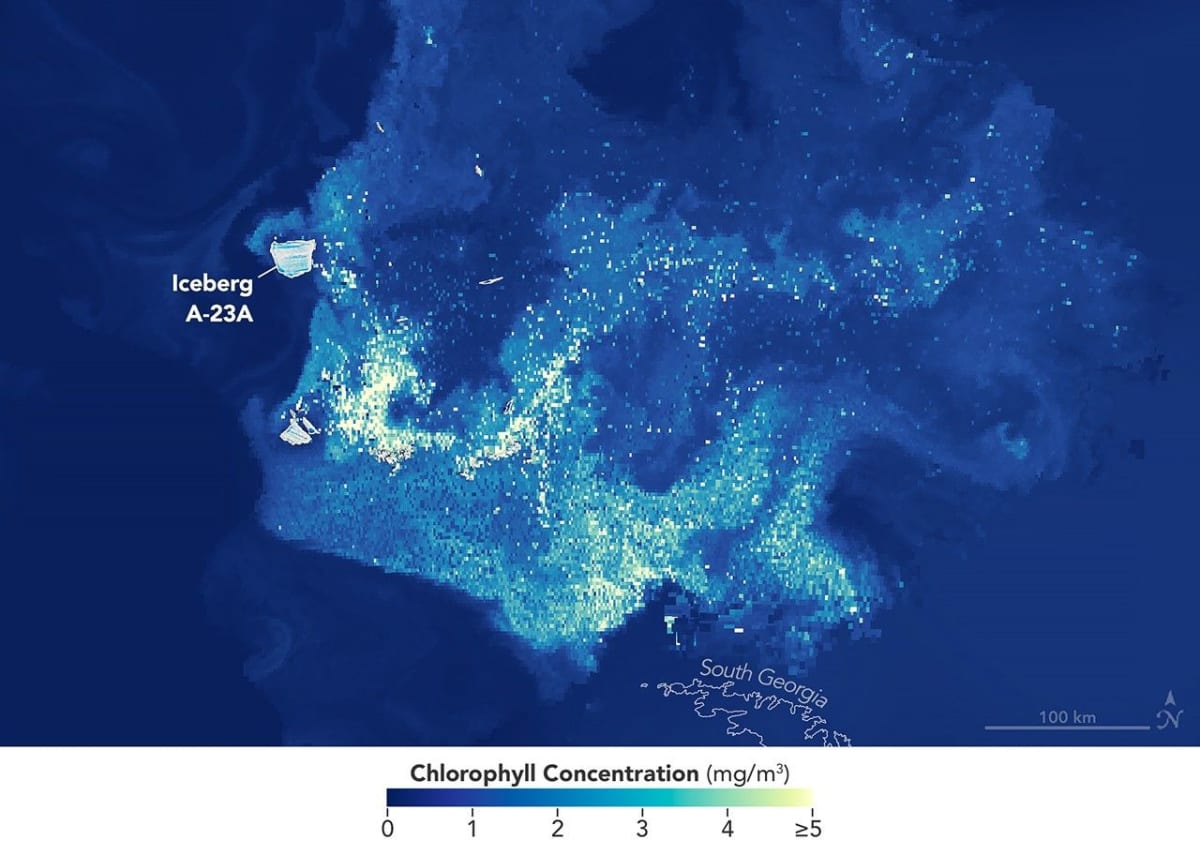
Iceberg A-23A, nicknamed the "megaberg," has spent over 40 years drifting through Antarctic waters. Now, as it melts in warmer waters of the South Atlantic, NASA satellites are watching something remarkable unfold. The crumbling ice is fueling an explosion of phytoplankton, the tiny organisms that form the foundation of ocean life.
These microscopic plants do more than feed fish. They produce up to half of Earth's oxygen and pull carbon dioxide from the atmosphere, storing it deep in the ocean. It's like having billions of tiny air purifiers scattered across the sea.
"This bloom is too big and too clearly spreading from the icebergs not to be strongly linked to them," said Grant Bigg, an oceanographer at the University of Sheffield who has studied these Antarctic giants for years.
The iceberg's journey has been anything but ordinary. After breaking off from Antarctica decades ago, it spent years stuck in one spot, then spun in an ocean whirlpool for months, and nearly crashed into an island in 2025. When it finally fractured on January 9, 2026, it left behind a debris field of ice chunks stretching for miles.
NASA's satellites spotted brilliant green plumes swirling around the ice fragments. The color comes from chlorophyll, revealing where phytoplankton are thriving. The secret ingredient? Iron-rich meltwater pouring from the ancient ice, along with manganese and nutrients like nitrates that accumulated over hundreds of years.
Heidi Dierssen, an oceanographer at the University of Connecticut, explained that the melting ice creates perfect growing conditions. The fresh meltwater forms a stable surface layer where phytoplankton can soak up sunlight without getting mixed too deep by ocean turbulence.
Researchers noticed something interesting: the bloom appears most concentrated near the smaller ice fragments. These chunks melt faster, releasing their nutrient treasure at a higher rate. Brown stains visible on some fragments suggest they're packed with soil and sediment scraped from Antarctic bedrock centuries ago.
NASA's newest ocean-watching satellite, PACE, identified specific types of phytoplankton thriving in the icy waters. Tiny organisms called picoeukaryotes, which respond quickly to temperature and nutrient changes, were flourishing alongside colonies of cyanobacteria.
The Ripple Effect
This isn't just one iceberg's story. Research suggests that icebergs in this region may account for up to one-fifth of the Southern Ocean's total carbon capture. Waters trailing large icebergs show 33% more phytoplankton than surrounding areas.
As climate change accelerates ice melt, these frozen giants might be offering an unexpected counter-punch. Each iceberg carries nutrients locked away for centuries, fertilizing the ocean as it returns to water.
Scientists are still watching A-23A's remnants to see how long the bloom will last. As of early March 2026, the megaberg continues shrinking, still feeding life in the waters around it.
Even in its final act, this ancient ice is nurturing the ocean that will outlast it.
More Images

Based on reporting by NASA
This story was written by BrightWire based on verified news reports.
Spread the positivity!
Share this good news with someone who needs it