
Giant Pandas Arrive at National Zoo from China in 1970
Fifty-four years ago, two giant pandas touched down in Washington DC as a gift from China, becoming the first of their species ever displayed in an American zoo. Their arrival sparked decades of conservation breakthroughs and continues to delight millions of visitors today.
When crates containing Ling-Ling and Hsing-Hsing arrived at the National Zoo in Washington DC on April 16, 1970, they carried more than just adorable black and white bears. They brought a symbol of friendship between two nations and launched one of the most successful conservation partnerships in zoo history.
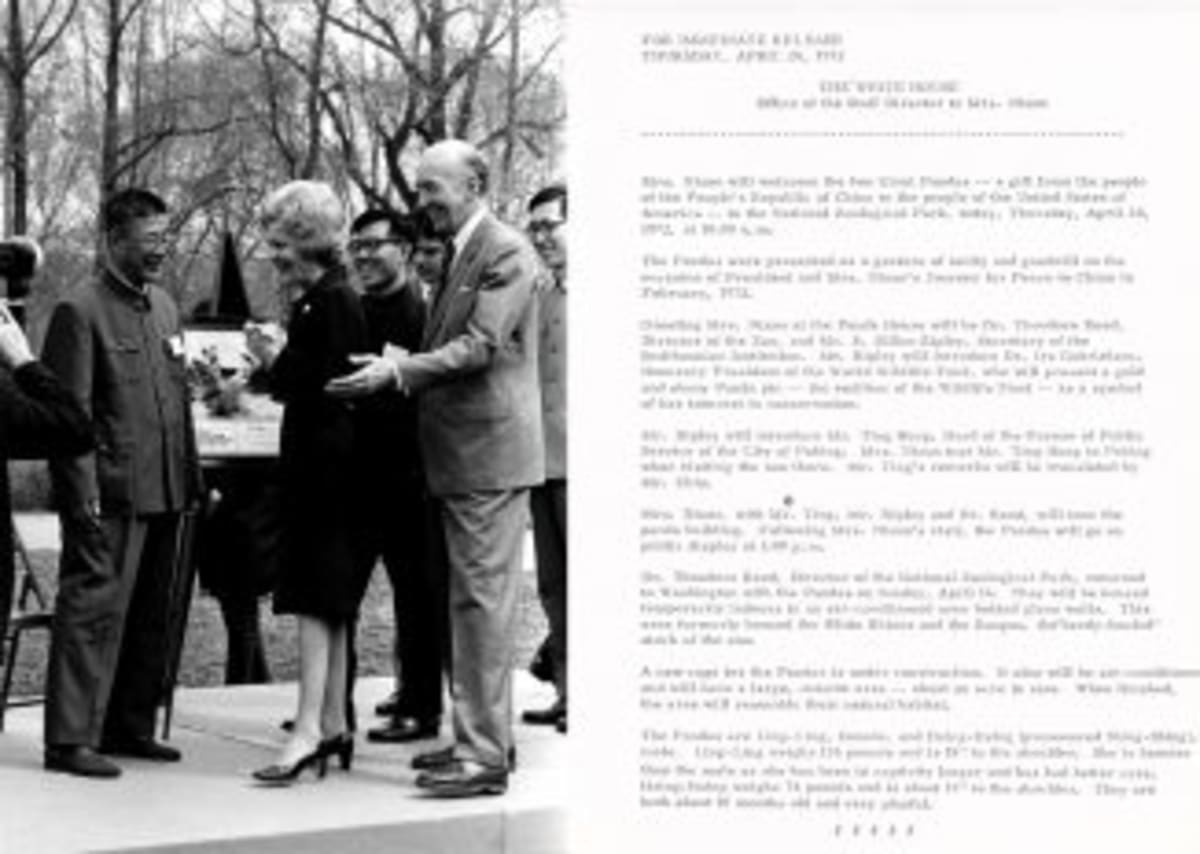
The story began at a dinner in Beijing in February 1972, when First Lady Patricia Nixon casually mentioned her love of giant pandas to Chinese Premier Zhou Enlai. His response was immediate and generous: "I will give you some."
Within weeks, the pair of giant pandas were on their way to America. Ling-Ling, the female, and Hsing-Hsing, the male, became instant celebrities the moment they stepped into their new home.
Television crews rushed to cover every development in their lives, from their first meals to their playful antics. Families packed the zoo to catch a glimpse of these rare creatures that seemed as emblematic of China as the Great Wall itself.
The gift was part of what became known as "panda diplomacy." Between 1957 and 1969, China gifted 69 pandas to 69 nations as gestures of friendship, including Korea, the UK, and the Soviet Union.
The Ripple Effect
For many countries, these giant pandas were the only ones ever seen by their citizens. The international spread of pandas created an unprecedented collaboration among zoos worldwide, all working to understand these finicky creatures and help them thrive in captivity.
The Smithsonian Zoo launched decades of joint research efforts with Chinese scientists. This cooperation led to major breakthroughs in understanding panda reproduction, diet, and habitat needs, information that proved crucial for protecting wild populations back in China.
Today, giant pandas have rebounded from the brink of extinction, moving from "endangered" to "vulnerable" status. That success stems directly from the scientific knowledge gained through programs like the one that began with Ling-Ling and Hsing-Hsing.
The pandas educated millions of American children about wildlife conservation and sparked careers in zoology and environmental science. Their legacy lives on in every panda born in captivity and every wild panda roaming China's bamboo forests today.
More Images


Based on reporting by Good News Network
This story was written by BrightWire based on verified news reports.
Spread the positivity!
Share this good news with someone who needs it