Giant Spiral Galaxy Found in Young Universe Stuns Scientists
The James Webb Space Telescope discovered a massive spiral galaxy nicknamed the Big Wheel that existed just two billion years after the Big Bang, challenging everything scientists thought they knew about how galaxies form. Five times more massive than our Milky Way, this cosmic giant shouldn't exist according to current models.
Scientists just found a galaxy that rewrites the rulebook on how the universe grew up.
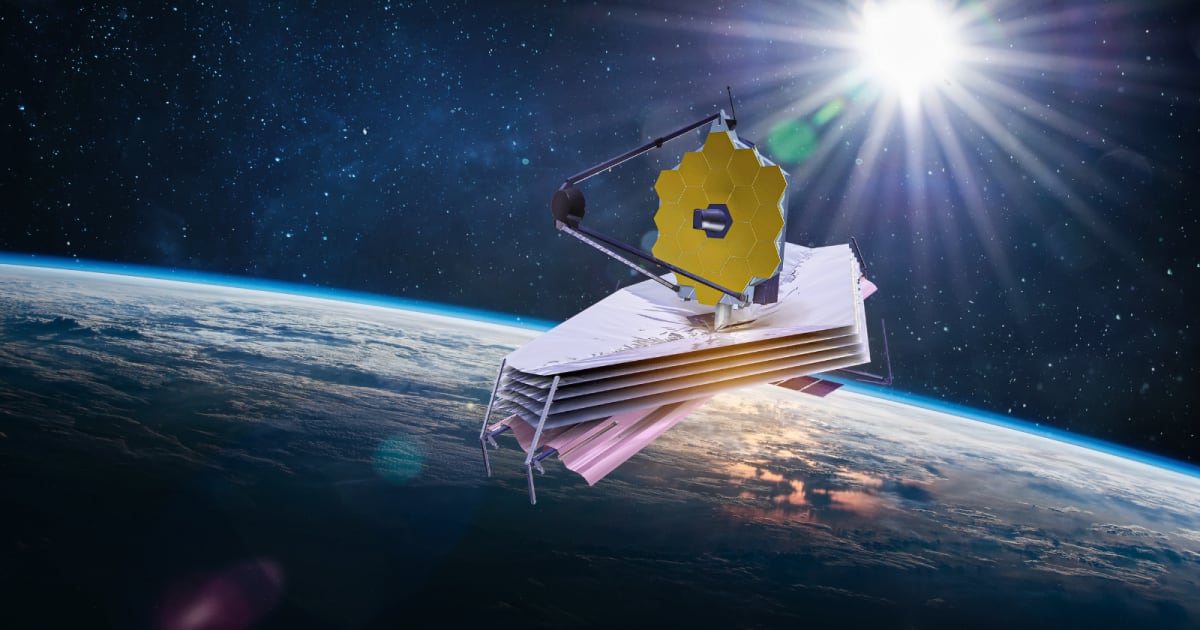
The James Webb Space Telescope spotted a colossal spiral galaxy from when the universe was only two billion years old, roughly 15 percent of its current age. Nicknamed the Big Wheel, this cosmic behemoth is five times more massive than our entire Milky Way and sports beautiful spiral arms that, according to current theory, should have been impossible at that early stage.
The discovery, published in Nature Astronomy by researcher Weichen Wang and colleagues, reveals a galaxy spinning elegantly in space at a time when most galaxies were expected to be small, clumpy, and chaotic. Instead, the Big Wheel stretches across 30 kiloparsecs in diameter with organized spiral structures clearly visible in Webb's infrared vision.
The real puzzle isn't just that the Big Wheel exists. It's that this galaxy appears fully mature, with a mass of hundreds of billions of suns packed into a well-ordered rotating disk. Early galaxies were supposed to be messy because gas was flowing in rapidly, star formation was explosive, and frequent collisions would scramble any organized structure.
The team used multiple telescopes to confirm their finding wasn't a fluke. JWST's near-infrared cameras revealed the galaxy's true shape, while spectroscopy measured how it rotates. Hubble saw only clumps of young stars on the edges, but Webb's infrared view pierced through to see the older stellar population that traces the galaxy's backbone.
What makes this discovery especially convincing is that the Big Wheel behaves like modern spiral galaxies. Its rotation speed matches what scientists would expect for a disk galaxy of its mass, following the same relationship seen in galaxies today. This isn't some weird cosmic accident. It's a fully functioning giant spiral galaxy that somehow assembled itself billions of years earlier than models predicted.
Why This Inspires
The Big Wheel shows us that the universe has always been more creative and dynamic than our best theories suggest. Every time we build a better telescope, we discover that nature found ways to accomplish the seemingly impossible.
This isn't about proving scientists wrong. It's about the universe being far more interesting and complex than we imagined. The discovery pushes researchers to figure out what special conditions allowed this galactic giant to form and stay organized when everything around it was chaos.
The James Webb Space Telescope continues revealing that the early universe was far more sophisticated than anyone expected, turning cosmic history into an ongoing adventure of discovery that reminds us how much we still have to learn about our cosmic home.
More Images




Based on reporting by Google: James Webb telescope
This story was written by BrightWire based on verified news reports.
Spread the positivity!
Share this good news with someone who needs it