%2Fhttps%3A%2F%2Ftf-cmsv2-smithsonianmag-media.s3.amazonaws.com%2Ffiler_public%2Fae%2Fd1%2Faed1da34-cf3a-49be-8324-4d06f215c356%2Fningaloo_coast_and_lake_macleod_western_australia_modis_2021-10-01.jpg)
Giant Squid Found Off Australia Using DNA in Seawater
Scientists discovered a rare giant squid and 225 other species in deep ocean canyons off Western Australia without seeing a single creature. They simply collected water samples and analyzed the DNA left behind by marine animals.
Imagine finding a school bus-sized squid without ever laying eyes on it. That's exactly what scientists accomplished in the deep canyons off Western Australia's Ningaloo coast, using nothing but water samples and some genetic detective work.
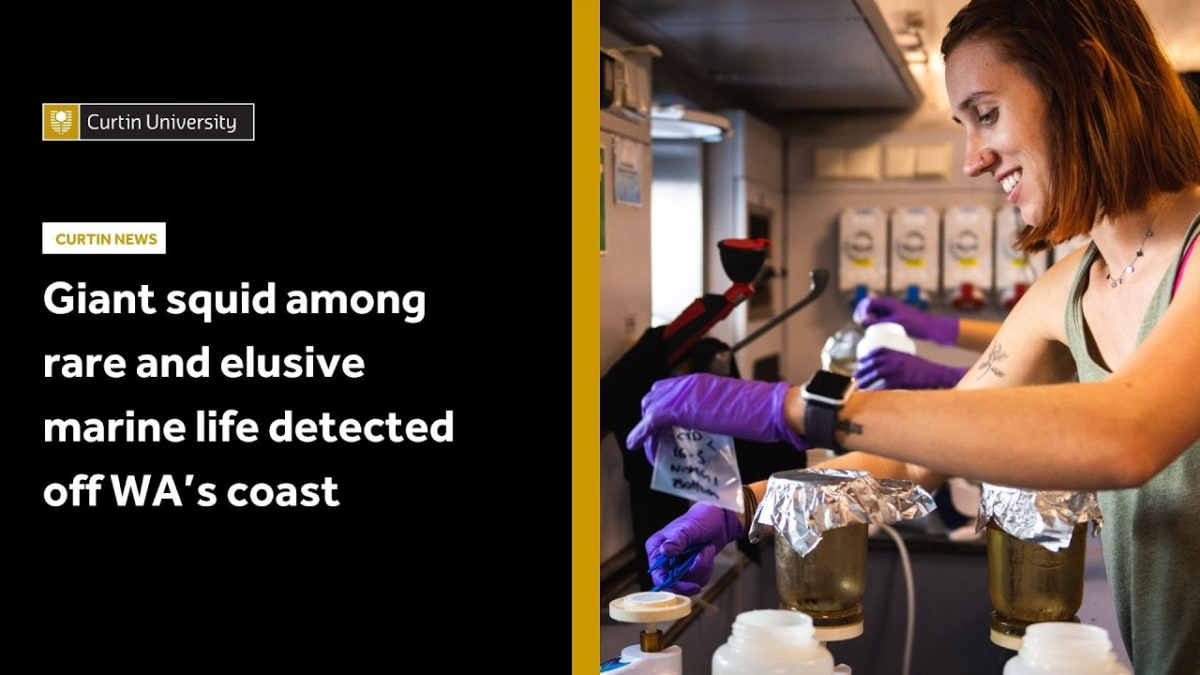
During a 2020 expedition aboard the research vessel Falkor, marine scientists collected nearly 200 water samples from depths reaching 2.8 miles below the surface. Instead of relying on cameras or nets, they extracted environmental DNA (eDNA) from the water, tiny genetic fragments left behind when animals shed skin, mucus, and other tissue.
The technique revealed an ocean treasure trove. By matching DNA fragments to genetic databases, the team identified 226 species across 11 major animal groups, including some never before recorded in Western Australian waters.
The star discovery was a giant squid, one of the ocean's most mysterious creatures. These massive animals can reach 43 feet long and weigh up to 600 pounds, yet this marks only the third time scientists have detected one in Western Australian waters. The last confirmed sighting was over 25 years ago.
But the giant squid was just the beginning. The researchers also found evidence of faceless cusk eels, sleeper sharks, pygmy sperm whales, and Cuvier's beaked whales. Each depth zone hosted its own unique community of life, and the two canyons surveyed showed distinct biodiversity signatures.
Why This Inspires
This DNA detective work represents a quiet revolution in ocean science. A single water sample can reveal hundreds of species, including fragile, rare, and fast-moving animals that slip past traditional monitoring methods. The technique works because DNA degrades quickly in seawater, within hours to days, meaning detected species were recently present.
Lead researcher Georgia Nester, a molecular ecologist at the University of Western Australia, points out that many species didn't match existing records. That doesn't automatically mean they're new to science, but it strongly suggests vast deep-sea biodiversity remains undiscovered.
Scientists are now pushing eDNA research even further, testing whether they can vacuum genetic material from air to study land animals. Some researchers have successfully trialed the approach in zoos, imagining a future where we can monitor wildlife without disturbing their habitats.
The better we understand these hidden ocean communities, the better we can protect them. This baseline knowledge of Cape Range and Cloates canyon biodiversity will guide future conservation efforts, helping safeguard ecosystems most people will never see but upon which healthy oceans depend.
The deep ocean is revealing its secrets one water sample at a time.
More Images
%2Fhttps%3A%2F%2Ftf-cmsv2-smithsonianmag-media.s3.amazonaws.com%2Ffiler_public%2Fae%2Fd1%2Faed1da34-cf3a-49be-8324-4d06f215c356%2Fningaloo_coast_and_lake_macleod_western_australia_modis_2021-10-01.jpg)
%3Afocal(942x727%3A943x728)%2Fhttps%3A%2F%2Ftf-cmsv2-smithsonianmag-media.s3.amazonaws.com%2Ffiler_public%2Fae%2Fd1%2Faed1da34-cf3a-49be-8324-4d06f215c356%2Fningaloo_coast_and_lake_macleod_western_australia_modis_2021-10-01.jpg)
%2Fhttps%3A%2F%2Ftf-cmsv2-smithsonianmag-media.s3.amazonaws.com%2Ffiler_public%2F40%2Fbe%2F40be6fa0-5711-43fa-8d2c-305e05734ddb%2Fedn370261-fig-0004-m.jpg)
Based on reporting by Google News - Scientists Discover
This story was written by BrightWire based on verified news reports.
Spread the positivity!
Share this good news with someone who needs it