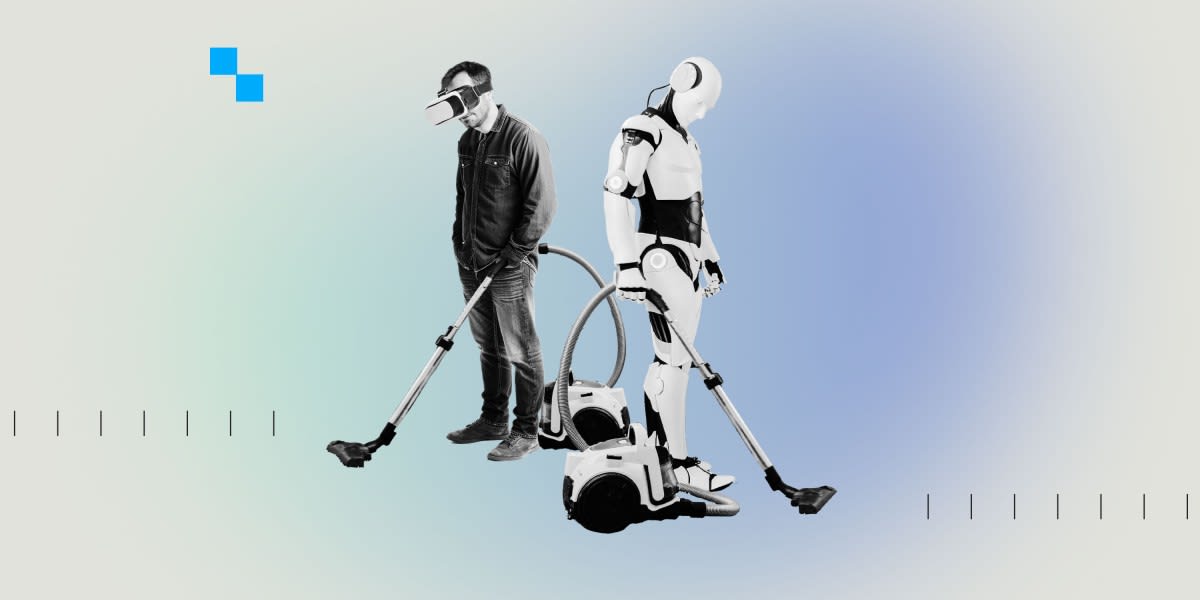
Gig Workers in 50 Countries Train Tomorrow's Robots
Thousands of workers from Nigeria to India are earning good wages filming themselves doing household chores to teach humanoid robots how to move like humans. This new gig economy is creating opportunities in developing nations while advancing robotics technology.
When Zeus returns from his medical school shifts in Nigeria, he straps an iPhone to his forehead and films himself folding laundry and ironing clothes. He's part of a global workforce training the next generation of humanoid robots.
California-based company Micro1 has hired thousands of contract workers across more than 50 countries to record themselves doing everyday tasks. They mount iPhones on their heads and capture videos of washing dishes, cooking meals, and organizing their homes.
The videos feed a revolution in robotics training. Just as ChatGPT learned language from vast amounts of text, robotics companies like Tesla and Figure AI believe humanoid robots can learn to interact with the physical world by studying massive amounts of human movement data.
Zeus earns $15 per hour, strong income in Nigeria's challenging economy. Workers in India, Argentina, and dozens of other nations are finding similar opportunities as robotics companies spend over $100 million annually buying real-world training data.
The work fills a crucial gap that computer simulations can't solve. Virtual programs can teach robots acrobatics, but they struggle to model the physics of grasping objects or folding fabric with perfect accuracy. Real humans doing real chores provide the detailed movement data robots need to work in factories and homes.
An AI agent named Zara interviews applicants and reviews their sample videos. Each week, workers submit new footage following guidelines about hand visibility and natural movement speed. Both AI systems and human reviewers check the videos before annotation teams label every action.
The Ripple Effect
This emerging gig economy is creating unexpected opportunities in regions with high youth unemployment. Tech-savvy young people are earning competitive wages while contributing to cutting-edge robotics development from their own homes.
The model is spreading rapidly. Companies like Scale AI and Encord are building their own recording networks, while DoorDash pays delivery drivers to film chores. In China, state-owned training centers employ workers wearing VR headsets and exoskeletons to teach robots specialized tasks.
Investors see the potential, pouring over $6 billion into humanoid robotics in 2025 alone. As demand grows, so do opportunities for workers worldwide to participate in building technology that could reshape how robots assist humanity.
Zeus finds ironing repetitive but stays motivated knowing his work trains future medical robots. Workers across continents are discovering that their everyday movements hold the key to teaching machines how to help us in everyday life.
Based on reporting by MIT Technology Review
This story was written by BrightWire based on verified news reports.
Spread the positivity!
Share this good news with someone who needs it