
Global Coalition Tackles Climate with Carbon Capture Push
Over 230 experts from dozens of countries gathered in Kazakhstan to accelerate carbon capture technology that could store millions of tons of CO2. China's Sinopec is leading the charge with groundbreaking projects already pulling carbon from the air.
Scientists and industry leaders just took a major step forward in the race to remove carbon dioxide from our atmosphere.
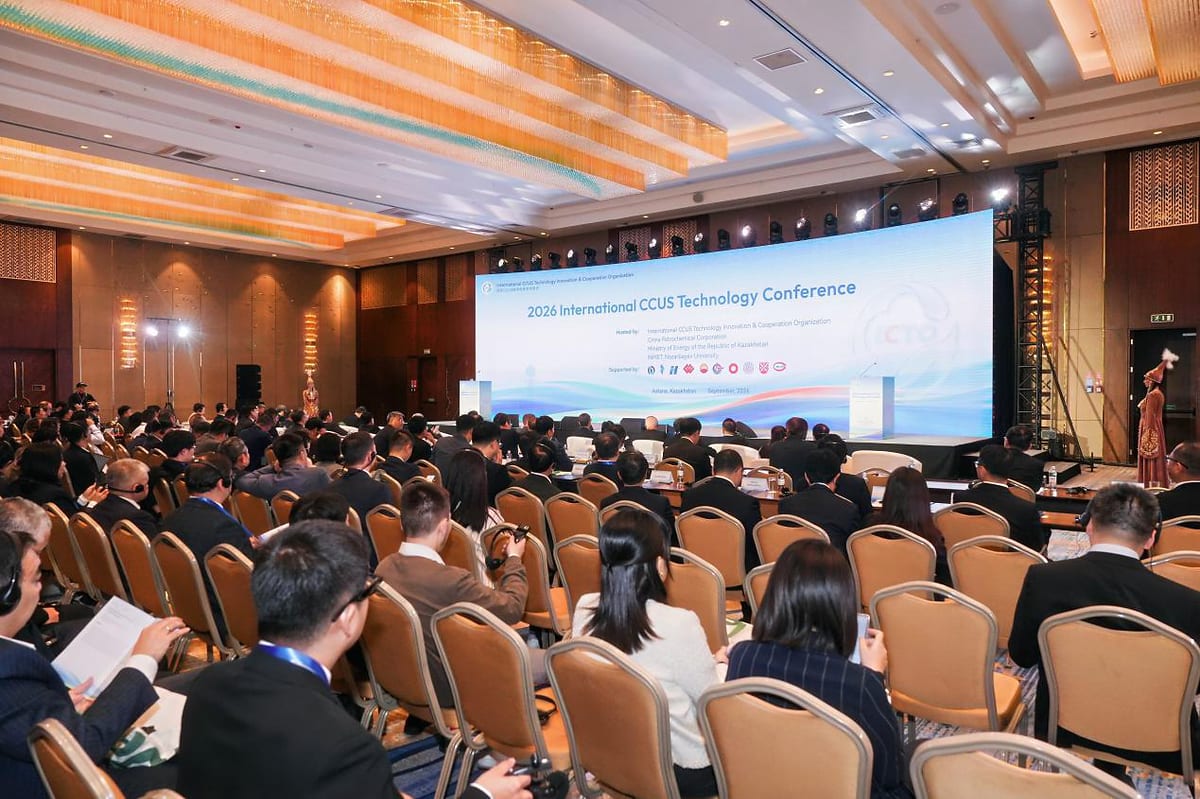
More than 230 experts from around the world met in Astana, Kazakhstan, this September to launch a new cooperation initiative focused on carbon capture, utilization, and storage technology. Representatives from China, Kazakhstan, the United Kingdom, the United States, and Canada came together to share knowledge and speed up deployment of systems that can trap CO2 before it enters the atmosphere.
The technology, known as CCUS, captures carbon dioxide from industrial sources and either stores it underground or converts it into useful materials. Think of it as a giant filter for emissions that would otherwise contribute to climate change.
China's Sinopec is already making this vision real. The energy company built China's first 100-kilometer pipeline designed to transport captured CO2 in its dense form. They've also launched the country's first major demonstration project that can handle one million metric tons of carbon annually.
Even more ambitious plans are underway. Sinopec is working with Shell, BASF, and China Baowu on a project designed to capture 10 million metric tons of CO2. They're also preparing another million-ton demonstration at Shengli Oilfield that will focus on capturing carbon from lower-concentration sources, which has been a technical challenge.
The new International CCUS Technology Innovation Cooperation Organization, established in July 2025, now includes 60 founding members from more than 20 countries. This global network connects researchers, engineers, and companies who are developing and testing different approaches to carbon capture.
The Ripple Effect
This collaboration matters because climate change requires solutions that cross borders. No single country can solve the carbon problem alone, but sharing technology and expertise accelerates progress for everyone.
The conference participants discussed more than just the science. They examined business models that could make carbon capture financially viable and explored policy frameworks that governments need to support wider use. They also talked about building CCUS hubs where multiple facilities could share infrastructure, reducing costs and complexity.
As Tian Hongbin, vice president of Sinopec Group, noted at the launch, global climate action has reached a critical phase where CCUS is becoming essential technology rather than experimental.
The cooperation initiative signals that countries once in competition are now choosing collaboration, pooling their knowledge to tackle one of humanity's biggest challenges together.
More Images



Based on reporting by Google: cooperation international
This story was written by BrightWire based on verified news reports.
Spread the positivity!
Share this good news with someone who needs it