Global Land-Use Emissions Drop 32% Since 2000s
Emissions from deforestation and land-use change have plummeted by nearly a third this century, offering a rare bright spot in the climate fight. While fossil fuel emissions continue climbing, forests are making a comeback worldwide.
For the first time in decades, humanity is winning a battle against climate change without even realizing it.
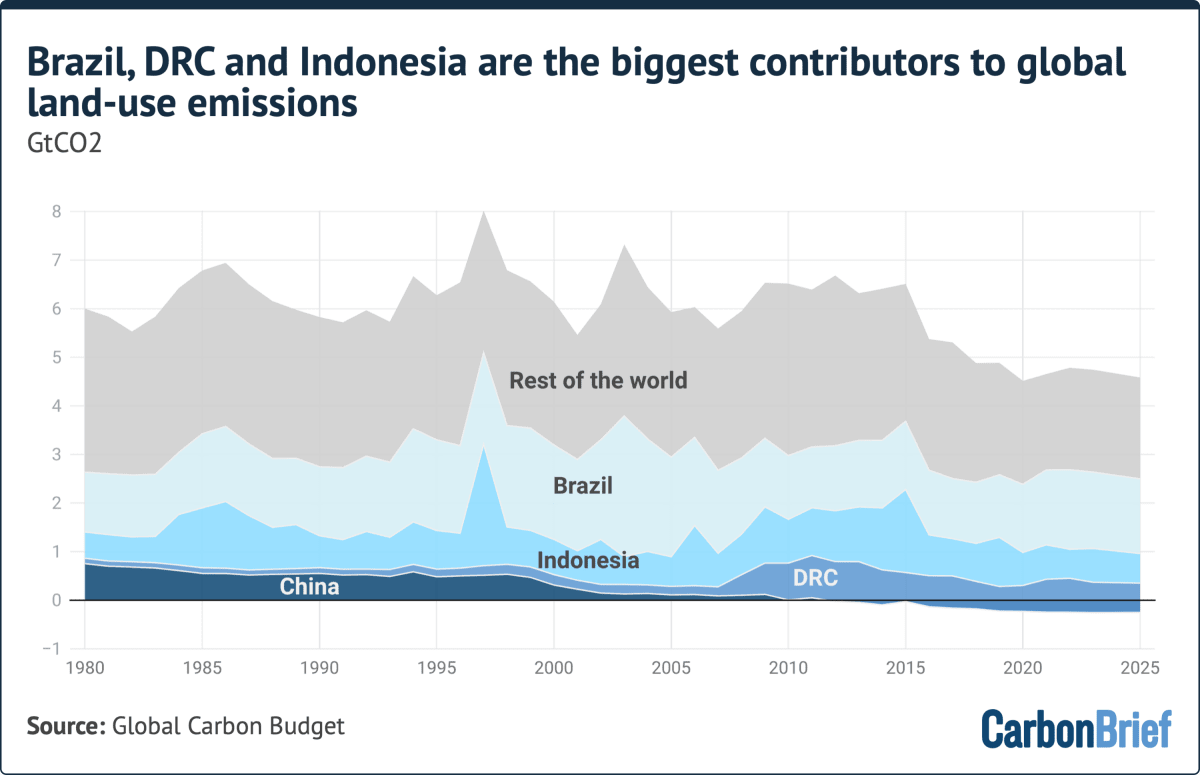
Emissions from deforestation, peatland loss, and forest degradation have fallen 32% since the early 2000s, according to the latest Global Carbon Budget report published in May. That's a genuine reversal of a trend that seemed unstoppable just 25 years ago.
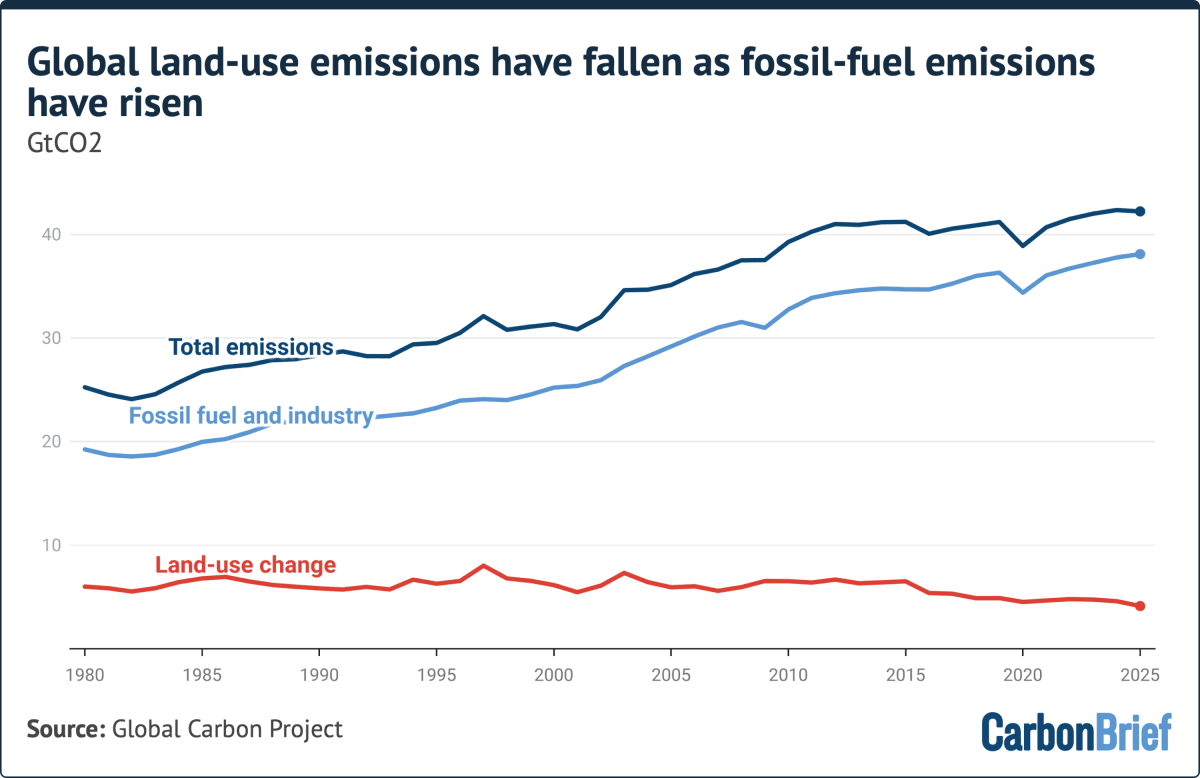
The numbers tell a remarkable story. Land-use emissions held steady at around 6.6 billion tonnes of CO2 annually through the 1990s. Today, they've dropped to just 4.1 billion tonnes in 2025.
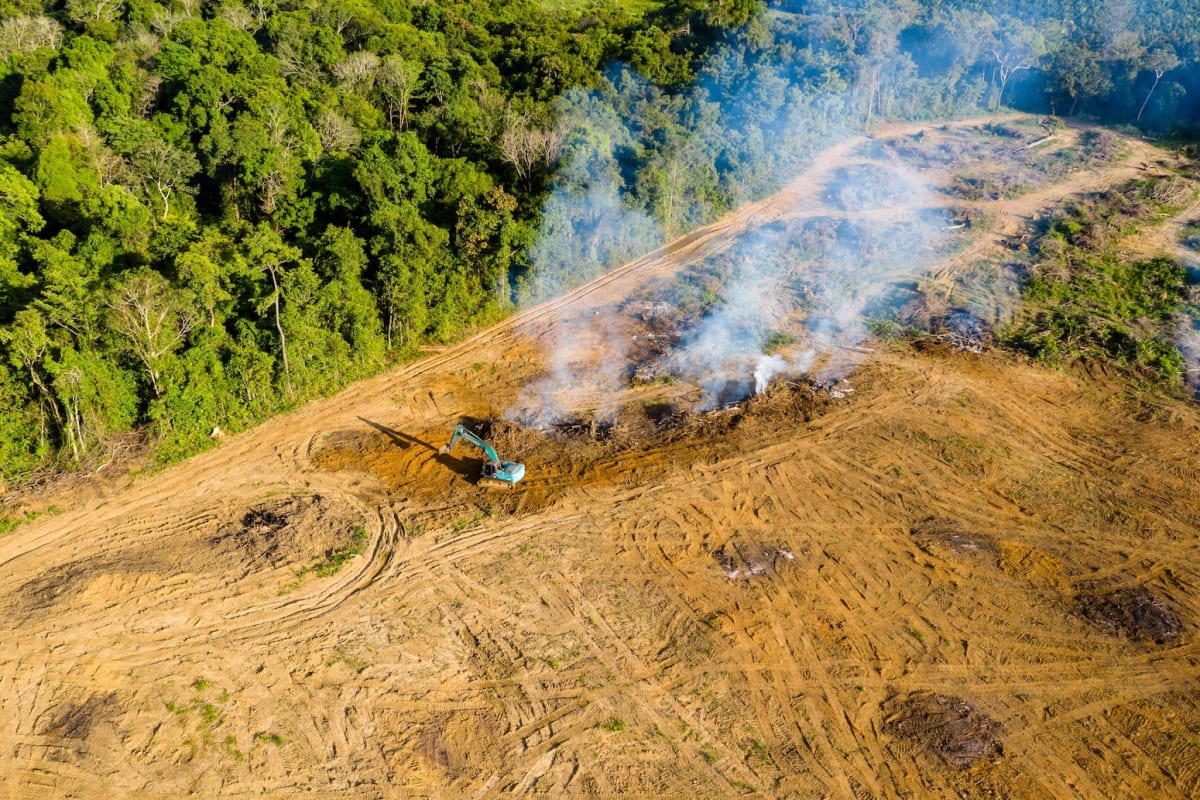
The shift happened quietly but decisively. Countries around the world slowed permanent deforestation, where forests are cleared forever for farms, mines, or cities. At the same time, forest regrowth accelerated through both natural recovery and active replanting efforts.
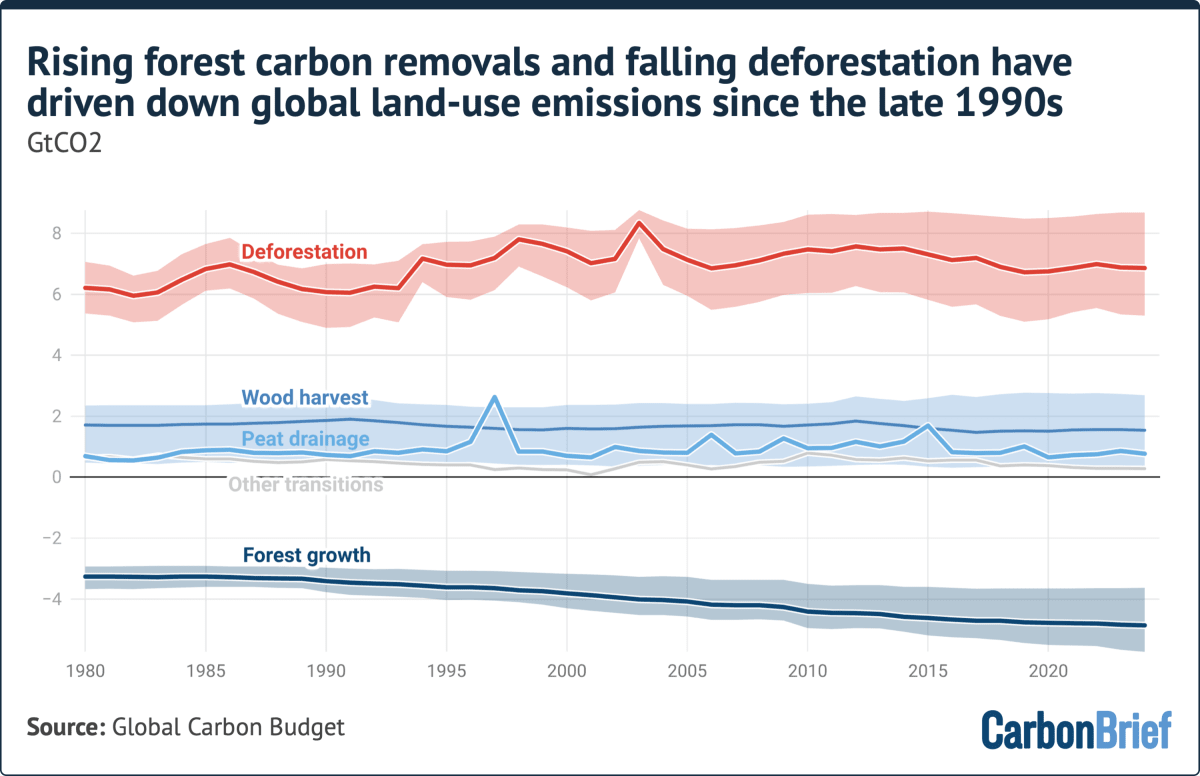
The timing matters too. The steepest decline came after 2015, driven by reduced deforestation across multiple countries and a peak in destructive peat fires that year. Since then, the trend line has pointed consistently downward.
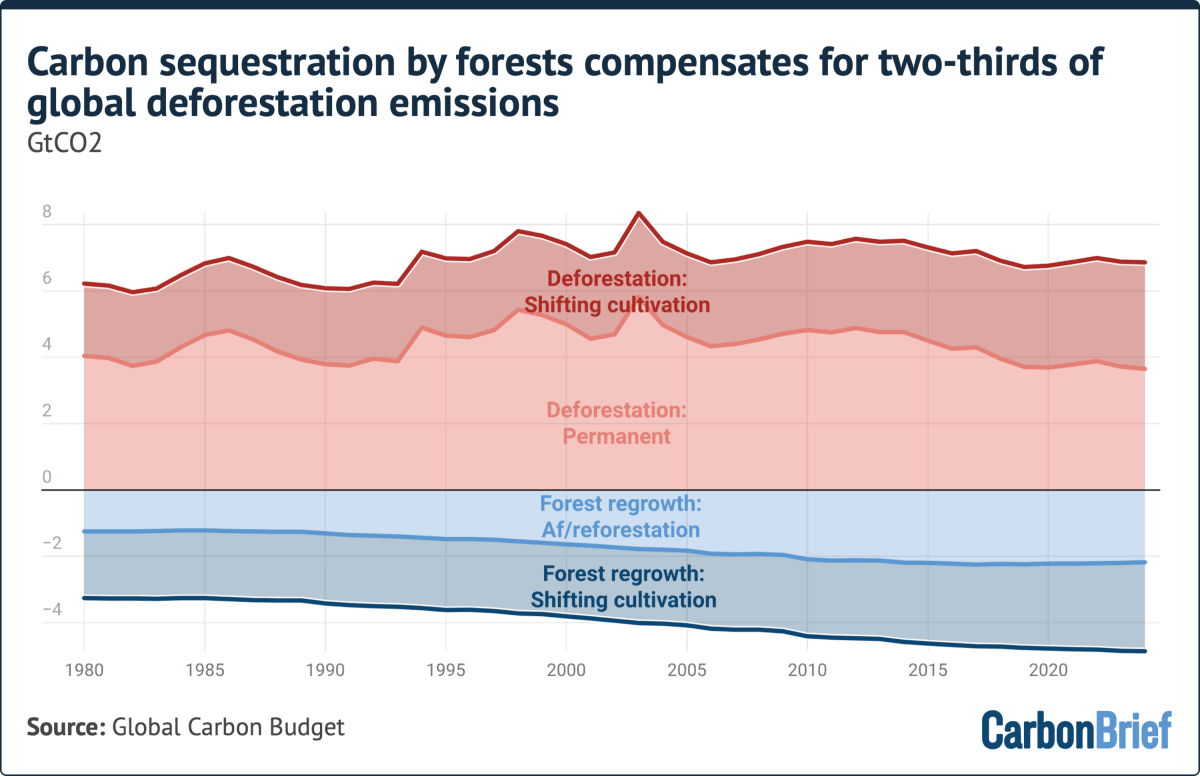
Here's the most encouraging part: forest regrowth now offsets two-thirds of remaining deforestation emissions. Between 2015 and 2024, trees absorbed nearly 5 billion tonnes of CO2 annually while deforestation released about 7 billion tonnes. Half of that carbon capture came from deliberate tree-planting and reforestation projects.
The contrast with fossil fuels couldn't be starker. While land-use emissions fell, fossil fuel and cement emissions climbed from 11 billion tonnes in the 1960s to 38.1 billion tonnes in 2025. Yet the progress on land use has still helped slow the overall rise in human-caused emissions.
Dozens of scientists contributed to the Global Carbon Budget report, which tracks these trends annually before formal peer review and publication. Their data shows that reducing permanent deforestation made the biggest difference, proving that protecting existing forests delivers results faster than planting new ones.
The Ripple Effect
This quiet victory demonstrates that environmental progress is possible even while other challenges persist. Countries that seemed locked into deforestation patterns found ways to change course. Communities that lost forests are watching them return.
The success with land-use emissions also proves that nature can bounce back remarkably fast when given the chance. Forests that took centuries to grow can begin recapturing carbon within years of protection or replanting.
Most importantly, this trend shows up in hard data, not just promises. The decrease has been statistically significant and consistent across multiple measurement methods. Real forests are expanding. Real carbon is being pulled from the atmosphere.
While fossil fuel emissions remain the larger challenge, the land-use turnaround offers both practical lessons and genuine hope. What worked for forests might work elsewhere: combining protection of what remains with active restoration of what was lost.
The world still has far to go, but for once, we're moving in the right direction on something big.
More Images
Based on reporting by Carbon Brief
This story was written by BrightWire based on verified news reports.
Spread the positivity!
Share this good news with someone who needs it