Goa Microbiologist Turns Coconuts Into Zero-Waste Business
A former corporate microbiologist left Bengaluru to transform his family's coconut farm into a completely circular business that employs local workers and wastes nothing. Four years of research created a process that turns every part of the coconut into valuable products while giving rural families steady incomes.
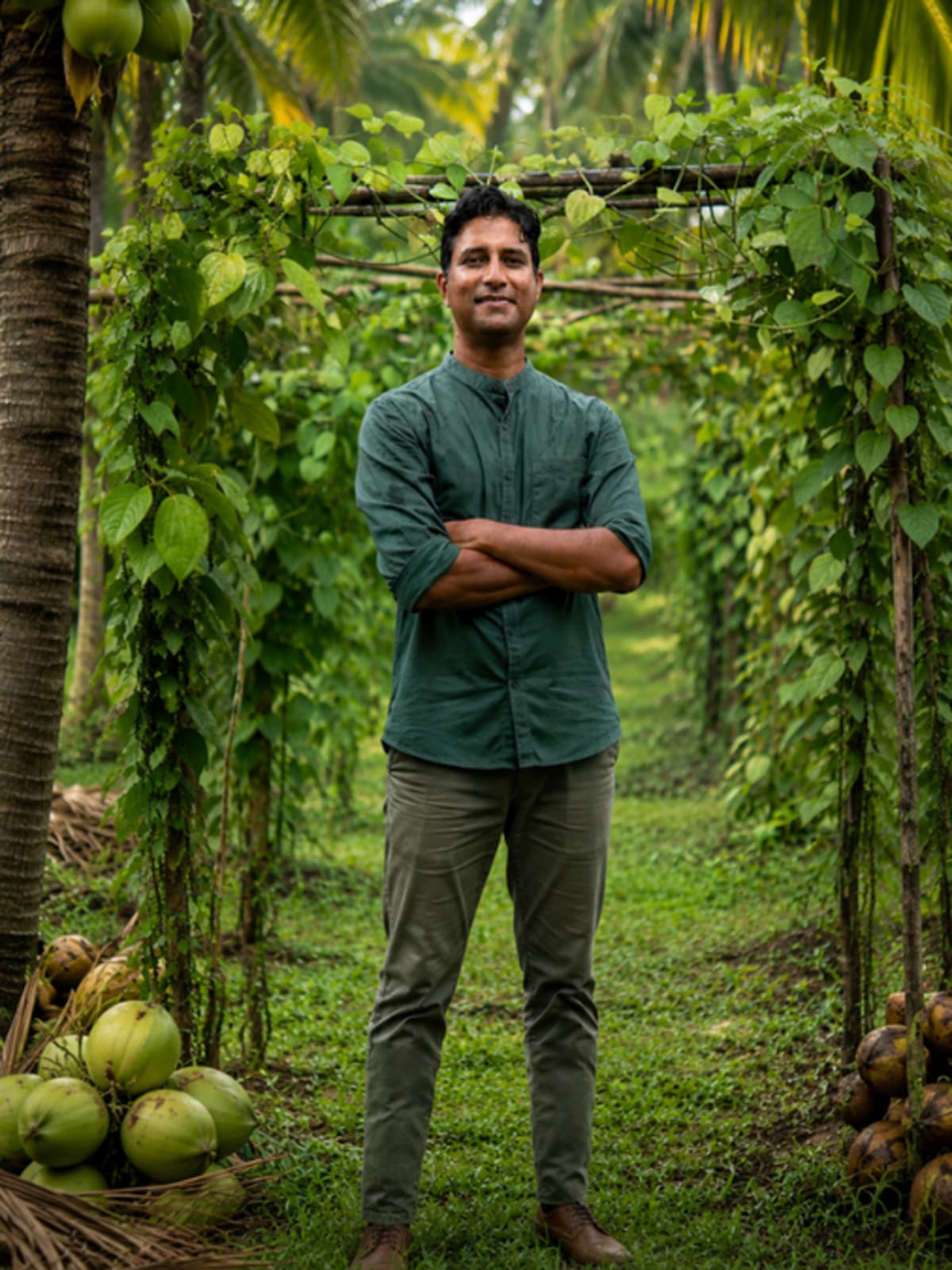
When Rohan Nazareth returned to his family's coconut farm in North Goa in 2021, he brought something unusual: a microbiologist's precision and a radical vision for zero waste.
The former corporate professional spent four years researching before selling a single product. His goal wasn't to build another fast-growing brand, but to prove that coconuts could create healthier lives, support farmers, and produce absolutely no waste.
His company Mulgao Verde uses a trademarked H.E.A.L. process that gently heats fresh coconut milk for six hours to create virgin coconut oil naturally rich in antioxidants and lauric acid. But the real innovation is what happens to everything else.
Husks become mulch for gardens. Shells transform into activated charcoal. Even production residue feeds vermicompost systems, creating a truly circular operation where nothing ends up in landfills.
The farm employs local workers full-time, many of them women, providing stable rural incomes in an area where seasonal work once dominated. For Vinay, a farm worker who previously struggled with irregular earnings, the careful six-hour oil-making process now means steady paychecks and dignity.
Rohan wants people to rethink coconut beyond hair care. Backed by scientific research, he's championing coconut as an everyday superfood that deserves a place in kitchens, not just bathrooms.
The Ripple Effect
The zero-waste philosophy extends beyond the farm gates. Mulgao Verde ships products in reused cartons and recycled paper, avoiding bubble wrap entirely to minimize packaging waste.
Visitors can spend two and a half hours walking coconut groves, watching the oil-making process unfold, and understanding every step from tree to bottle. This transparency builds trust that no marketing budget could buy.
Despite growing demand, the business remains completely bootstrapped and intentionally small-batch. Rohan measures success not by supermarket shelves, but by healthier products, thriving communities, and patient growth that respects natural rhythms.
His model proves that slowing down can actually move us forward, creating businesses that nourish people, land, and local economies simultaneously.
Based on reporting by The Better India
This story was written by BrightWire based on verified news reports.
Spread the positivity!
Share this good news with someone who needs it