Goa's Monsoon Markets Explode With Wild Mushrooms & Pickles
When the rains arrive in Goa, markets transform into treasure troves of foraged mushrooms, smoked sausages, and pantry staples prepared months in advance. From wild almi mushrooms that vanish within hours to rare tere vegetables harvested only during monsoon months, these seasonal markets reveal a side of Goa most tourists never see.
When monsoon clouds roll over Goa, the markets don't slow down. They explode with an entirely different kind of abundance.
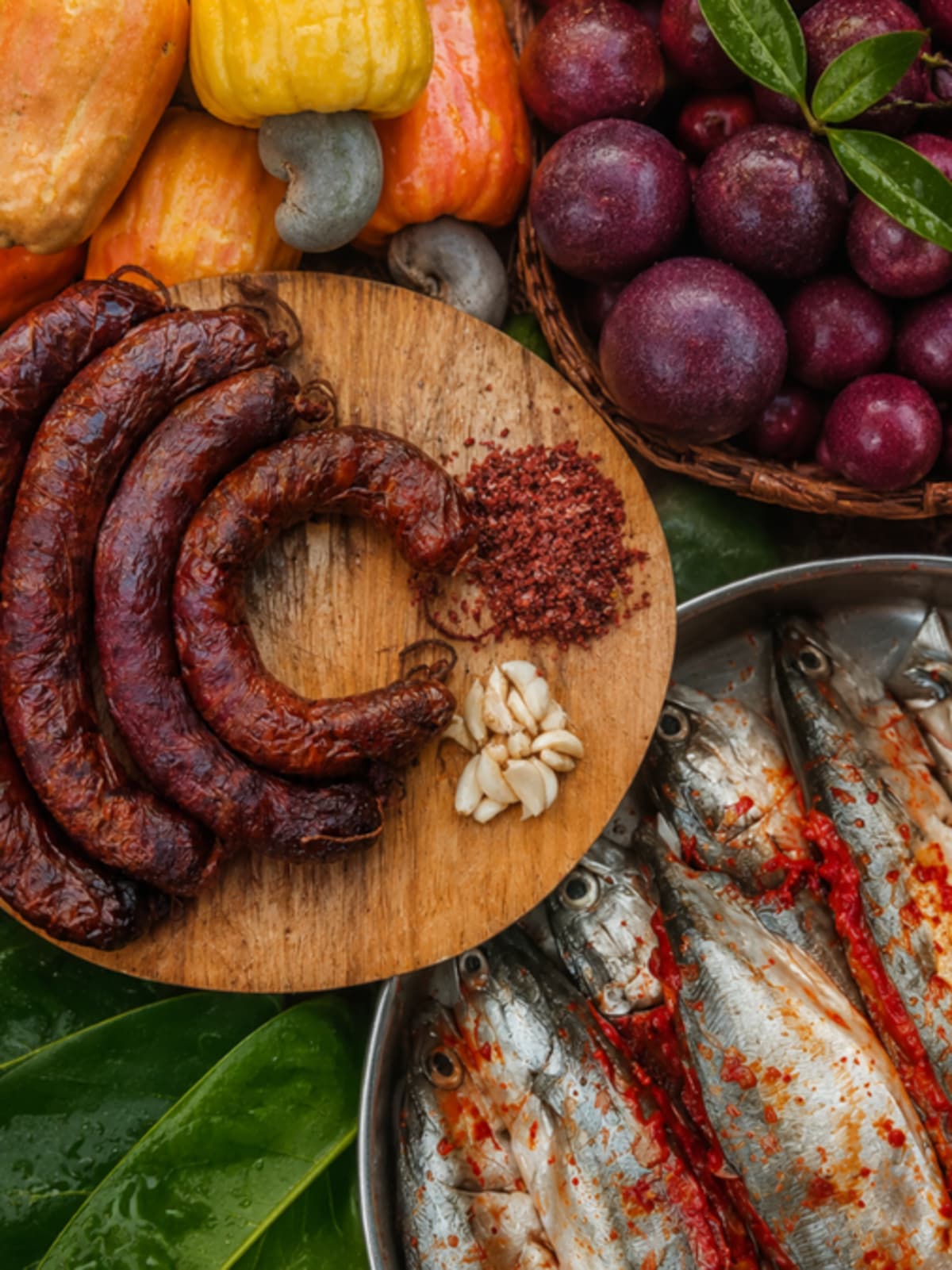
Fresh fishing stops during the annual monsoon ban, so coastal stalls fill with salted mackerel, dried prawns, and preserved Bombay duck. Families stock up on vinegar-cured pork sausages bought in bulk, knowing they'll become the heart of comfort meals for months ahead.
The real magic happens with what the forest provides. Wild almi mushrooms appear for only a few weeks each year, foraged from forest floors and often sold out within hours of arriving at market stalls.
Even rarer are tere vegetables, a prized seasonal variety of taro harvested exclusively during the monsoon. Village women arrive with overflowing baskets of tambdi bhaji, wild colocasia shoots, and foraged greens with names like phodshi and karmal leaves.
Fresh turmeric leaves signal the start of patoleo season, their fragrant aroma essential for wrapping Goa's famous steamed sweets stuffed with coconut and jaggery. Kulem leaves join them, traditionally used to wrap fish dishes before cooking.
Markets in Mapusa, Margao and Panaji become seasonal food hubs where kokum appears in three forms: dried rinds, concentrated syrup, and kokum butter. This signature Goan ingredient carries special GI recognition, flavoring kitchens throughout the rainy season.
Locals line up for freshly ground recheado masala made with Kashmiri chillies, pepper, cumin, cloves, cinnamon and vinegar, prepared in quantities meant to last months. Homemade mango pickles prepared with local mangoes and coconut oil stock traditional purumet markets.
Licensed outlets see residents stocking up on GI-tagged Goa Cashew Feni before long stretches of wet weather begin. Black palm jaggery and coconut jaggery become essential for rainy-day desserts, while Goa red rice dominates everyday meals.
The Ripple Effect
These markets preserve something deeper than food. They connect generations of culinary knowledge, from knowing which forest floors yield almi mushrooms to mastering the timing of bamboo shoot harvests from the Western Ghats.
The annual Purmentacho Bazaar at Ravindra Bhavan in Sankhali celebrates these pre-monsoon traditions, drawing locals who understand that summer's labor becomes monsoon's comfort. Rice papads, dried chillies, and homemade spice powders prepared months earlier finally come into their glory.
From mushrooms that last only weeks to pantry staples prepared half a year in advance, Goa's monsoon markets prove that abundance takes many forms.
Based on reporting by The Better India
This story was written by BrightWire based on verified news reports.
Spread the positivity!
Share this good news with someone who needs it