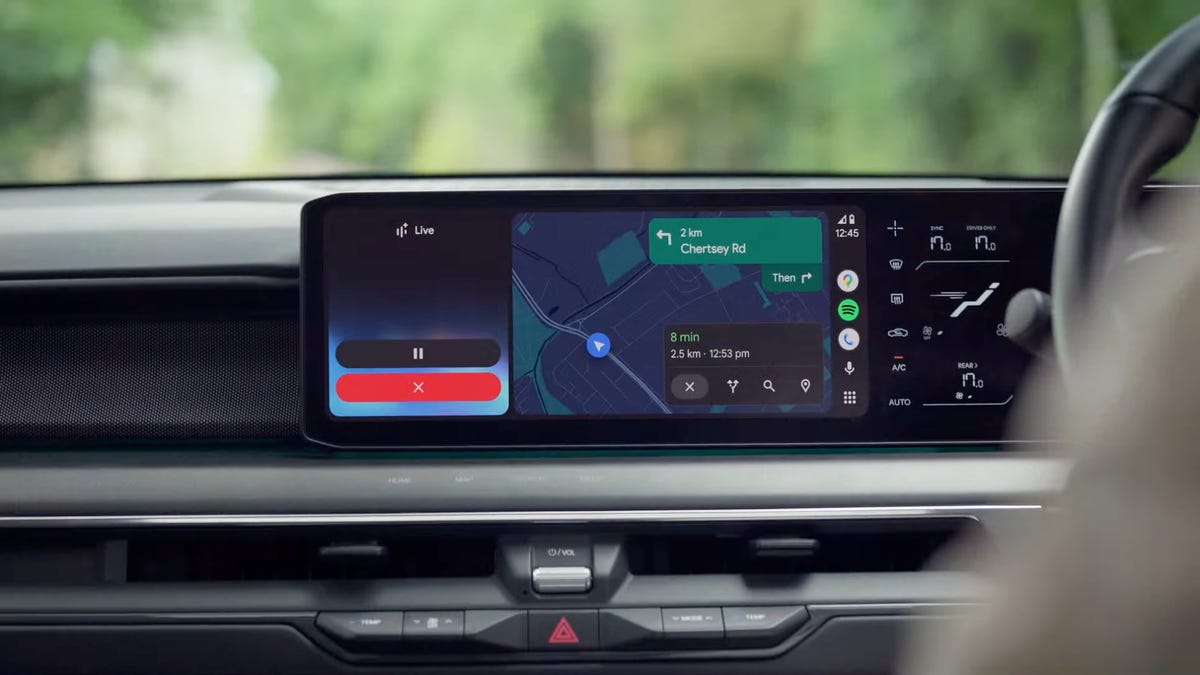
Google Maps Plans EV Road Trips With Charging Stops
Electric vehicle drivers can now let Google Maps automatically plan charging stops on long road trips, taking the stress out of range anxiety. The update works with over 350 EV models and uses AI to predict exactly when and where you'll need to plug in.
Planning a road trip in an electric vehicle just got a whole lot easier for Android Auto users.
Google Maps rolled out a new feature Monday that automatically suggests charging stops when you're planning a longer drive in your EV. The app uses artificial intelligence to estimate how much battery you'll use, where you should charge, and exactly what time you'll arrive at your destination.
The system works with EVs from 16 different automakers, covering more than 350 models across the US. That means whether you're driving a Tesla, a Chevy Bolt, or a Nissan Leaf, Google Maps has you covered.
Getting started is simple. Open Google Maps on your phone, go to settings, and change your vehicle type to "Electric." Then add your car's year, make, model, and plug type, and you're ready to roll.
When you plan your next road trip through Android Auto, Google Maps will show you everything you need to know. You'll see how much battery your trip will use, which charging stations to stop at, how long to charge, and what percentage you'll have left when you arrive.
The AI considers real factors that affect your range. It looks at your car's weight and battery size, current traffic conditions, hills and elevation changes, and even the weather. All of this adds up to predictions that actually match real driving conditions.
There's one small catch for most drivers. Unlike newer cars with Google built directly into their systems, phone-based Android Auto can't automatically read your current battery level. You'll need to manually enter your starting charge percentage before each trip.
The Bright Side
This update is especially meaningful for people who own older electric vehicles. Early EV owners remember the anxiety of planning road trips with multiple apps, constantly checking charging networks, and carefully calculating whether they'd make it to the next station. Those white-knuckle days are fading fast.
Even though phone-based systems can't auto-update if your range drops faster than expected due to heavy cargo or underinflated tires, having AI-powered guidance at the start of your journey is a major step forward. It levels the playing field, giving older EVs some of the same smart features that come standard in newer models.
The shift represents something bigger too. As tools like this become standard, electric vehicles move from feeling like a science project to just being a normal way to travel. That convenience opens the door for more people to consider making the switch to electric.
Road trips in an EV no longer require a degree in route planning, just a quick tap on Google Maps and you're good to go.
Based on reporting by Google News - Electric Vehicle
This story was written by BrightWire based on verified news reports.
Spread the positivity!
Share this good news with someone who needs it