Google Spinout Uses AI to Speed Better Battery Development
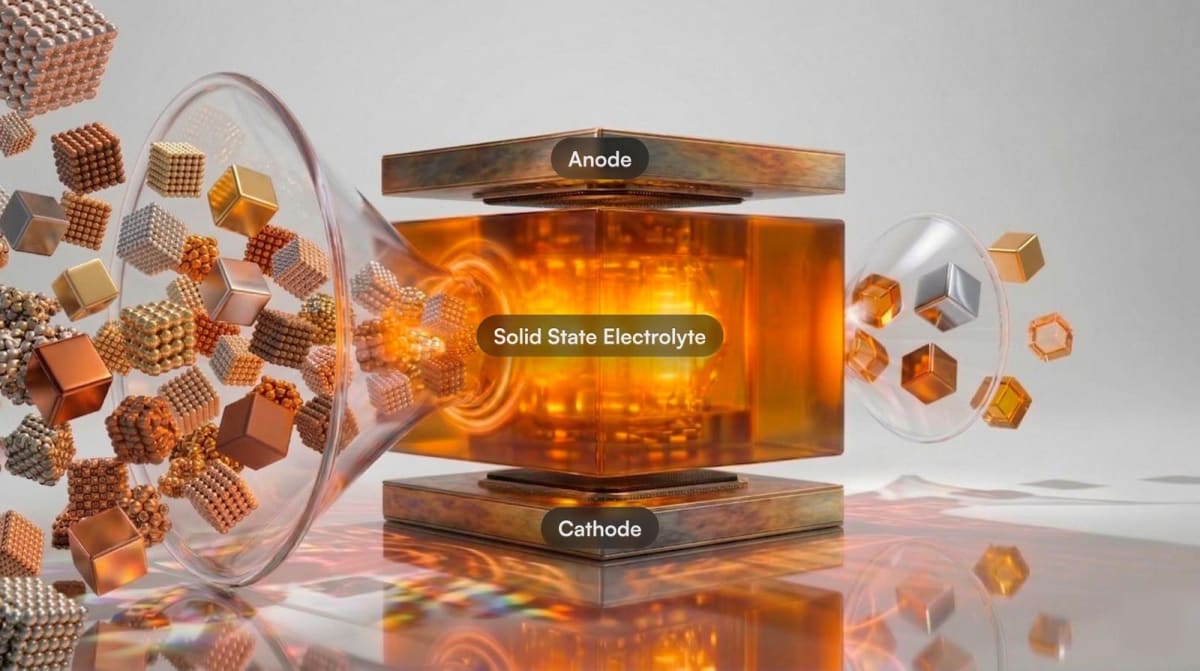
A Google spinout called SandboxAQ just unveiled technology that could slash battery development time by up to 95%, helping America compete with China's dominance in electric vehicle batteries. The company's AI platform is already working with the U.S. Army and battery makers to create safer, cheaper solid-state batteries.
America's struggle to compete with China in battery production might have just found an unexpected ally in artificial intelligence.
SandboxAQ, a company spun out of Google in 2022, released a new AI platform this week that helps battery scientists compress years of trial-and-error research into months. The goal is ambitious but simple: create better batteries faster than anyone thought possible.
The company's AQVolt26 platform focuses on the earliest and slowest part of battery development, when researchers screen thousands of materials to find promising candidates. What normally takes scientists 10 to 15 years could shrink dramatically, with the discovery phase alone reduced by 90% to 95%, according to Ang Xiao, who leads SandboxAQ's materials science team.
Unlike chatbot-style AI, SandboxAQ uses what it calls "large quantitative models" trained on physics and scientific principles rather than text. Think of it as AI that generates synthetic material data instead of writing essays.
The company isn't just theorizing. It's already generating revenue from customers including battery developer Novonix, the U.S. Army, and unnamed automotive companies. Backed by $950 million from investors like Alphabet, Nvidia, and renowned AI scientist Yann LeCun, the Palo Alto startup sees a $500 billion market opportunity this decade.
The technology focuses on creating solid-state batteries using halides, mineral compounds found in things like rock salt and iodine. These materials could replace lithium and cobalt, making batteries safer and cheaper to produce. Current lithium-based electrolytes can overheat and catch fire, while halide-based versions promise better stability without the fire risk.
China didn't dominate the battery market by accident. The country mastered making batteries cheaply and quickly, allowing companies like BYD to sell electric vehicles at prices that undercut American and European competitors. SandboxAQ's bet is that America doesn't need to match China factory-for-factory, it needs to leapfrog them with better designs.
The Ripple Effect
The impact extends far beyond electric cars. These next-generation batteries could power military equipment, data centers, and energy storage systems across America's electrical grid. Every breakthrough in battery technology strengthens domestic supply chains and reduces dependence on foreign manufacturing.
Battery innovation has concentrated in just a few countries, creating vulnerable supply chains. By accelerating materials discovery, SandboxAQ hopes to democratize battery advancement and spread innovation beyond China's current stranglehold on the industry.
The timeline is realistic but patient. Commercial batteries using this technology likely won't hit the market for at least five years. But for an industry where development cycles stretch over a decade, shaving off years of research time could reshape the competitive landscape.
Former Google CEO Eric Schmidt chairs the company, bringing Silicon Valley's moonshot mentality to an industry desperately needing faster innovation.
America's battery future might not be built on matching China's scale, but on outsmarting the competition with smarter science.
More Images

Based on reporting by Google News - Electric Vehicle
This story was written by BrightWire based on verified news reports.
Spread the positivity!
Share this good news with someone who needs it