Google's SynthID Watermark Adopted by OpenAI and Nvidia
After watermarking 100 billion AI images, Google's breakthrough detection technology is expanding to major platforms. Now OpenAI, Nvidia, and others will help people identify AI content across the internet.
Telling real photos from AI fakes just got easier thanks to a technology that's already been tested on billions of images.
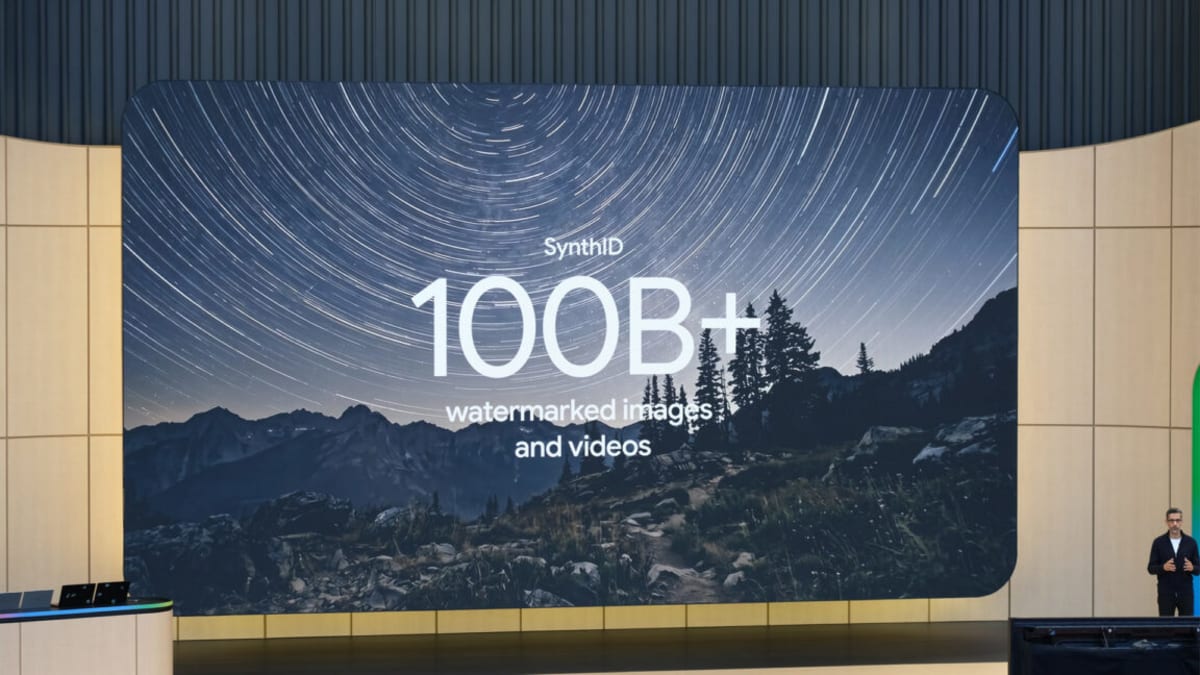
Google's SynthID has quietly watermarked 100 billion images and videos plus 60,000 years' worth of audio since launching three years ago. Now the company is sharing this technology with OpenAI, Nvidia, and other major players to help more people identify AI-generated content.
The timing couldn't be better. AI has evolved from producing images with extra fingers to creating videos that look shockingly realistic. SynthID offers a solution by embedding invisible watermarks directly into the pixels of images, the waveforms of audio, and the frames of video.
Unlike traditional metadata tags that can be easily stripped away, SynthID watermarks survive compression, cropping, and rotation. DeepMind scientist Pushmeet Kohli says his team spent years making the technology resistant to tampering. "A technology like this will always be attacked," Kohli explained. "There was a lot of research that we did in making SynthID robust to different kinds of transformations."
The expansion means OpenAI will add SynthID to images created by GPT, while Nvidia will implement it in their Cosmos world foundation models. ElevenLabs and Kakao are joining the effort too.
Checking for watermarks is getting simpler. Google is integrating SynthID detection into Circle to Search, Lens, and Chrome. You can ask "Is this AI?" and get an instant answer. The Gemini app already lets users upload suspicious content for verification.
Google is also rolling out C2PA metadata tagging to Pixel phone videos in the coming weeks. This complementary system adds information about how content was created and processed, giving users multiple ways to verify what they're seeing.
The Ripple Effect
While open-source models without watermarking will still exist, having major platforms adopt SynthID represents a significant shift toward transparency. When the biggest AI content creators commit to labeling their output, millions of images and videos become instantly verifiable.
Google is preparing an enterprise API that will let trusted business partners flag AI content at scale. This feedback loop will help refine the detection system while preventing bad actors from easily testing ways to bypass it.
The changes create a new normal where checking authenticity becomes as simple as a quick search. That's progress worth celebrating in an age where seeing is no longer believing.
Together, these companies are building the foundation for a more transparent internet.
More Images


Based on reporting by Ars Technica
This story was written by BrightWire based on verified news reports.
Spread the positivity!
Share this good news with someone who needs it