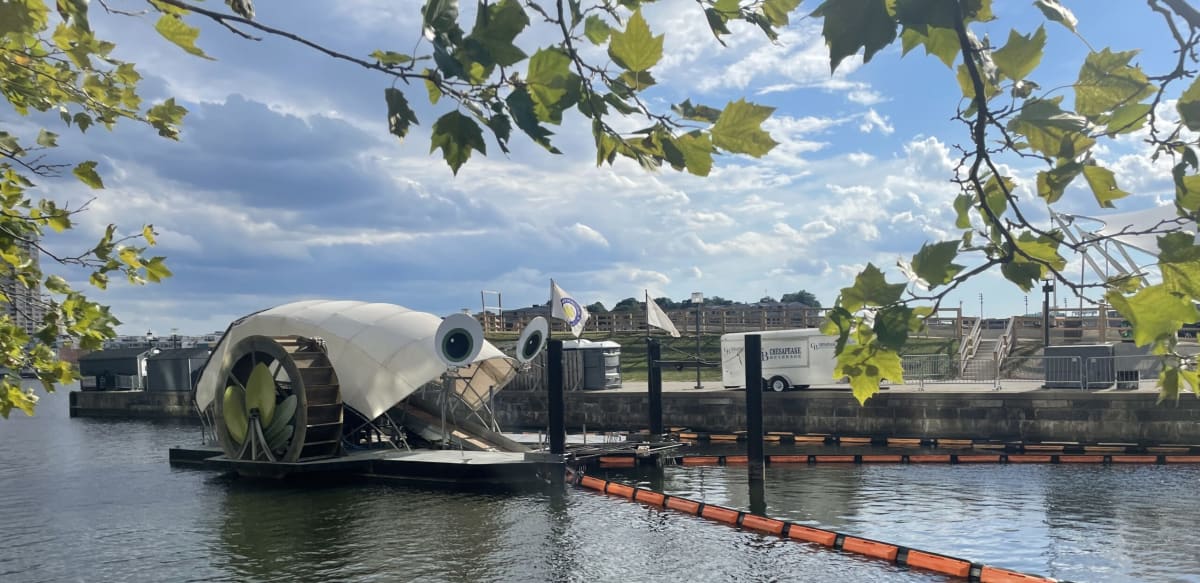
Googly-Eyed Mr. Trash Wheel Has Cleaned 6M Pounds of Litter
A growing network of creative devices is catching millions of pounds of trash before it reaches our oceans. From adorable googly-eyed wheels in Baltimore to simple mesh bags in Florida storm drains, these trash traps are turning the tide on water pollution one cigarette butt at a time.
Picture a giant wheel with googly eyes bobbing in Baltimore's harbor, munching up trash like a friendly monster. That's Mr. Trash Wheel, and he's part of a growing family of clever devices stopping litter before it reaches our oceans.
From high-tech swimming robots to simple mesh bags fitted over storm drains, trash traps around the world have collected more than six million pounds of litter since 2017. That's the weight of about 30 blue whales worth of garbage that never made it to sea.
In Cedar Key, Florida, college student Mallory Willem sorts through a mesh bag pulled from a storm drain. Cigarette butts, plastic bottle caps, fake nails painted lavender. The town has 10 such traps, and volunteers clean them monthly, carefully logging what they find to track pollution patterns.
"We get a lot of fake nails," Willem says with a laugh. It's tedious work, but it's making a real difference in the local waterways.
The International Trash Trap Network connects groups using these devices worldwide. Some traps are simple booms stretching across streams. Others are cutting-edge robots or giant conveyor belts that scoop everything from microplastics to mangled bikes out of the water.
Cedar Key's Operation TRAP (Trash Reduction in Aquatic Preserves) represents a smart, scalable solution. The mesh bags are inexpensive, easy to install, and give communities hard data about their pollution sources.
The Ripple Effect
While six million pounds sounds impressive, it's still a tiny fraction of the 130 million tons of plastic waste entering our environment each year. But trash traps do something more valuable than just collecting garbage.
They make the invisible visible. When volunteers sort through storm drain catches, they see exactly what's polluting their waters. Communities can then target the biggest offenders, whether that's cigarette butts, fast food packaging, or construction debris.
The data helps cities make smarter decisions about waste management and public education. And there's something powerful about people gathering monthly to physically remove trash from their local waters, turning environmental protection from an abstract concept into hands-on community action.
As more cities adopt trash traps, the technology improves and costs drop. What started with one googly-eyed wheel in Baltimore has sparked a global movement of communities saying enough is enough to ocean pollution.
Every piece of trash caught is one less threat to marine life, one less bit of plastic breaking down into microparticles in our food chain. That's progress you can see, touch, and measure, one mesh bag at a time.
More Images

Based on reporting by Reasons to be Cheerful
This story was written by BrightWire based on verified news reports.
Spread the positivity!
Share this good news with someone who needs it