Green Space Thrives Along Maryland's Capital Beltway
An astronaut photo reveals how Maryland suburbs have preserved forests, parks, and green corridors despite decades of urban development. The image shows strategic planning from the 1930s New Deal era still protecting green space today.
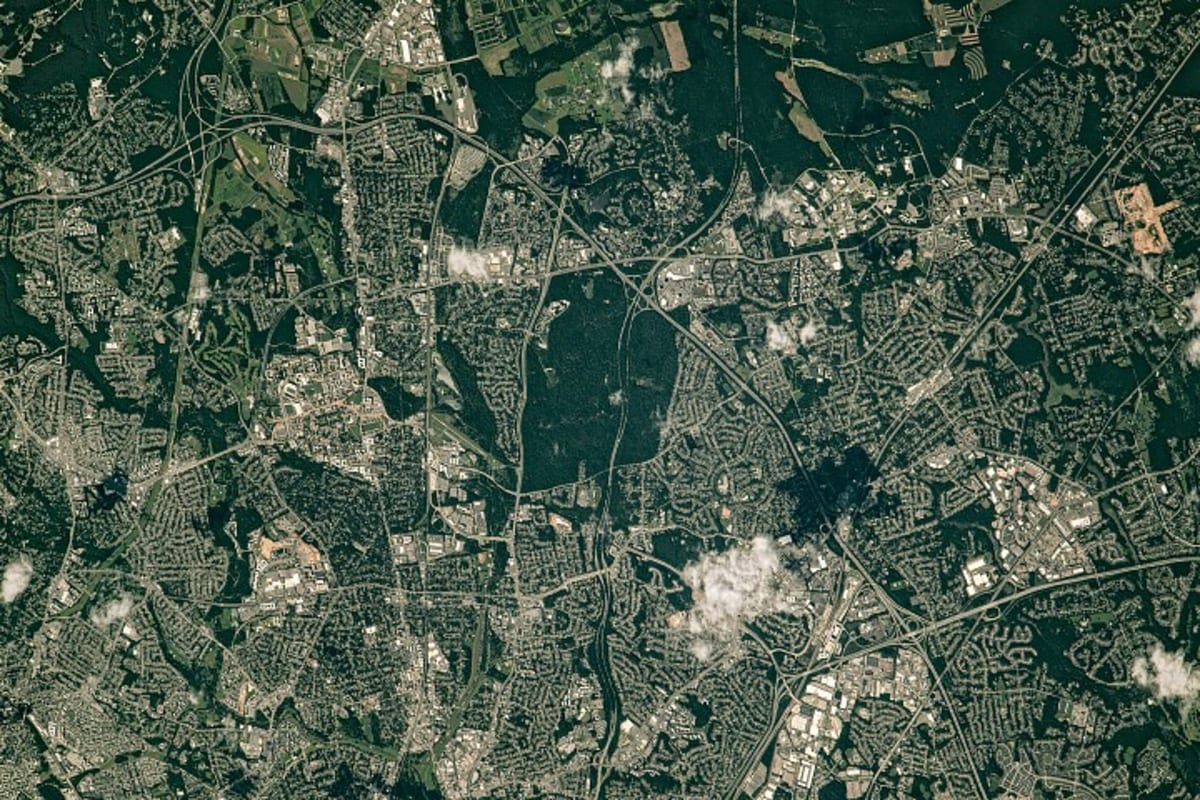
From 250 miles above Earth, an astronaut captured something remarkable: a web of green forests and parks threading through the sprawling Maryland suburbs outside Washington, D.C.
The photo, taken in July 2023 from the International Space Station, shows the northeast section of the Capital Beltway where nature and development coexist in surprising harmony. Lush summer vegetation highlights how decades of thoughtful planning have protected open space in one of America's most developed regions.
At the heart of the image sits Greenbelt Park, nearly 2 square miles of forested hiking trails, picnic areas, and campgrounds. The land was originally slated for suburban development but was saved by the National Park Service in 1950, preserving a green refuge that residents still enjoy today.
Just north of the park, the historic city of Greenbelt tells an inspiring story of its own. Built in the 1930s as part of the New Deal, it was designed from the ground up to give families affordable housing connected by walking paths to accessible green space and one of America's first planned shopping centers.
The green theme continues throughout the region. NASA's Goddard Space Flight Center, established in 1959, features patches of forest separating its buildings. Agricultural research fields managed by the University of Maryland and USDA stretch across nearby Beltsville, blending productive farmland with preserved forests.
Even the highways got the green treatment. The Baltimore-Washington Parkway, running north to south through the image, is lined with mature trees that create natural corridors for wildlife and beauty for commuters.
The Ripple Effect
This 1930s vision of green urban planning created a model that neighboring communities embraced. Hyattsville, visible just south of College Park, has maintained its "tree city" designation for over 30 years, showing sustained commitment to urban forestry.
The University of Maryland's main campus adds another significant green space to the region, its tree-lined grounds providing both education and recreation. Together, these interconnected green areas create breathing room for both people and wildlife in a densely populated corridor.
What started as a New Deal program to create jobs and affordable housing became a lasting blueprint for balancing growth with nature. Nearly a century later, those original walking paths still connect homes to parks, and families still camp under the forest canopy that could have been shopping centers.
The view from space proves that cities can grow without erasing nature entirely.
More Images


Based on reporting by NASA
This story was written by BrightWire based on verified news reports.
Spread the positivity!
Share this good news with someone who needs it