Gurugram Teen Builds Free App to Measure Light Pollution
High schooler Suhani Gupta turned her love of stargazing into SkyQi, an accessible platform that measures light pollution from a single smartphone picture. Her citizen-science project now empowers communities worldwide to track urban night brightness and reconnect with the cosmos.
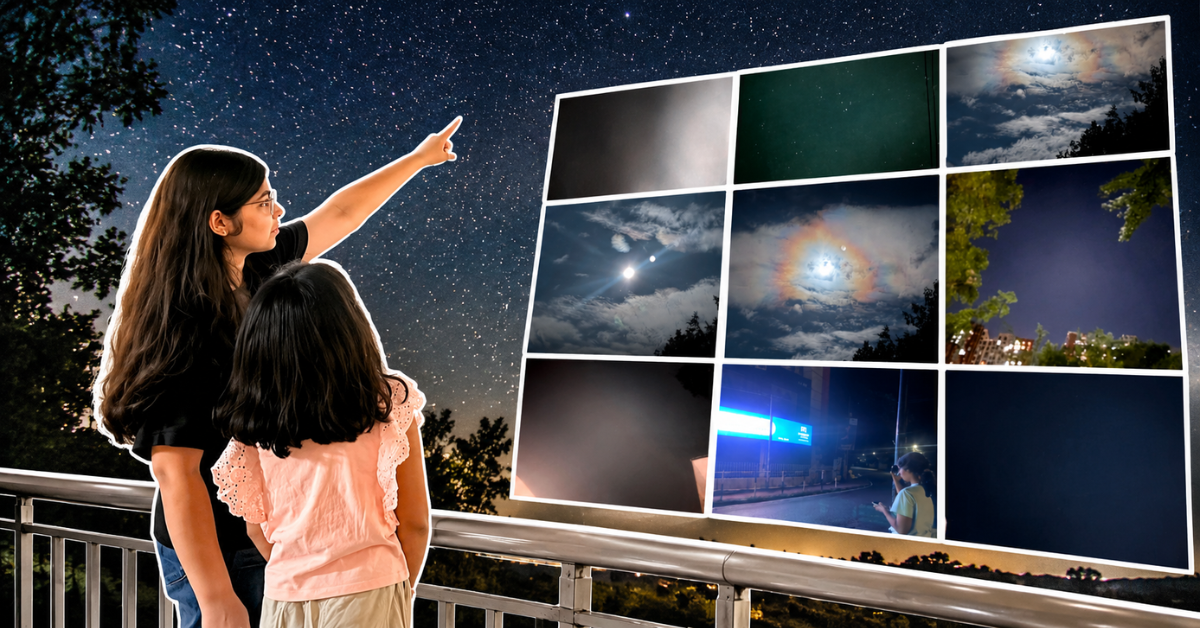
Whenever high schooler Suhani Gupta spotted more than seven stars from her city balcony, she and her sister celebrated the rare cosmic view. That tender spark of curiosity eventually inspired an ingenious tool that puts astronomy back into everyday hands.
Growing up in Gurugram, India, Suhani noticed that the stars often vanished behind an ambient urban glow. A family visit to the quiet mountain town of Udhampur revealed a glittering canopy of constellations, proving that artificial light was drowning out the night.
That striking contrast led her to investigate light pollution, an environmental challenge that quietly disrupts human sleep cycles and harms nocturnal wildlife. While dirty rivers or plumes of smoke capture immediate attention, fading darkness often slips by unnoticed.
Professional astronomers measure sky brightness using specialized meters that cost hundreds of dollars. Suhani knew that widespread community action required a tool that anyone with curiosity could freely access.
Drawing on her self-taught skills in computer vision and electronics, the twelfth-grade student built SkyQi. The free web platform uses advanced image processing to measure darkness from an ordinary smartphone snapshot.
Users simply step outside at night, snap a photo of the sky above, and upload the image to the site. Within seconds, the platform calculates light radiance and provides immediate insights on local visibility.
Suhani took her research even further by analyzing a decade of NASA satellite records spanning 50 Indian cities. Her findings revealed significant increases in artificial radiance, highlighting the urgent need for thoughtful urban design.
The Ripple Effect
What began on a quiet apartment balcony has blossomed into an energetic global citizen-science movement. Everyday stargazers from dozens of countries now upload images to document changing night skies in real time.
This crowdsourced information offers environmental researchers and urban planners crucial local data that satellites often miss. Armed with these insights, communities can advocate for directional streetlights and shielded fixtures that save energy while preserving natural darkness.
Suhani proves that a passionate teenager with a laptop can empower thousands of people to protect our shared planetary heritage.
Thanks to her brilliant innovation, communities around the world are rediscovering the joy of looking up at a sky full of stars.
More Images


Based on reporting by The Better India
Building Something New? Try the BrightWire Tech Stack Advisor
Compare modern frameworks, cloud hosting, and AI tools tailored to your project budget and scale.
Spread the positivity!
Share this good news with someone who needs it