Harvard Cracks How Snakes Stand Upright Without Limbs
Scientists finally understand how tree snakes lift 70% of their bodies straight up without toppling over. The discovery could revolutionize soft robotics and flexible medical devices.
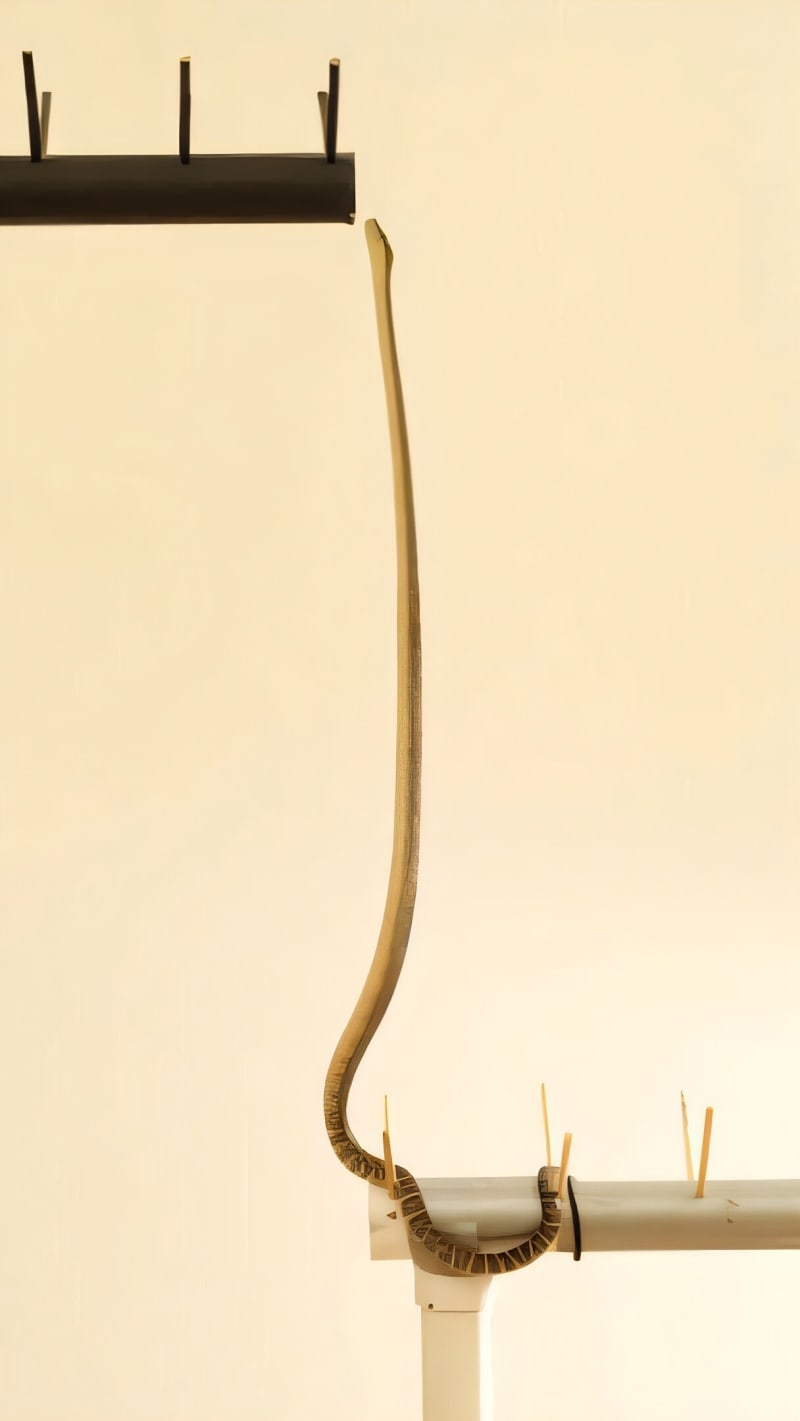
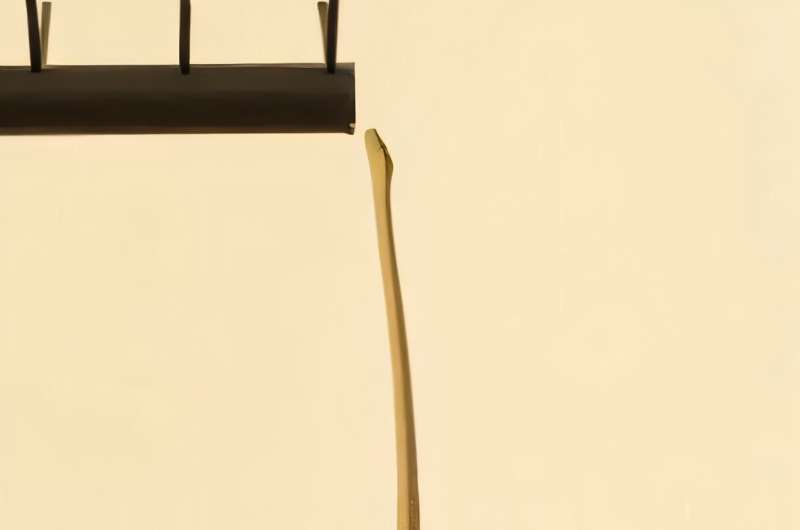
Imagine balancing two-thirds of your body vertically in mid-air with no arms, no legs, and a spine as bendy as a garden hose. That's exactly what tree snakes do every day, and scientists just figured out their secret.
A Harvard-led team discovered that brown tree snakes and scrub pythons use a surprisingly simple trick to defy gravity. Instead of stiffening their entire body like a rigid pole, they concentrate all their muscle control in a small "boundary layer" near their base where they grip the branch.
Above that zone, the snake stays almost perfectly vertical. In this position, gravity produces very little bending force, so the snake barely needs to work to stay upright. It's an elegant solution that saves enormous amounts of energy.
The researchers, led by Harvard professor L. Mahadevan, combined biology, physics, and mathematics to crack the code. They carefully tracked snake movements and built mathematical models treating the animals as "active elastic filaments" that can sense their own shape and respond through muscle forces.
Here's the twist: lifting the body isn't even the hardest part. The real challenge is staying balanced once upright, like an inverted pendulum constantly threatening to topple. That's why tall snakes sway so gently and slowly as they reach between branches.
The team tested two control strategies in their models. Local feedback, where muscles respond directly to bending, works but requires lots of energy. Optimal control, where muscles coordinate along the entire body, produces the same S-shaped posture with far less effort. Real snakes appear to use the optimal approach.
The Ripple Effect
This isn't just about understanding a cool animal trick. Engineers designing soft robots face the exact same challenge: how to build flexible structures that can stand tall or reach far without collapsing under their own weight.
Medical device designers working on flexible surgical tools could apply these principles too. So could anyone building structures that need to be both bendable and stable, from construction equipment to space exploration robots.
"By concentrating control where it counts, engineers may learn to build machines that are both efficient and resilient," said first author Ludwig Hoffmann, a postdoctoral researcher in applied mathematics. Nature solved this extreme control problem not with brute force, but with subtle, economical intelligence.
The findings were published in the Journal of the Royal Society Interface. From tree-climbing snakes to future robots that can navigate disaster zones or perform delicate surgeries, this research shows how studying nature's solutions can spark human innovation.
More Images


Based on reporting by Phys.org
This story was written by BrightWire based on verified news reports.
Spread the positivity!
Share this good news with someone who needs it