Harvard Launches First AI Institute for Astronomy
A physicist who fell in love with neural networks while studying black holes just launched the world's first AI institute dedicated to astronomy. As telescopes prepare to capture a million supernovae per year, scientists say artificial intelligence isn't just helpful anymore—it's essential.
Cecilia Garraffo studies black holes, but a detour into neuroscience in 2010 changed everything she thought possible in astronomy.
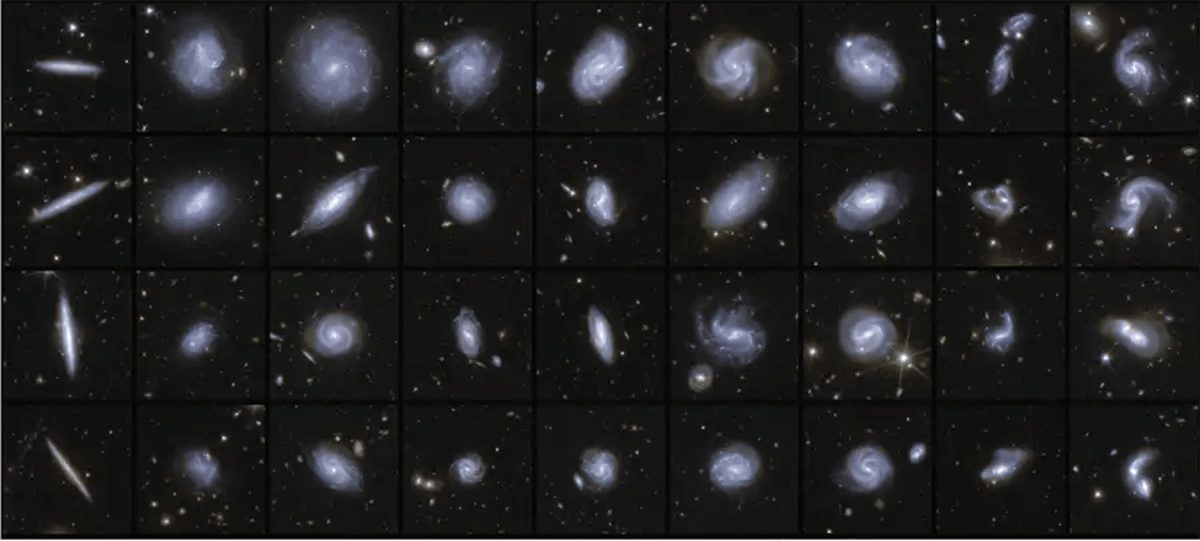
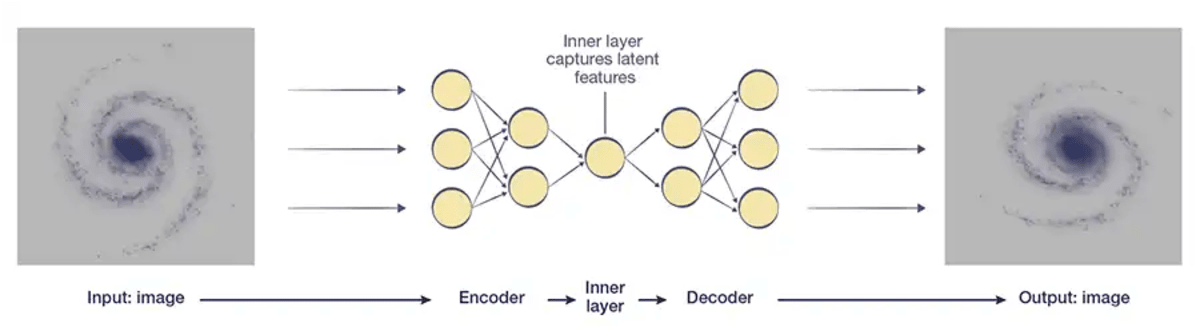
While researching extreme gravitational fields at Brandeis University, Garraffo discovered neural networks—mathematical systems that mimic how brains process information. She realized these AI tools could solve astronomy's biggest challenge: too much data and not enough human eyes to analyze it.
Fast forward to 2023, and Garraffo founded AstroAI at the Center for Astrophysics, Harvard & Smithsonian. It's the first institute anywhere dedicated entirely to developing artificial intelligence for astrophysics.
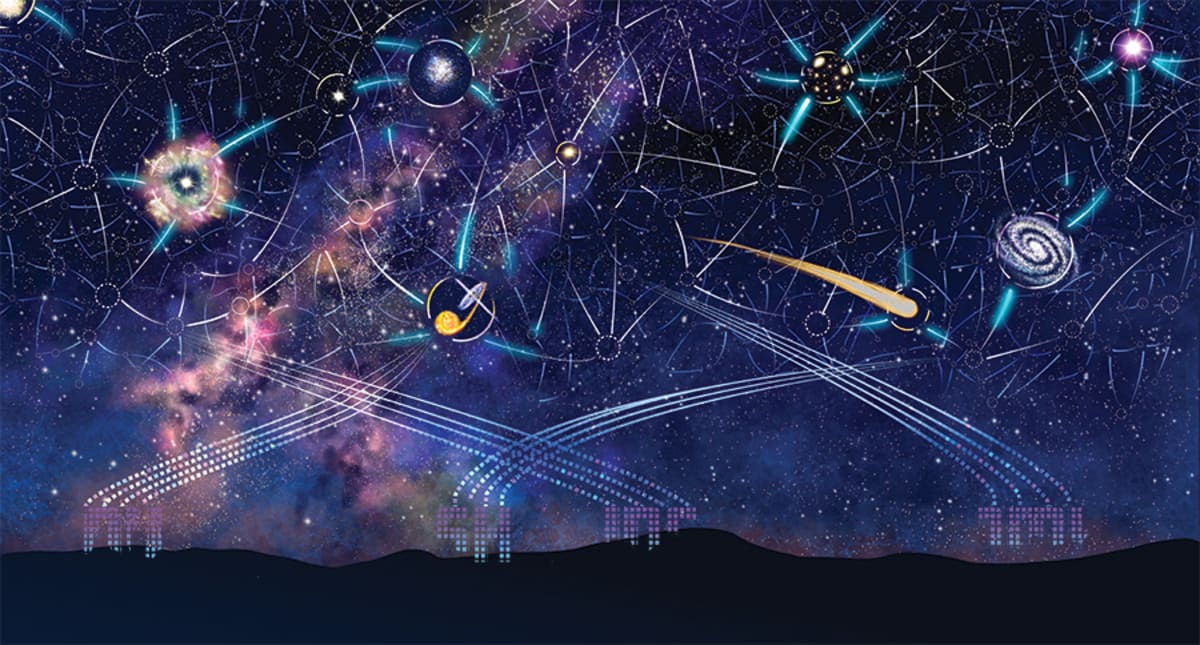
The timing couldn't be better. Right now, astronomers observe hundreds of supernovae each year and can follow up on most of them. But when Chile's Vera C. Rubin Observatory comes online, that number jumps to one million supernovae annually.
"They have to have an algorithm that says, 'This is not only an explosion, it is an anomalous one,'" Garraffo explains. Humans simply can't review a million anything, let alone distant cosmic explosions that might rewrite our understanding of the universe.
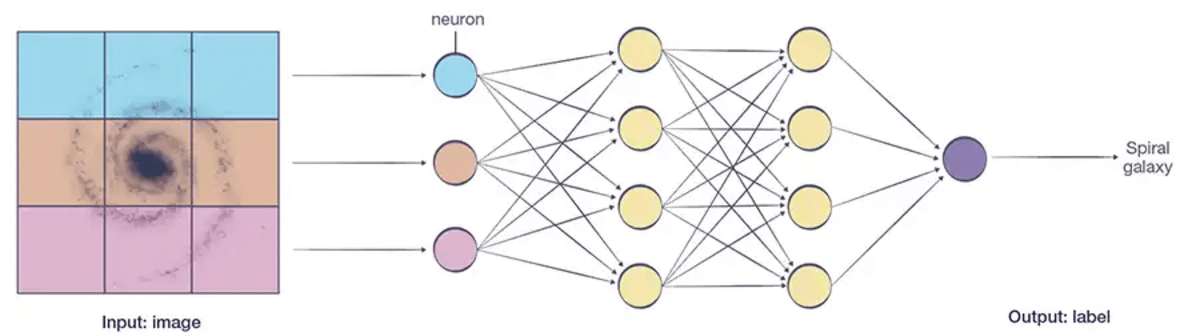
Neural networks learn like you choose books. You know what you like from past reads, so you weigh different factors when picking something new. Neural networks do the same with telescope data, training on examples until they can spot the most interesting cosmic events without human help.
The Rubin Observatory, the Square Kilometre Array, the Event Horizon Telescope, and the Euclid space telescope are all producing or will soon produce more observations than any team of scientists could process in a lifetime.
Astronomy has been slower to adopt AI than industries like banking or online shopping. UC Berkeley astronomer Josh Bloom champions the technology but understands scientists' caution: "We are going to have to put a tremendous amount of computational time and people time into this without a guaranteed result."
Why This Inspires
Garraffo sees beyond the risks to the discoveries waiting on the other side. "Not having access to these methods is similar to not having had access to a computer when computers started," she says.
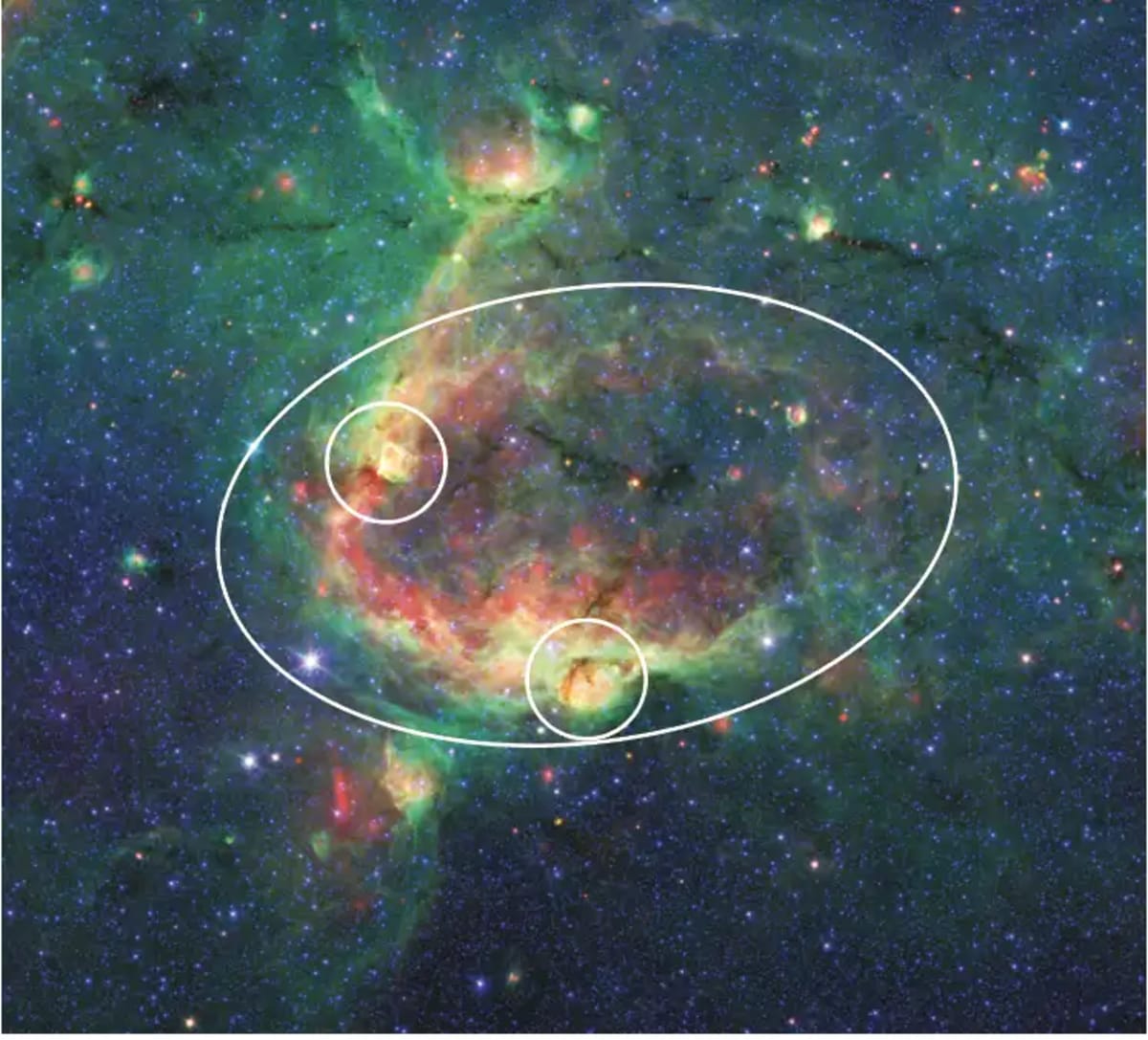
She never lost her fascination with those neural networks she encountered while studying neuroscience. Now she's building an entire institute to help astronomers use them to find the universe's hidden treasures—the unusual supernovae, the unexpected black hole behaviors, the anomalies that reveal new physics.
The stars have always been there, but soon we'll finally have the tools to truly see them all.
More Images
Based on reporting by Sky & Telescope
This story was written by BrightWire based on verified news reports.
Spread the positivity!
Share this good news with someone who needs it