Harvard Scientists Find Hidden Vessels Inside Human Brain
Researchers accidentally discovered a network of tiny vessels deep inside the brain that may help clear out waste and toxic proteins. The finding could revolutionize how we treat Alzheimer's, Parkinson's, and other brain diseases.
Scientists at Harvard University have stumbled upon something remarkable hiding in plain sight: a network of microscopic vessels inside the brain that no one knew existed.
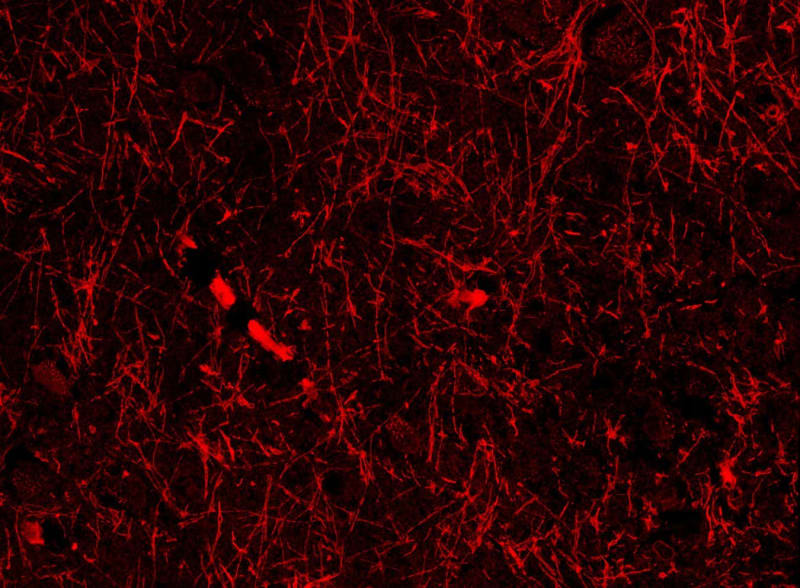
Researcher Shiju Gu was examining mouse brain tissue under a microscope when he spotted strange tube-like structures wrapping around blood vessels. After 30 years in the field, his colleague Chongzhao Ran calls this "the dream of a scientist."
The discovery could explain one of medicine's biggest mysteries: how the brain removes toxic waste that leads to diseases like Alzheimer's. We've known the brain has a cleanup system called the glymphatic system, but scientists thought lymphatic vessels only existed in the brain's protective outer layer.
These newly found structures, dubbed nanoscale lymphatic-like vessels (NLVs), appear throughout the brain's interior. The team found them in regions controlling memory, thinking, sleep, and body temperature in both healthy mice and those with Alzheimer's-like disease.
The breakthrough came when researchers checked human brain samples. They found the same structures in tissue from someone who died with Alzheimer's disease and another person without the condition. This suggests NLVs are a normal part of brain anatomy, not a disease symptom.
The structures seem to help drain metabolic waste, including beta-amyloid proteins that form the toxic clumps linked to Alzheimer's. In one experiment, fluorescent tracers injected into mouse brains appeared to flow directly into nearby NLVs.
Why This Inspires
If other research teams confirm this discovery, it opens exciting new possibilities for treating brain diseases. Imagine medications that could help these vessels work better, flushing out harmful proteins before they damage neurons. The same approach might help people recovering from strokes or traumatic brain injuries.
Per Kristian Eide at Oslo University, who wasn't involved in the research, called it potentially "huge" and a paradigm shift for understanding brain health. The finding could transform how we think about everything from normal aging to neurodegenerative diseases.
Some scientists urge caution, noting the structures need verification with more advanced imaging techniques. Christopher Brown at the University of Southampton suggests they could be imaging artifacts rather than real vessels. The Harvard team plans to use electron microscopy in coming weeks to settle the question.
Ran says he's 90 percent certain the structures are real lymphatic-like vessels. Whether they turn out to be a new type of brain plumbing or something else entirely, scientists agree we're looking at structures never properly documented before.
The accidental discovery reminds us that even after centuries of studying human anatomy, our bodies still hold secrets waiting to be revealed.
More Images



Based on reporting by New Scientist
This story was written by BrightWire based on verified news reports.
Spread the positivity!
Share this good news with someone who needs it