Hawaii AI Projects Win $1.5M in National Science Push
Two University of Hawaii teams just landed major federal funding to use artificial intelligence for breakthrough discoveries in energy security and particle physics. They're among 168 universities nationwide racing to solve some of science's biggest mysteries.
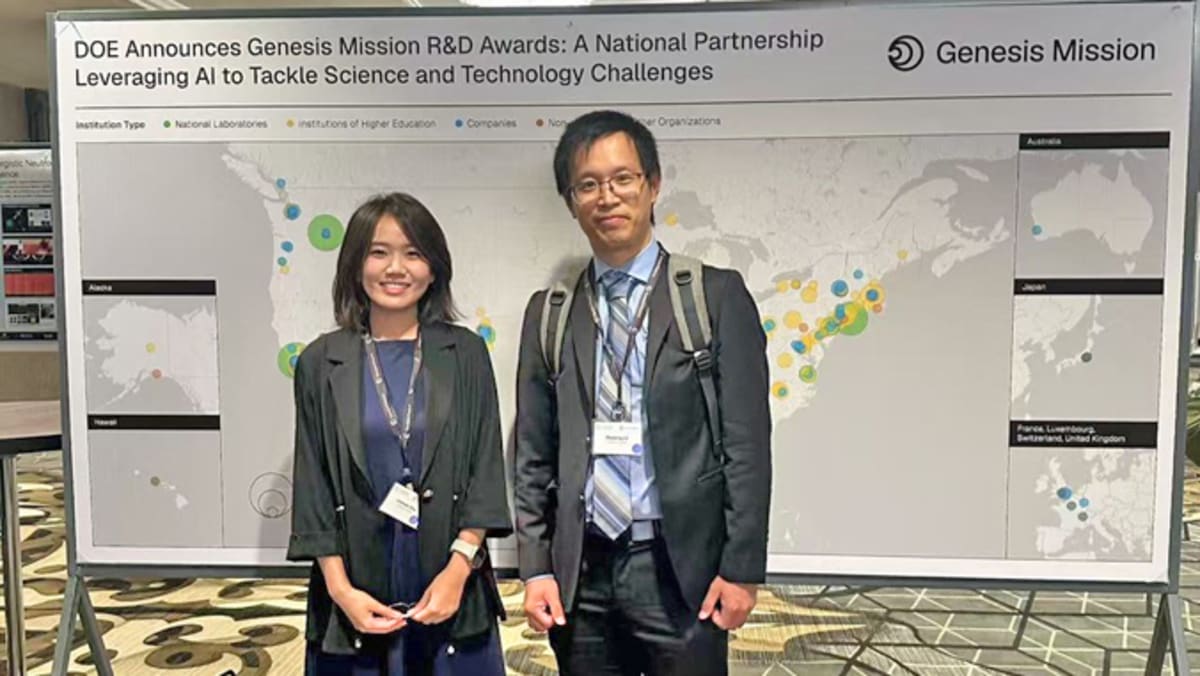
The University of Hawaii at Mānoa just became one of America's newest AI research powerhouses, securing not one but two spots in the Department of Energy's first-ever Genesis Mission.
On July 22, 2026, the DOE announced that two UH Mānoa teams won Phase I awards worth up to $750,000 each over nine months. If their work succeeds, they'll compete for Phase II funding of up to $15 million per project.
Out of 278 research projects selected nationwide, Hawaii researchers stood out in a field of more than 340 institutions. That's a big deal for a university thousands of miles from the mainland research hubs.
Assistant Professor Liuwan Zhu is tackling a problem that keeps energy experts up at night: protecting AI systems that run our electrical grids. Her project, STRATOS, will create security software that detects cyber threats targeting AI systems in real time, using the UH campus microgrid and Argonne National Laboratory as testing grounds.
Meanwhile, Assistant Professor Zepeng Li is helping solve one of physics' deepest puzzles. His team is building AI tools to hunt for neutrinoless double beta decay, an incredibly rare event that could reveal whether mysterious neutrinos are their own antiparticles.
Right now, research teams around the world search for this phenomenon separately, each using different detectors and methods. Li's AI platform will help them share data and spot patterns faster, turning competing experiments into collaborative partners.
The Ripple Effect
The Genesis Mission isn't just funding research. It's weaving together DOE laboratories and universities into a nationwide network where AI meets scientific discovery.
For Hawaii, this means more than prestige. Graduate students will train on cutting-edge AI tools, local infrastructure gets stress-tested for cybersecurity, and the islands gain a stronger foothold in fields that shape national security and energy policy.
Chad Walton, UH's Interim Vice President for Research, said the dual selection "reflects the strength of the UH research community and the creativity of our faculty in pursuing solutions to some of the most complex challenges facing society."
The nine-month timeline starts now, with both teams racing to prove their concepts work. Success could bring up to $30 million total in Phase II funding, cementing Hawaii's role in the future of AI-driven science and potentially unlocking mysteries of the universe itself.
More Images

Based on reporting by Google: scientific discovery
This story was written by BrightWire based on verified news reports.
Spread the positivity!
Share this good news with someone who needs it