Hawaii Gene Drive Could Save Rare Honeycreepers From Malaria
Scientists are developing genetically modified mosquitoes that can't spread avian malaria, offering hope for Hawaii's disappearing honeycreepers. Eleven of 17 remaining species face extinction without urgent intervention.
A single finch flew from Russia to Hawaii 6 million years ago and became 56 unique species of honeycreepers, each more spectacular than the last. Today, 39 are gone forever, and scientists are racing to save the remaining 11 threatened species with a groundbreaking solution.
The culprit is avian malaria, carried by mosquitoes that aren't native to Hawaii. The birds have almost no immunity, making a single bite often deadly.
Tim Harvey-Samuel at the University of Keele is working on something that sounds like science fiction but could be conservation reality. His team wants to insert a gene into mosquitoes that prevents the malaria parasite from completing its life cycle inside them.
The clever part is called a gene drive. While normal genes pass to 50 percent of offspring, this modified gene spreads to far more, potentially racing through the entire mosquito population in years instead of centuries.
Millions of mosquitoes carrying a different modification have already been released in Hawaii. Those males were infected with bacteria that make females infertile, showing that large-scale mosquito intervention is possible.
Harvey-Samuel believes no single approach will solve the crisis alone. His gene drive research is still in early stages, with years of testing and regulatory approval ahead before any modified mosquitoes could be released.
Why This Inspires
The debate shows how seriously scientists take conservation decisions. At a recent International Union for Conservation of Nature conference, members created the world's first framework for deciding when and how genetic modification might help save species.
Some conservationists remain cautious, wanting proof that the technology works before widespread use. Others see it as a necessary tool when species teeter on the brink.
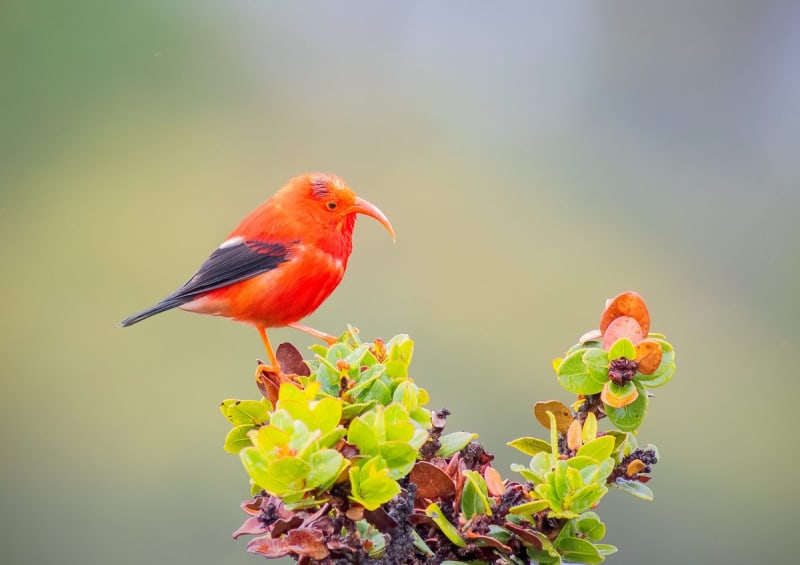
What matters is that nobody is giving up on Hawaii's honeycreepers. The gorgeous scarlet i'iwi, with its curved bill perfectly shaped for native flowers, still has champions willing to try bold new approaches.
After 6 million years of evolution created some of Earth's most unique birds, scientists are fighting to make sure the next chapter isn't extinction.
More Images

Based on reporting by Google: species saved endangered
This story was written by BrightWire based on verified news reports.
Spread the positivity!
Share this good news with someone who needs it