Heat Makes Pure Metals Stronger, Breaking 100-Year Rule
Northwestern engineers discovered that heating pure metals makes them stronger under extreme conditions—the opposite of everything science has taught for a century. This breakthrough could protect satellites from space debris and revolutionize hypersonic flight.
Scientists just threw out the metallurgy textbook after discovering that pure metals break the rules in extreme conditions.
For over a century, every engineer learned the same basic truth: heat softens metal. Blacksmiths have relied on this principle for thousands of years, heating iron until it glows red so they can hammer it into shape. But Northwestern University researchers found something nobody expected.
When pure metals get blasted at extreme speeds and temperatures, they do the opposite. They get stronger.
Chris Schuh, dean of Northwestern's McCormick School of Engineering, led the team that made this discovery. "One of the most basic tenets in metallurgy is that if you heat a metal, it becomes softer," he said. "But we found that if you heat a pure metal and attempt to deform it at extremely high speeds, it flips."
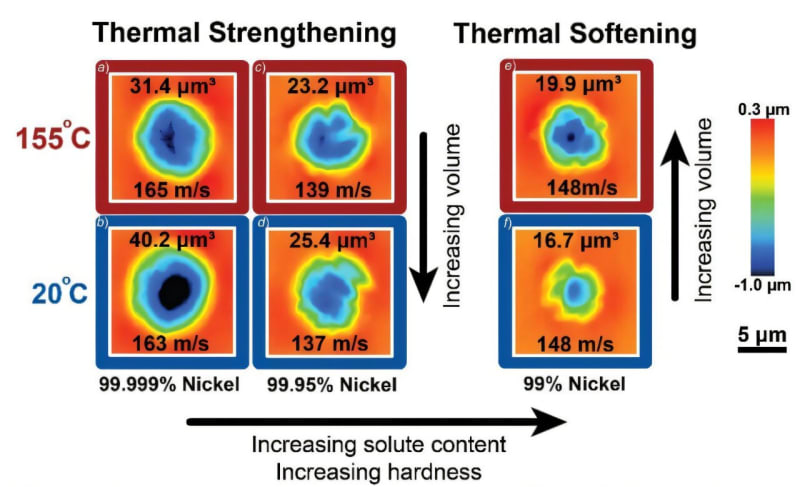
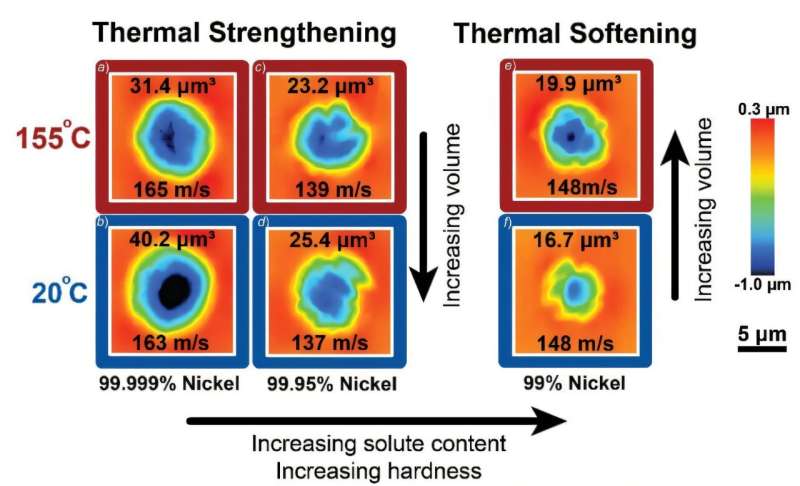
The team fired microscopic particles at pure nickel, titanium, gold, and copper at hundreds of meters per second. These impacts happened so fast they could run almost a billion experiments in the time it takes a car to crash. They tested metals at different temperatures, from room temperature up to 155 degrees Celsius.
The results shocked them. As temperatures rose, pure metals became harder and more resistant to damage. Meanwhile, metal alloys (mixtures with impurities) behaved normally and softened with heat.
The secret lies in atomic vibrations. When a particle slams into heated pure metal at extreme speed, the metal's atoms vibrate so intensely they push back against the impact. The hotter the metal, the more vigorously its atoms vibrate, creating stronger resistance.
This discovery flips traditional engineering on its head. For decades, manufacturers added impurities to metals to make them stronger. Pure iron bends easily, but adding carbon creates steel strong enough to build skyscrapers. Now engineers have a new tool: purity itself.
The Ripple Effect
This breakthrough opens doors for technologies operating in extreme conditions. Satellites could better withstand micro-meteorites flying through space at devastating speeds. Hypersonic aircraft traveling faster than five times the speed of sound could use pure metals in their shells for better protection.
Engineers might even design reactive systems that heat up metal surfaces when danger approaches. Imagine a satellite that senses incoming debris and automatically strengthens its armor by raising its temperature.
The team published their findings in Physical Review Letters, and the implications keep expanding. Advanced manufacturing, space construction, and ballistic protection could all benefit from this counterintuitive property.
"If we want to design materials for extreme conditions, we need to step away from conventional knowledge," Schuh said. Engineers can now tune a metal's response to impacts by adjusting its purity, giving them precise control over how materials behave under stress.
The discovery that started by challenging a basic assumption has opened an entirely new frontier in materials science, one where breaking the rules might just be the strongest choice.
More Images


Based on reporting by Phys.org - Technology
This story was written by BrightWire based on verified news reports.
Spread the positivity!
Share this good news with someone who needs it