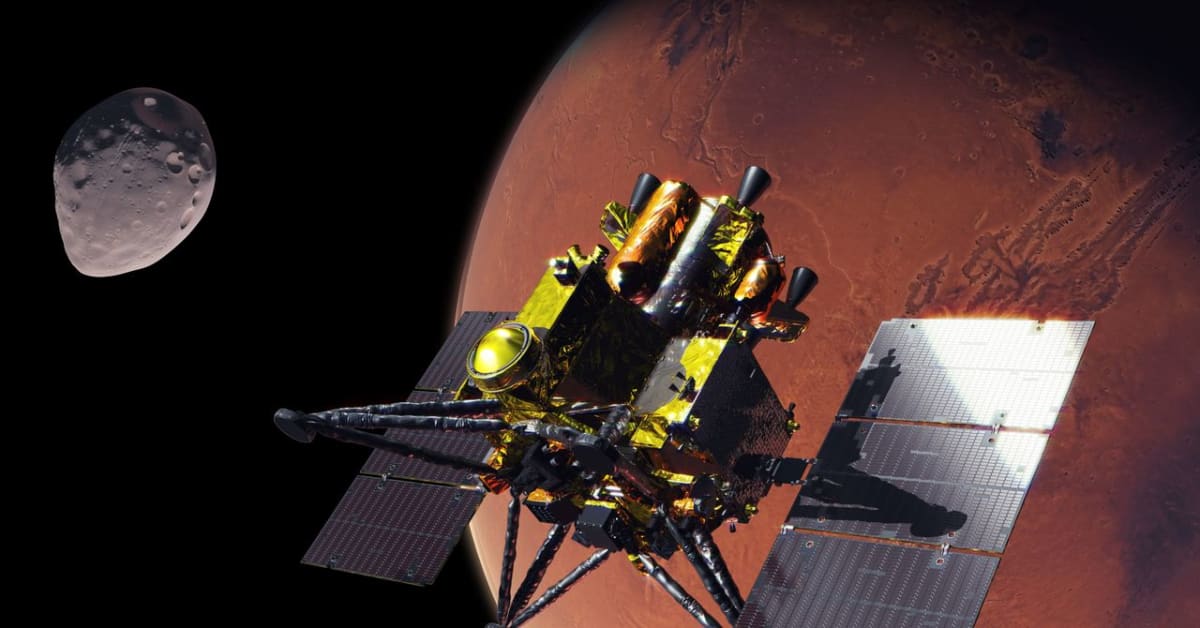
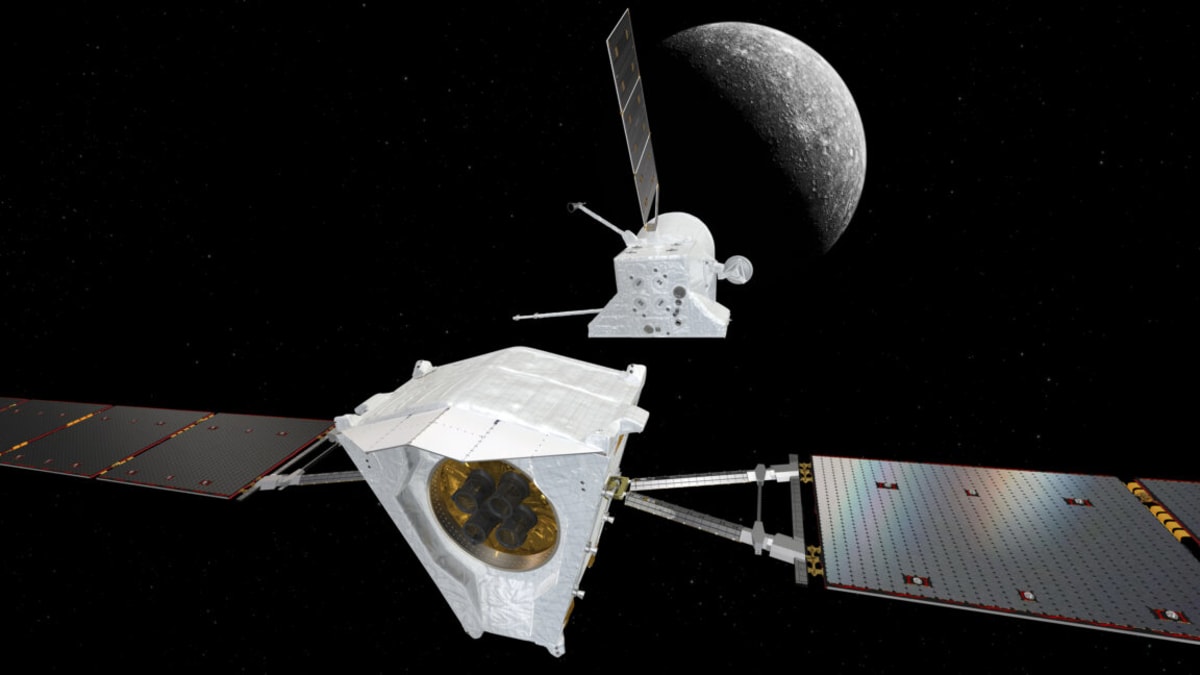
Rocket Lab Spacecraft Ready for Historic Mars Mission
Two spacecraft just completed their first test phase in deep space and are now preparing for a groundbreaking journey to Mars that could unlock secrets needed for future human exploration. The mission proves that innovative partnerships can deliver world-class science faster and cheaper than ever before.
Two spacecraft designed to unlock Mars' atmospheric mysteries have successfully completed their first major milestone, positioning humanity one step closer to understanding the Red Planet.
Rocket Lab announced that its twin ESCAPADE spacecraft, nicknamed Blue and Gold, have finished their commissioning phase at a distant parking spot 1.5 million kilometers from Earth. The University of California Berkeley team will soon take control to prepare for the duo's cruise to Mars.
What makes this achievement remarkable isn't just the destination. Rocket Lab moved from initial concept to launch readiness in just over three years, a timeline that shatters traditional expectations for interplanetary missions. Most Mars missions take a decade or more to develop.
The company accomplished this speed by building nearly everything in house, from solar panels to navigation systems to flight software. Both spacecraft launched from Cape Canaveral in November 2025 and have already executed precise maneuvers to reach their current position near Earth-Sun Lagrange Point 2.
Blue and Gold will spend the next nine months testing their science instruments and collecting early data about how solar wind interacts with Earth's magnetic field. This warmup period allows the Berkeley team to fine-tune operations before the real work begins.
In November 2026, both spacecraft will swing around Earth in a gravity assist maneuver, using our planet's pull like a cosmic slingshot to propel them toward Mars. They're scheduled to arrive in September 2027, with full science operations beginning in 2028.
The Ripple Effect
The mission will study how solar wind strips molecules from Mars' thin atmosphere, answering questions that have puzzled scientists for decades. Understanding this process is crucial because it reveals why Mars lost most of its atmosphere over billions of years.
But the benefits extend far beyond pure science. The data ESCAPADE collects will help engineers design the telecommunications and life support infrastructure needed for future human missions to Mars. Every measurement brings us closer to the day when astronauts can safely live and work on another world.
The project also proves a new model for space exploration works. By partnering commercial companies with universities and government agencies, NASA achieved an ambitious interplanetary mission for a fraction of traditional costs. Success here opens doors for more frequent, more affordable missions across the solar system.
This is how we build the future, one spacecraft at a time.
Based on reporting by Google: space mission success
This story was written by BrightWire based on verified news reports.
Spread the positivity!
Share this good news with someone who needs it