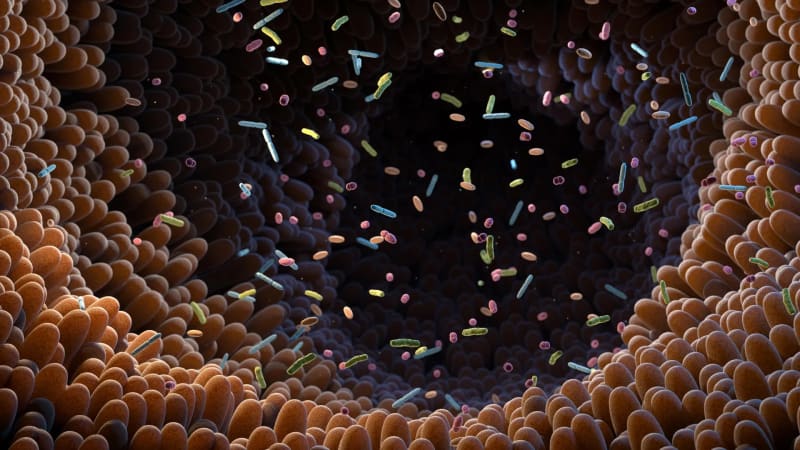
Hidden Gut Bacteria Linked to Health in 39 Countries
Scientists have discovered a mysterious group of gut bacteria that shows up consistently in healthy people across the globe. The finding could reshape how we understand and protect our gut health.
Scientists just mapped a hidden player in human health that's been living inside us all along.
Researchers at the University of Cambridge identified a little-known group of gut bacteria called CAG-170 that appears far more often in healthy people than in those with chronic illness. The discovery came after studying gut samples from more than 11,000 people across 39 countries.
The pattern was striking. People without chronic disease consistently had higher levels of these bacteria than those living with conditions like inflammatory bowel disease, obesity, chronic fatigue syndrome, and multiple sclerosis.
What makes CAG-170 special is that scientists have never been able to grow it in a lab. They only know it exists through its genetic fingerprint, which is why it's part of what researchers call the "hidden microbiome."
Using advanced genetic analysis, the team discovered that CAG-170 produces large amounts of Vitamin B12 and carries enzymes that break down carbohydrates, sugars, and fibers. But here's the twist: the vitamin likely supports other beneficial gut bacteria rather than directly helping the human host.
"These bacteria appear to be key players in human health, likely by helping us to digest the main components of our food and keeping the whole microbiome running smoothly," said Dr. Alexandre Almeida, who led the study.
The research builds on Almeida's earlier work mapping more than 4,600 bacterial species in the human gut. Remarkably, over 3,000 of those species had never been documented before, showing just how much remains unknown about the microscopic world inside us.
The Ripple Effect spreads far beyond this single discovery. By identifying what a healthy microbiome actually looks like, scientists can now better understand how it changes during disease and potentially develop ways to restore balance.
The team ran three separate analyses to confirm their findings. Each one pointed to the same conclusion: CAG-170 stands out as the most consistent marker of gut health across different populations and countries.
Lower levels of these bacteria were also associated with dysbiosis, an imbalance in gut microbiome that's been linked to irritable bowel syndrome, rheumatoid arthritis, anxiety, and depression.
The discovery opens the door to more targeted probiotics designed specifically to maintain or restore healthy CAG-170 levels. Unlike current probiotics that take a general approach, future treatments could be tailored to support the specific bacteria that matter most for health.
The findings were published in Cell Host & Microbe and represent what researchers call a fundamental shift in understanding human health from the inside out.
Understanding the hidden microbiome could transform how we prevent and treat chronic disease worldwide.
Based on reporting by Google News - Scientists Discover
This story was written by BrightWire based on verified news reports.
Spread the positivity!
Share this good news with someone who needs it