Himalayan Landslide Creates Lake, Sparks Rescue Effort
When monsoon rains triggered a massive landslide in Arunachal Pradesh, it blocked the Siji River and created an enormous lake overnight. Now experts and authorities are working together to protect thousands of people downstream.
A river that has flowed through the same mountain valley for centuries suddenly stopped moving, and what happened next shows how communities come together when nature takes a dramatic turn.
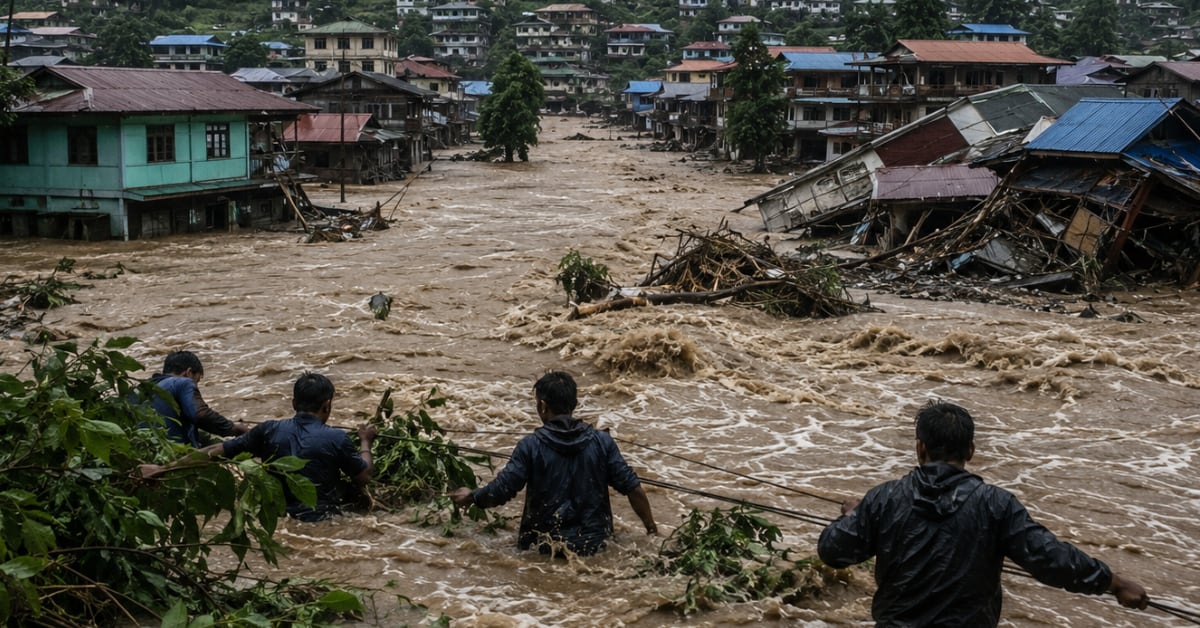
Heavy monsoon rains caused a mountainside to collapse into the Siji River in Arunachal Pradesh's Lower Siang district. Within hours, rocks, mud, and fallen trees created a natural dam that transformed the flowing river into a growing lake.
Instead of panicking, authorities quickly assembled teams of experts to monitor the situation. Scientists are using satellite imagery and ground sensors to track water levels around the clock, while officials have set up early warning systems for villages downstream in both Arunachal Pradesh and Assam.
Local communities have responded with remarkable cooperation. Families along the riverbanks have organized evacuation plans and created communication networks to share updates. Village leaders are working closely with disaster response teams to ensure everyone knows what to do if water levels change suddenly.
Engineers and geologists are now studying the natural dam to understand how long it might hold. Their work could help predict similar events in the future and protect other mountain communities across the Himalayas.
The Indian Space Research Organization has joined the effort, providing detailed satellite images that help teams track changes without putting anyone at risk. This technology allows experts to measure the lake's growth and calculate pressure on the debris barrier from safe distances.
The Ripple Effect
This emergency has sparked something unexpected. The coordinated response has brought together state governments, research institutions, and local communities in new ways. Scientists who normally work in separate fields are now sharing data and insights in real time.
The monitoring systems being developed could become templates for other vulnerable regions across the eastern Himalayas. Researchers say the lessons learned here will help protect thousands of people living in similar mountain valleys where landslides and blocked rivers remain ongoing risks.
Local volunteers have set up shelters and supply stations for families who may need to evacuate quickly. These community hubs have become gathering places where people share information, support each other, and coordinate with officials.
The response shows how preparation and teamwork can turn a potential disaster into a managed situation. While the natural dam still requires careful watching, the infrastructure now in place gives downstream communities the protection they need.
Similar landslide dams have formed safely and gradually drained in other parts of the Himalayas when monitored properly. Experts remain hopeful this one will follow the same path, guided by the careful attention it's receiving from dedicated teams working to keep everyone safe.
More Images
.png)
%2Fenglish-betterindia%2Fmedia%2Fmedia_files%2F2026%2F06%2F29%2Fsiji-river-landslide-2026-06-29-14-58-49.png)


Based on reporting by The Better India
This story was written by BrightWire based on verified news reports.
Spread the positivity!
Share this good news with someone who needs it