
Historic Radio Telescope Gets Second Life in Australia
A 60-year-old Australian radio telescope that discovered one of the brightest pulsars in the sky has been rescued from retirement by a tech entrepreneur who wants to keep it running for science and education.
When the University of Sydney put its legendary Molonglo radio telescope up for sale in 2024, astronomers feared the end of an era. Instead, aerospace consultant Johann Bell bought the historic observatory for $890,000 and brought it back to life.
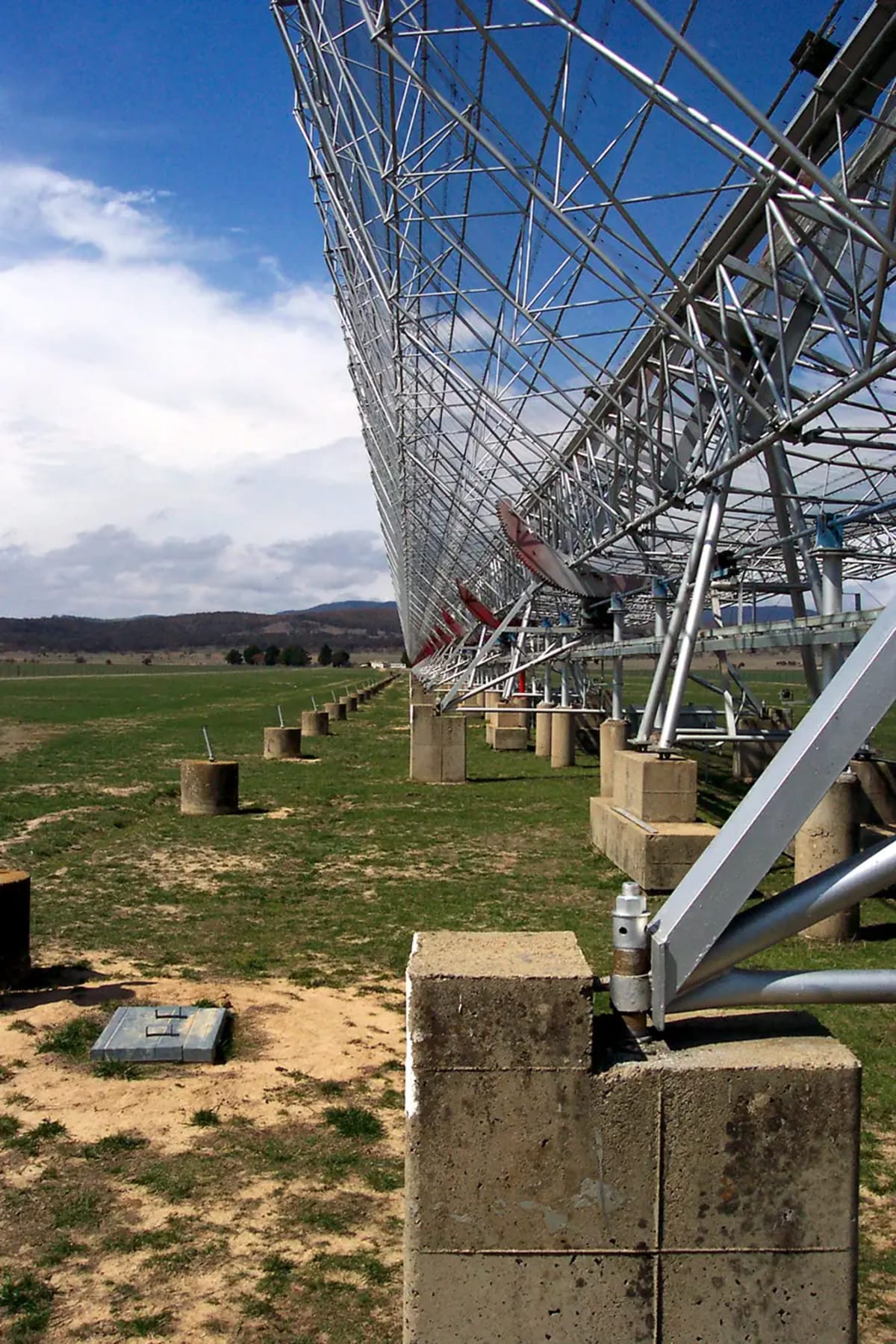
The Molonglo Cross Telescope has been scanning the southern skies since the early 1960s. Located just 20 miles east of Canberra, its two perpendicular arms stretch nearly a mile long, filled with hundreds of radio receivers that capture signals from deep space.
This isn't just any telescope. In 1968, Molonglo discovered the Vela pulsar, the brightest pulsar visible from Earth. After a 2015 upgrade, it became a champion hunter of fast radio bursts, those mysterious millisecond explosions scientists believe come from distant magnetars.
But when newer facilities like the giant Square Kilometre Array came online, the university decided to retire the aging observatory. Most of the supporting equipment was removed in late 2023, and the entire 200-acre facility went to auction.
Bell had a different vision. Within months of his purchase in early 2025, he teamed up with radio astronomers Duncan Campbell-Wilson and Tim Bateman to restore the observatory's capabilities.
In early April this year, they achieved what Bell calls a "second first light." The team successfully detected and measured the same Vela pulsar the telescope discovered 57 years ago, proving the old giant still has plenty of life left.
Why This Inspires
Bell's rescue of Molonglo shows how private initiative can preserve scientific heritage when institutions move on. His commitment goes beyond nostalgia. While the telescope will primarily track satellites for space awareness, Bell has promised to keep it available for astronomy research and training.
The story resonates because it challenges our throwaway culture. This 60-year-old instrument isn't obsolete. It's now serving multiple purposes, combining cutting-edge satellite tracking with continued contributions to our understanding of the universe.
Young scientists will continue learning radio astronomy techniques on equipment that made genuine discoveries. That hands-on connection to scientific history matters in an age when much research happens through computer simulations and remote data access.
"I wanted to make sure that the telescope is not going to be mothballed or demolished," Bell explains. His $890,000 investment preserves decades of astronomical capability that would have cost hundreds of millions to replace.
The Molonglo telescope's second act proves that with vision and effort, even aging scientific instruments can find new purpose while honoring their remarkable past.
More Images
Based on reporting by Sky & Telescope
This story was written by BrightWire based on verified news reports.
Spread the positivity!
Share this good news with someone who needs it