
Honey Bee Hives Have Their Own Disease-Fighting System
Australian scientists discovered that honey bee colonies use a coordinated "immune system" throughout their hives, with different materials providing antimicrobial protection in different areas. The surrounding landscape determines how strong these defenses are, suggesting that diverse plant habitats are crucial for bee health.
Scientists just discovered that honey bee hives function like a single organism with their own immune system, and it could change how we protect these vital pollinators.
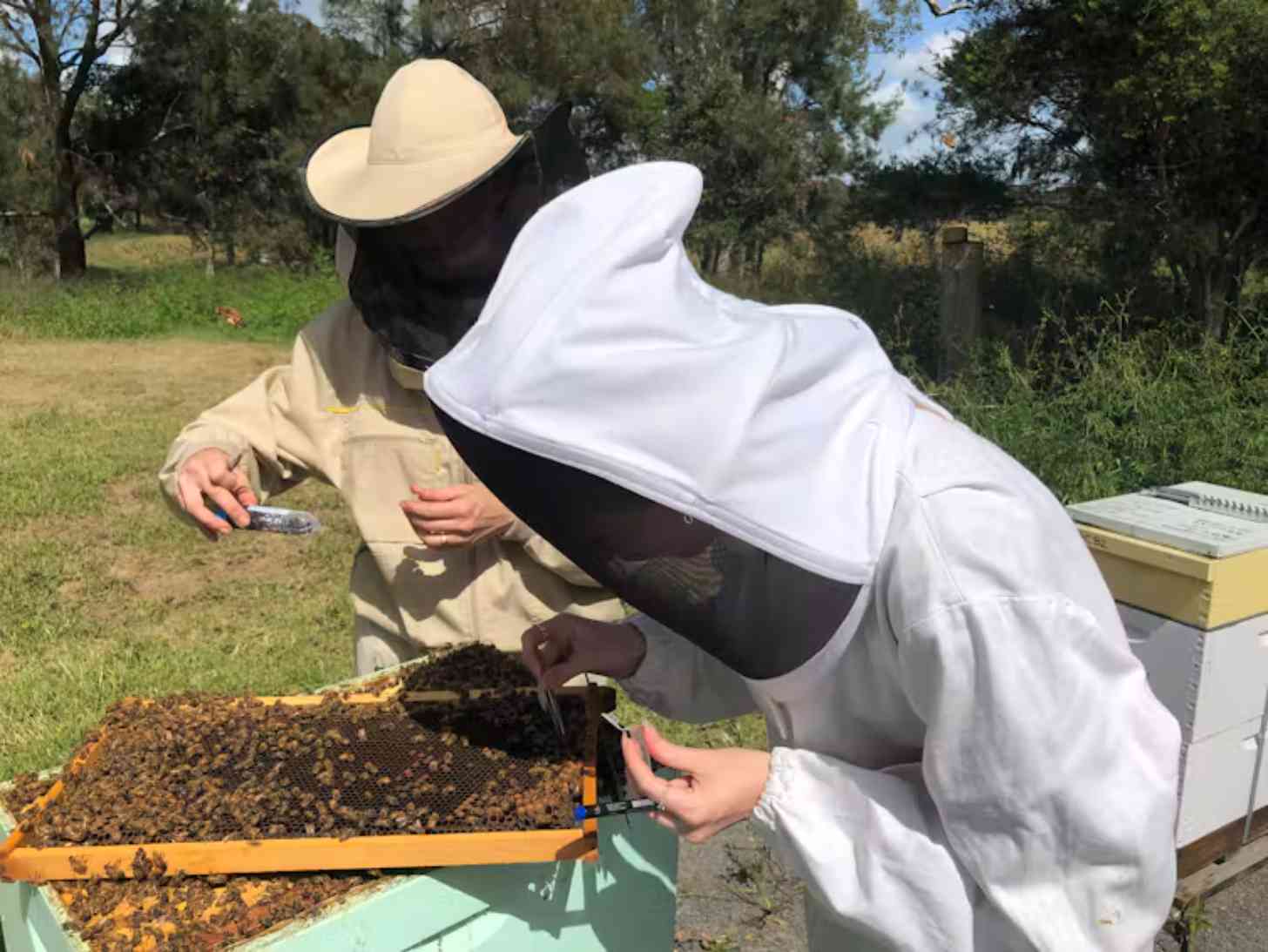
Researchers from the University of Sydney studied 24 bee colonies across New South Wales, mapping the bacteria and fungi living throughout the hives. What they found was remarkable: healthy colonies don't try to stay sterile but instead deploy different defenses in different rooms of their wax homes.
The team sampled everything from honey and propolis to pollen, wax, and the bees themselves. Using DNA sequencing and chemical analysis, they discovered each material fights germs differently, creating what the researchers call a "chemical floor plan" for disease defense.
Near the vulnerable baby bees, the colony uses selective protection that targets harmful microbes while preserving helpful ones. At the hive entrance where forager bees bring in outside threats, broader antimicrobial defenses kick in to protect the whole colony.
The chemistry is surprisingly sophisticated. Honey relies on hydrogen peroxide, the same antiseptic in your medicine cabinet. Propolis uses flavonoids, plant compounds similar to those in red wine and green tea. Pollen's defense comes from fermentation, creating protective acids like those in yogurt.
Each material contributes unique antimicrobial properties, working together like organs in a body. Rather than one all-purpose disinfectant, the colony orchestrates multiple defense systems across different spaces.
The Ripple Effect
The most exciting discovery came when researchers looked beyond the hive itself. The strongest predictor of a colony's chemical defenses wasn't disease history or hive health but rather which apiary the bees called home.
The surrounding landscape matters enormously. Since bees typically forage within a few kilometers of their hive, local plants determine not just what they eat but what raw materials they have available to build their defenses.
A colony surrounded by diverse flowering plants has access to a broader chemical toolkit than bees foraging in simplified landscapes dominated by single crops. In other words, much of a colony's ability to fight disease comes from what's growing outside its front door.
This suggests that habitat loss and reduced plant diversity may be weakening bee immunity in ways we hadn't understood. Maintaining diverse flowering vegetation around bee colonies could be as important for their health as controlling mites or limiting pesticide exposure.
The findings may extend far beyond honey bees. Ants, termites, and stingless bees also use antimicrobial compounds to protect their colonies, often drawing on materials from their environment.
For all these social insects, the landscape provides more than food and shelter—it provides their medicine cabinet.
More Images
Based on reporting by Good Good Good
This story was written by BrightWire based on verified news reports.
Building Something New? Try the BrightWire Tech Stack Advisor
Compare modern frameworks, cloud hosting, and AI tools tailored to your project budget and scale.
Spread the positivity!
Share this good news with someone who needs it

