Hot Pink Katydid Changes Colors Like Rainforest Leaves
Scientists in Panama discovered a rare hot pink katydid that transformed to green over two weeks, potentially mimicking the color-changing leaves around it. This first-ever observation of color transformation in adult katydids reveals a brilliant new camouflage strategy in the rainforest.
Deep in a Panamanian rainforest, scientists stumbled upon an insect that looked more like a highlighter marker than a creature designed to hide.
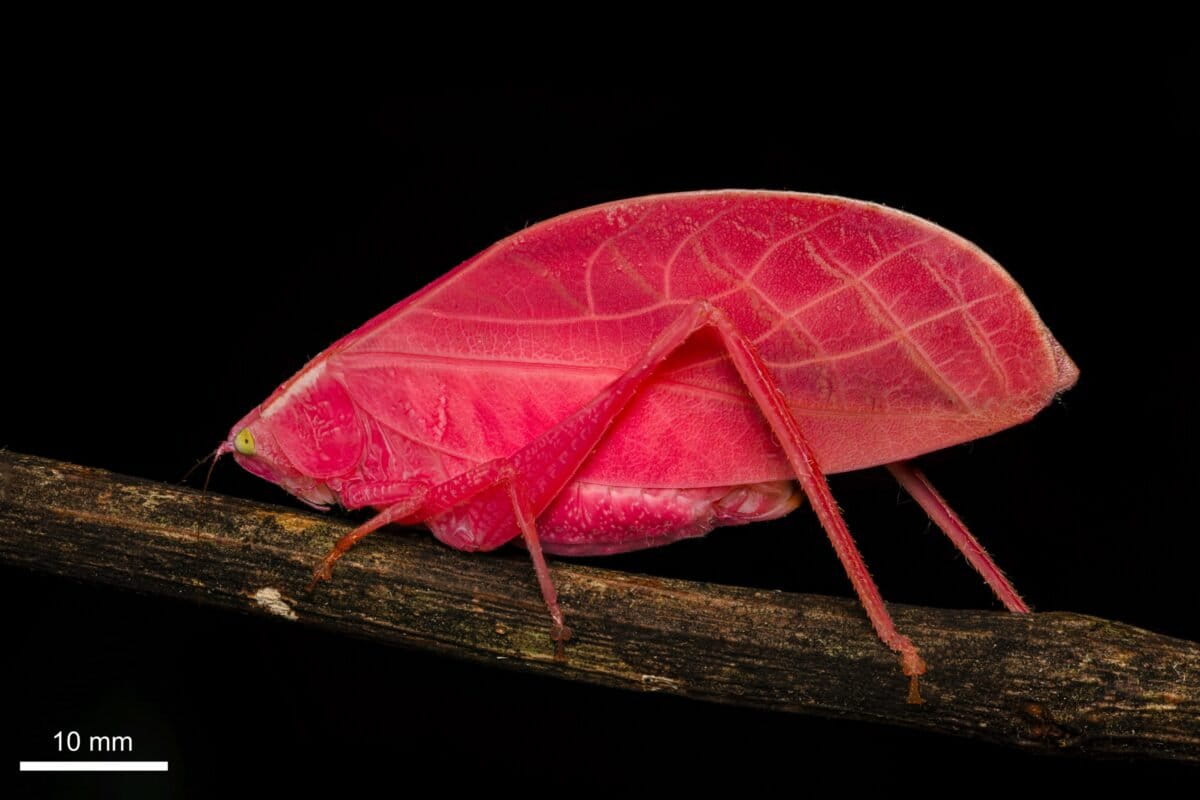
Biologist Benito Wainwright and his team were searching for katydids on Barro Colorado Island in March 2025 when they spotted something extraordinary. Among the typical green, leaf-mimicking insects sat one glowing hot pink individual, a color that should have made her an easy target for predators.
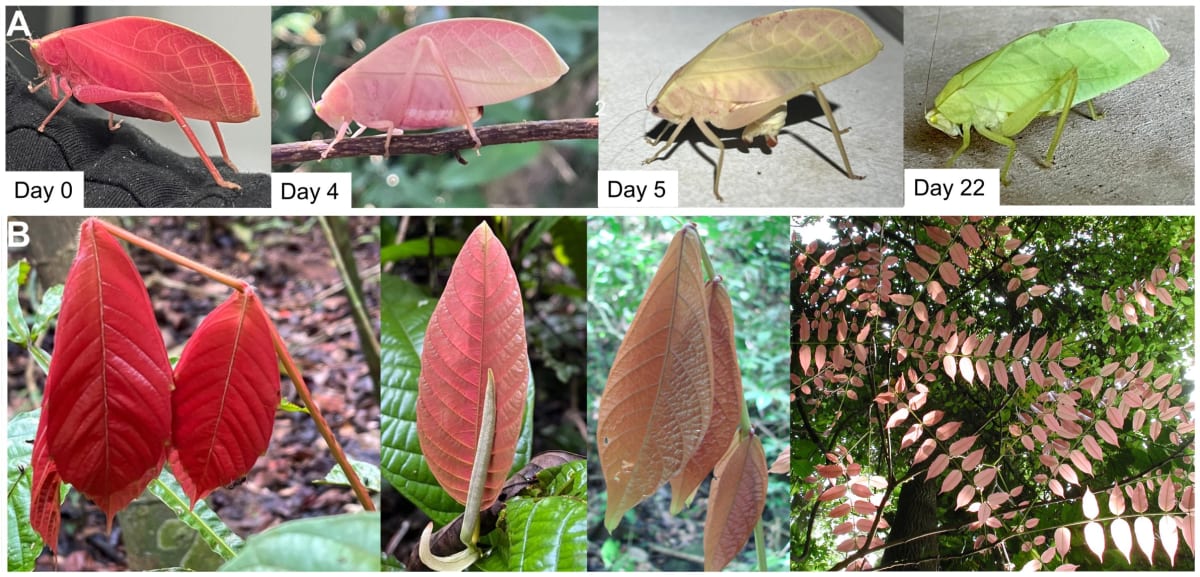
The researchers brought her back to their lab and watched something remarkable unfold. Over 14 days, they photographed her daily transformation from hot pink to pastel pink and finally to the typical light green color of her species, Arota festae.
Wainwright, from the University of St Andrews in Scotland, emphasized just how rare this discovery is. He's spent eight months searching tropical rainforests and found only one pink katydid, while his colleagues who've worked on the island for over two years had never seen one before.
Jeffrey Cole, a katydid evolution expert not involved in the study, called the finding remarkable. This marks the first time scientists have documented a katydid changing colors within a single life stage, opening up entirely new questions about insect camouflage.
Why This Inspires
The discovery challenges everything scientists thought they knew about katydid survival. Pink coloration was previously considered a death sentence for these insects, making them stand out like a neon sign to hungry birds and lizards.
But the researchers noticed something fascinating about the rainforest itself. On Barro Colorado Island, one third of plant species have "delayed greening," where their new leaves emerge pink or red before turning green over about two weeks.
The timing matched perfectly. The katydid's color transformation took exactly the same amount of time as the surrounding plants' leaf changes, suggesting she might be using a camouflage strategy nobody knew existed.
While Cole notes that scientists need more evidence beyond this single individual, the hypothesis offers hope for understanding how nature's smallest creatures survive. The discovery reminds us that even after centuries of studying insects, the rainforest still holds secrets worth protecting.
This pink katydid may have just revealed that standing out isn't always a mistake, sometimes it's the smartest way to blend in.
More Images


Based on reporting by Google News - Researchers Find
This story was written by BrightWire based on verified news reports.
Spread the positivity!
Share this good news with someone who needs it