How Coconuts Travel 4,800 km Across Oceans and Survive
A coconut can float across oceans for 110 days and still sprout on a distant shore. Scientists reveal the brilliant natural design that turned this tropical fruit into nature's ultimate island explorer.
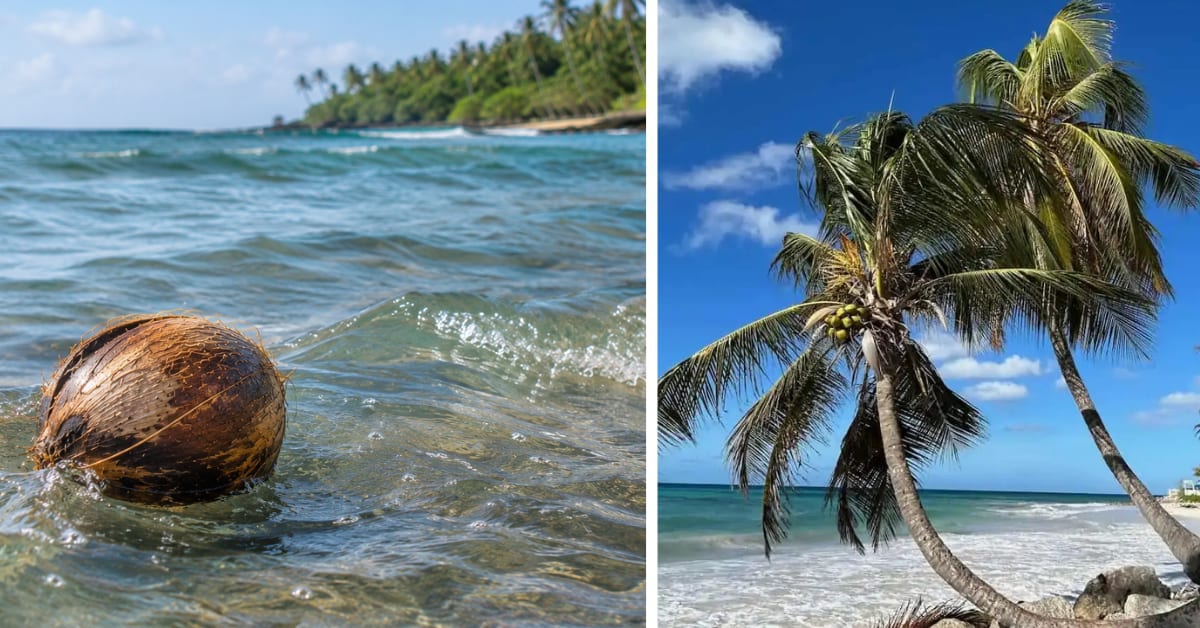
A coconut drops from a palm tree, splashes into the ocean, and begins a journey that could last nearly four months and cover thousands of kilometers. When it finally washes ashore on a distant island, the seed inside is still alive and ready to grow.
This isn't luck. The coconut carries everything it needs for an extraordinary voyage built right into its design.
Scientists believe this ocean-crossing ability helped coconuts spread naturally across tropical islands long before humans started farming them. One study estimates a wild coconut could survive at sea for around 110 days, potentially traveling about 4,800 kilometers if ocean currents cooperate.
The thick, fibrous husk that surrounds a coconut isn't just waste we peel away. It acts like a life jacket, keeping the fruit afloat instead of sinking to the ocean floor. Inside that husk sits a hard shell, the edible flesh, and an air cavity that adds extra buoyancy.
But floating is only half the challenge. The coconut also needs to protect its precious cargo from saltwater while drifting across the open ocean.
The thick husk and hard inner shell create a protective barrier that shields the developing plant from seawater. This matters because a coconut seedling that started growing in the middle of the ocean would die quickly. Research suggests delayed germination may have been one of the key traits that helped coconuts colonize distant shores.
A coconut that sprouted too soon would burn through its energy reserves while still floating. A coconut that waited could travel much farther before beginning its next chapter.
Why This Inspires
Inside every coconut sits a generous food supply in the form of endosperm, which eventually becomes the familiar white flesh we eat. This stored nutrition supports the young plant during germination and early growth, even on beaches with poor soil. Under good conditions, tall coconut varieties typically germinate within 60 to 130 days after planting.
When a coconut finally reaches a tropical shoreline, its angular shape can help prevent it from rolling back into the waves. Once it settles above the tide line and receives fresh rainwater, germination begins. The first shoot pushes upward while roots dig down into the sand.
This is why coconut palms line tropical beaches around the world. They didn't just happen to end up there by chance.
The 4,800 kilometer figure comes from calculations based on ocean current speeds and the coconut's 110-day survival window. Not every coconut completes such an epic voyage, and researchers continue debating how common these maximum-distance journeys actually were. But the evidence is clear that coconuts possess multiple features working together to make ocean travel possible.
Over evolutionary time, these adaptations allowed coconuts to reach remote islands where there were no coconut palms before. Each fruit that survived the journey could eventually produce a new tree, which would drop more coconuts into the sea, continuing the cycle.
Nature designed the perfect island colonizer, wrapped in a package we now enjoy at beaches worldwide.
More Images
%2Fenglish-betterindia%2Fmedia%2Fmedia_files%2F2026%2F09%2F01%2Fcoconut-ocean-journey-2026-09-01-15-41-04.png)
%2Ffilters%3Aformat(webp)%2Fenglish-betterindia%2Fmedia%2Fmedia_files%2F2026%2F09%2F01%2Fcoconut-ocean-journey-2026-09-01-15-55-24.png)

%2Ffilters%3Aformat(webp)%2Fenglish-betterindia%2Fmedia%2Fmedia_files%2F2026%2F09%2F01%2Fcoconut-ocean-journey-2026-09-01-15-57-01.png)
Based on reporting by The Better India
This story was written by BrightWire based on verified news reports.
Spread the positivity!
Share this good news with someone who needs it
%2Fhttps%3A%2F%2Ftf-cmsv2-smithsonianmag-media.s3.amazonaws.com%2Faccounts%2Fheadshot%2FSarahKuta.png)
