How India Won RTI, Linguistic States Through Peaceful Protest
Behind everyday rights like filing RTI requests and living in states organized by language lie decades of peaceful protests, hunger strikes, and grassroots movements. These are the stories of ordinary Indians who transformed public demands into laws that changed the nation.
Every time an Indian citizen files a Right to Information request or speaks their mother tongue in a government office, they're using a right that someone fought years to secure.
These weren't gifts from Parliament. They were victories won by ordinary people who refused to accept that corruption, secrecy, and injustice were simply the way things had to be.
In the 1990s, laborers in Rajasthan kept asking a simple question. If they had worked on government projects, why hadn't they been paid? Government officials refused to share the records that would answer that question, so the workers decided to take matters into their own hands.
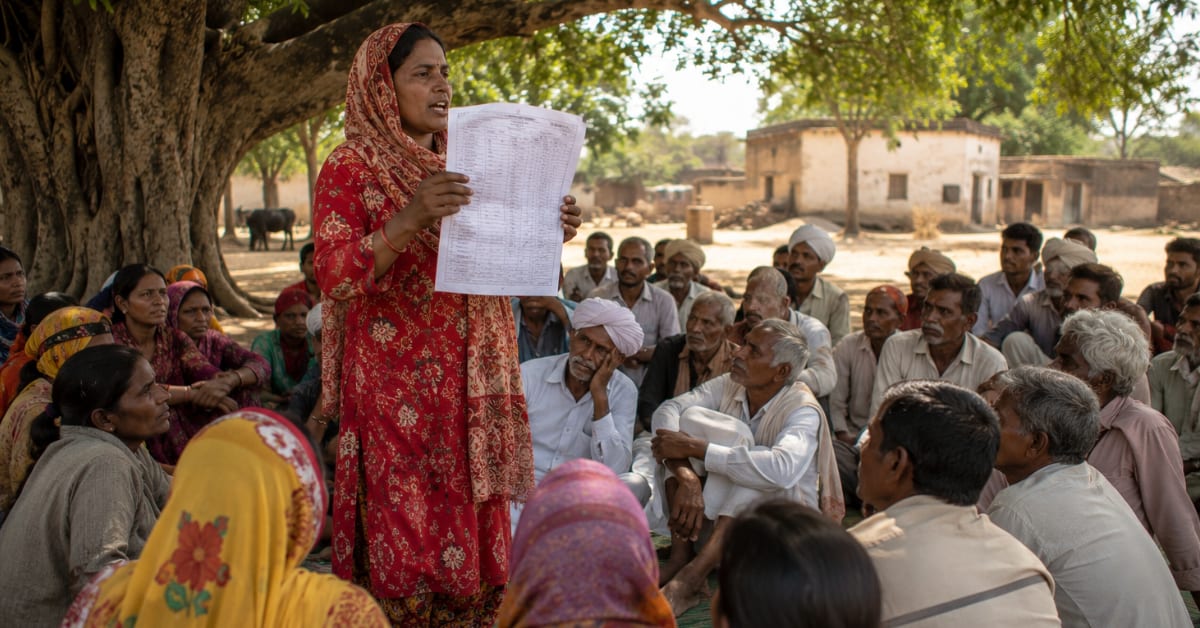
The Mazdoor Kisan Shakti Sangathan, led by Aruna Roy, Nikhil Dey, and Shankar Singh, began organizing jan sunwais, or public hearings. They read government records aloud in village squares, and the truth came tumbling out.
Roads that were never built had already been paid for. Wages went to workers who didn't exist. As villagers heard the evidence of corruption read aloud, the movement spread like wildfire across India.
For nearly a decade, MKSS organized protests, demonstrations, and public meetings demanding transparency. In 2005, their persistence paid off when Parliament passed the Right to Information Act, giving every Indian citizen the legal right to question how public money is spent.
That same spirit of peaceful resistance reshaped India's map. In 1952, freedom fighter Potti Sriramulu began a hunger strike demanding a separate state for Telugu speakers. He fasted for 58 days.
When he died on December 15, 1952, grief exploded into mass protests. Thousands filled the streets, businesses shut down, and transport ground to a halt. Within days, Prime Minister Jawaharlal Nehru announced that Andhra State would be created.
That movement led directly to the States Reorganisation Act of 1956, which redrew India's boundaries largely along linguistic lines. Today, millions of Indians live in states organized around their dominant language because one man refused to eat until justice was served.
The Ripple Effect
These movements didn't just change laws. They changed what Indians believed was possible.
When forest-dwelling Adivasi communities faced eviction from lands they'd lived on for generations, they organized nationwide. Their decades-long struggle led to the Forest Rights Act of 2006, giving legal recognition to traditional forest dwellers.
When corruption scandals rocked the nation in 2011, activist Anna Hazare's hunger strike mobilized millions and resulted in the Lokpal and Lokayuktas Act of 2013, creating institutions to investigate corruption in high places.
Each movement proved the same truth: peaceful protest works. Citizens armed with nothing but conviction, patience, and the willingness to endure hardship can reshape their democracy.
The rights Indians use every day weren't inevitable, and they didn't arrive by accident—they were won by people who believed their country could be fairer than it was.
More Images
%2Fenglish-betterindia%2Fmedia%2Fmedia_files%2F2026%2F07%2F20%2Feveryday-rights-in-india-2026-07-20-14-32-01.png)

%2Ffilters%3Aformat(webp)%2Fenglish-betterindia%2Fmedia%2Fmedia_files%2F2026%2F07%2F20%2Feveryday-rights-in-india-2026-07-20-14-33-25.png)
%2Ffilters%3Aformat(webp)%2Fenglish-betterindia%2Fmedia%2Fmedia_files%2F2026%2F07%2F20%2Feveryday-rights-in-india-2026-07-20-14-34-35.png)
Based on reporting by The Better India
This story was written by BrightWire based on verified news reports.
Spread the positivity!
Share this good news with someone who needs it