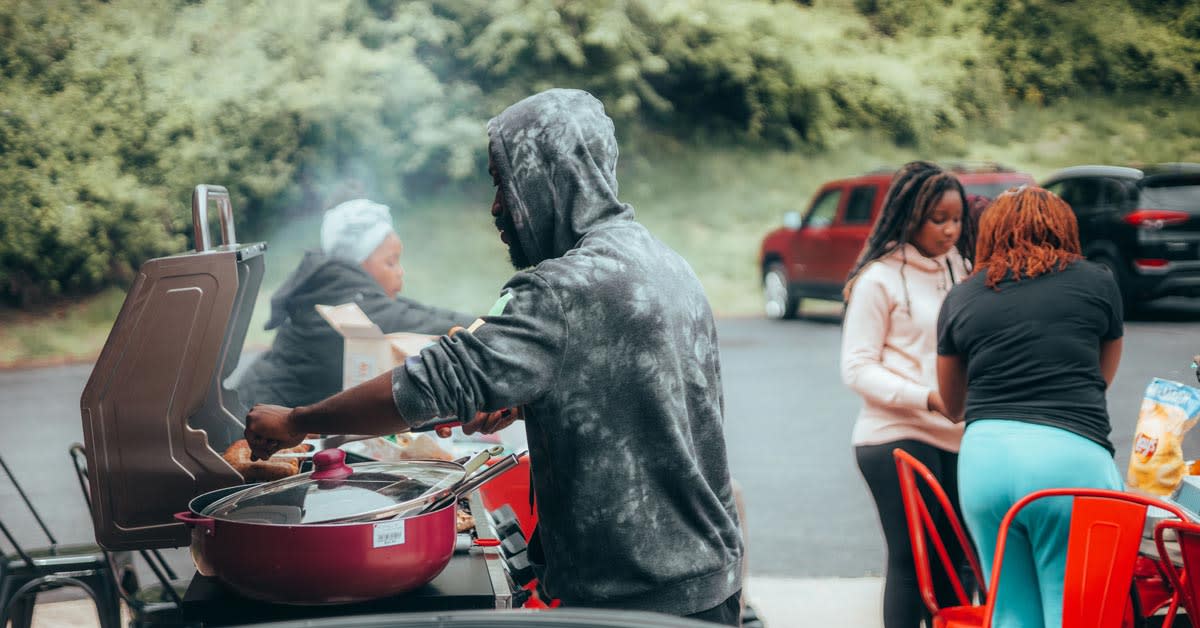
How Juneteenth Food Celebrates Freedom Through Flavor
A Texas family's return to a historic Juneteenth celebration site reveals how smoked meats, potato salad, and watermelon became powerful symbols of freedom and resistance for Black communities after emancipation.
When Bobby Smith's father returned to Comanche Crossing after 60 years, the memories came flooding back like it was yesterday.
"Visiting Comanche Crossing on Juneteenth felt like freedom," his father recalled, describing a park once filled with thousands of Black Texans celebrating with food, music, and dancing. The menu was legendary: barbecue ribs, brisket, blood sausage, fried chicken, potato salad, yellow watermelon, and Big Red Soda from nearby Waco.
But this wasn't just a meal. It was a declaration of independence on plates passed between families.
Comanche Crossing sits less than 3 miles from where enslaved people in Texas first learned they were free on June 19, 1865. Union troops arrived that day with news that came two and a half years late, long after the Emancipation Proclamation was signed.
The newly freed people celebrated with a feast from their harvest. Their descendants kept the tradition alive for over a century before Juneteenth became a state holiday in 1980 and a national holiday in 2021.
Smith, now a scholar of Black food culture, sees these celebrations differently than he did as a child devouring ribs at his grandmother's Fort Worth home. The food tells a story of resistance and self-determination.
His father remembered cooking all night before Juneteenth 1965, with meat smoked to perfection over the pit while his grandmother assembled dishes using fresh ingredients and farm-raised livestock. Every family brought their own unique preparations, but smoked meat was nonnegotiable.
That smoking tradition echoes the ritual of hog killing, one of the few moments when enslaved people exercised control over their food. Potato salad symbolized the abundance of the harvest, showcasing the agricultural knowledge and labor of those who worked the land.
After emancipation, these traditions became what Smith calls "emancipatory food power." Food became a resource for survival, self-determination, and freedom in Black communities.
Why This Inspires
Standing under the rebuilt dance pavilion where he once ran as a child, Smith's father said it reminded him of "that Sugar Shack picture," the iconic 1970s painting showing Black Americans dancing with pure joy at a juke joint.
Historian Amilcar Shabazz captured the significance perfectly: "Before Black Texans had their own history, schools, churches, they had Juneteenth. It may not have looked like much in the eyes of an arrogant world, but it was everything Black Texans had, and they each loved and cherished that day with all their heart."
Every bite of smoked brisket and every spoonful of potato salad at Juneteenth celebrations honors ancestors who transformed survival into celebration, turning the tools of their oppression into recipes for freedom.
More Images



Based on reporting by Good Good Good
This story was written by BrightWire based on verified news reports.
Spread the positivity!
Share this good news with someone who needs it
%2Fhttps%3A%2F%2Ftf-cmsv2-smithsonianmag-media.s3.amazonaws.com%2Ffiler_public%2F2e%2F99%2F2e9914da-bea8-4ddf-aba5-d65d54917699%2Fceramiche_solimene_4.jpg)