%2Fhttps%3A%2F%2Ftf-cmsv2-smithsonianmag-media.s3.amazonaws.com%2Ffiler_public%2Fb8%2F56%2Fb85633d0-22f9-40d3-bb4e-cfdc81d19c40%2Fservice-pnp-hec-08300-08300v.jpg)
How Mothers Won the Vote: The Real Story of the 19th
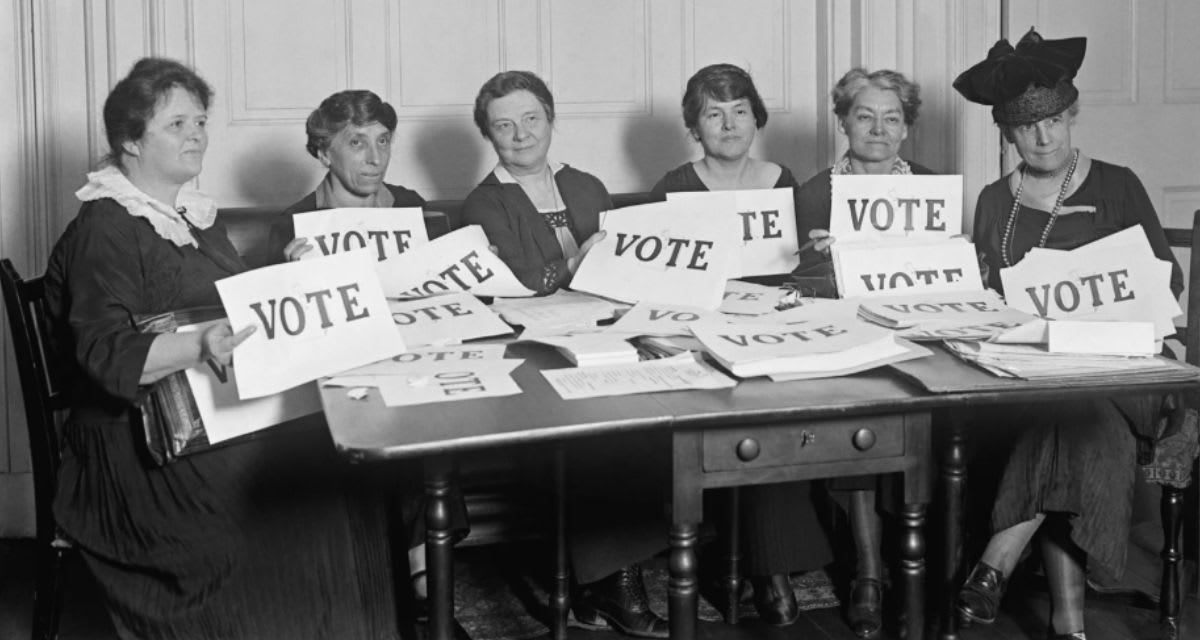
When young Carrie Chapman Catt watched her mother get left behind on Election Day in 1872, she couldn't understand why. That childhood moment of injustice sparked a movement led by mothers and daughters that changed America forever.
Carrie Chapman Catt was just a girl on an Iowa farm when she saw something that didn't make sense. While her father drove off to vote with the farmhands, her mother stayed home because women had no legal right to cast a ballot.
"I was astonished that my mother did not go to vote, and shocked when she told me she had no legal right to do so," Catt recalled. That moment of watching her mother excluded from democracy set Catt on a path that would end with the passage of the 19th Amendment in 1920.
The fight for women's voting rights ran through generations of mothers and daughters. Susan B. Anthony grew up in a Quaker household where her mother managed a farm that became a meeting place for abolitionists, teaching Anthony the power of organizing for change.
Elizabeth Cady Stanton raised seven children who all lived to adulthood, including her daughter Harriot, who carried her mother's work forward. Harriot organized working women and wealthy women to march side by side, bridging class divides in the fight for equality.
Mary Church Terrell, the first president of the National Association of Colored Women, credited her mother's sacrifice for her education. Born enslaved but later a successful businesswoman, Terrell's mother insisted her daughter receive the higher education she'd been denied.
Alice Paul, who led the bold White House pickets in the 1910s, learned her fierce persistence from her mother. "When you put your hand to the plow, you can't put it down until you get to the end of the row," her mother taught her at suffrage meetings.
By 1920, Catt's strategic state-by-state campaign had won approval from 35 states, just one short of the required number. In Tennessee, the State House vote was tied 48 to 48.
Then 24-year-old Representative Harry Burn received a letter from his mother, Phoebe "Febb" Burn. "Vote for Suffrage and don't keep them in doubt," she wrote. "Don't forget to be a good boy and help Mrs. Catt."
Burn switched his vote. "I know that a mother's advice is always safest for her boy to follow, and my mother wanted me to vote for ratification," he explained in his official statement.
The Ripple Effect
The 19th Amendment didn't just give women the vote. It proved that systematic change happens when one generation refuses to accept injustice and fights so the next generation won't face the same barriers.
These mothers couldn't vote, but they raised daughters who could organize, strategize, and ultimately win. They turned their exclusion into fuel for a movement that transformed American democracy.
Young Carrie never forgot the injustice done to her mother on that Election Day, and because she didn't forget, millions of women gained the right their mothers had been denied.
More Images
%2Fhttps%3A%2F%2Ftf-cmsv2-smithsonianmag-media.s3.amazonaws.com%2Ffiler_public%2Fb8%2F56%2Fb85633d0-22f9-40d3-bb4e-cfdc81d19c40%2Fservice-pnp-hec-08300-08300v.jpg)
%3Afocal(512x366%3A513x367)%2Fhttps%3A%2F%2Ftf-cmsv2-smithsonianmag-media.s3.amazonaws.com%2Ffiler_public%2Fb8%2F56%2Fb85633d0-22f9-40d3-bb4e-cfdc81d19c40%2Fservice-pnp-hec-08300-08300v.jpg)

Based on reporting by Smithsonian
This story was written by BrightWire based on verified news reports.
Spread the positivity!
Share this good news with someone who needs it
%2Fhttps%3A%2F%2Ftf-cmsv2-smithsonianmag-media.s3.amazonaws.com%2Ffiler_public%2F51%2F62%2F51625ade-c2d1-4eff-aec9-4262cb020a02%2Fedistone-hotel_19-1024x575.jpg)