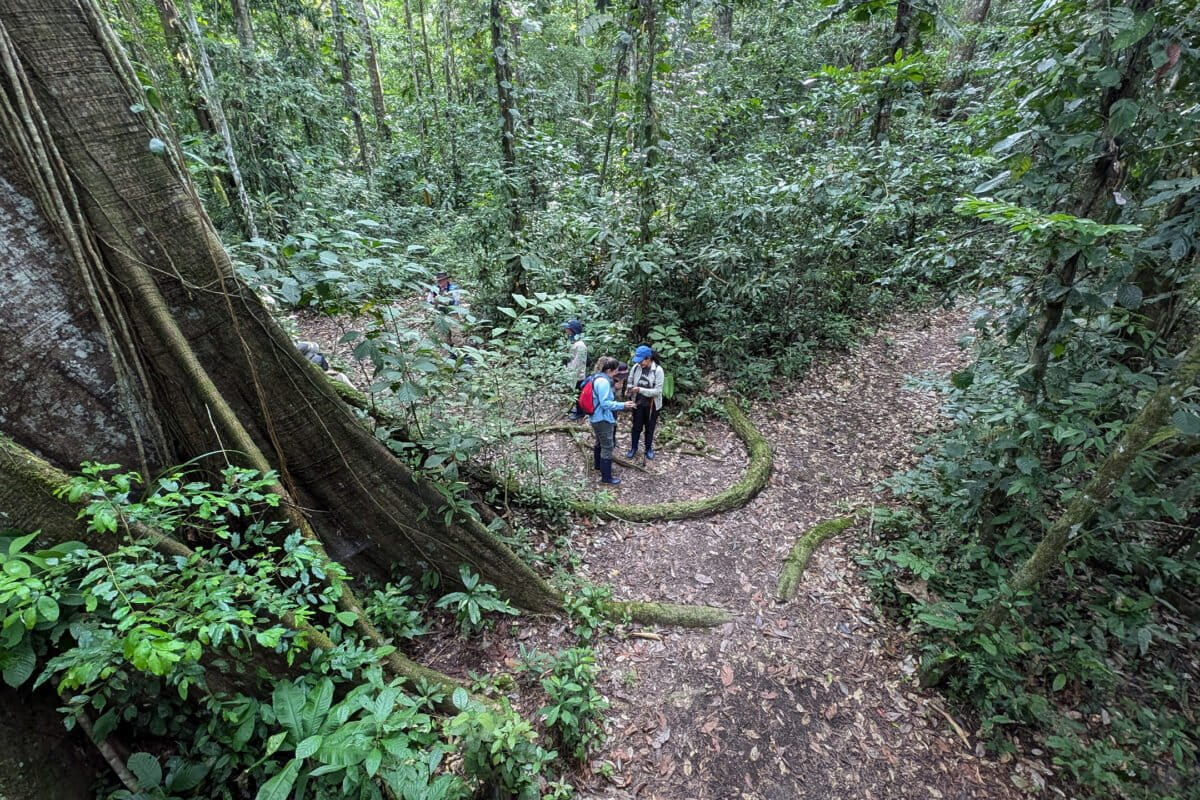
How Satellites and Reporters Team Up to Fight Amazon Crime
Mongabay Latam has spent a decade building a regional network that combines satellite technology with on-the-ground reporting to expose illegal mining, deforestation, and wildlife trafficking across Latin America. Managing editor Alexa Vélez reveals how environmental journalism evolved from eyewitness accounts to high-tech investigations that cross borders and hold criminals accountable.
Environmental crimes in the Amazon often start as a single faint line on a satellite image, but months later that line becomes a highway for illegal timber, wildlife, and drugs.
For the past decade, journalists across Latin America have been getting better at catching these crimes early. They're combining traditional reporting with satellite imagery, open databases, and mapping tools to track environmental destruction with precision that wasn't possible ten years ago.
Alexa Vélez has been at the center of this transformation. As managing editor of Mongabay Latam for nearly ten years, she coordinates investigations that can take more than a year to complete. Her team partners with dozens of media organizations across the region to expose illegal activities in some of the world's most biodiverse and contested landscapes.
The work requires patience and technical skill. A suspicious clearing in a remote basin gets compared against historical satellite images, matched with land concession records, and verified through months of field reporting. What once relied mainly on eyewitness accounts now blends remote sensing with traditional journalism.
Vélez didn't start in environmental reporting. She trained as an investigative journalist in Peru, exposing government corruption on a weekly television program. She later worked as a field camerawoman, unusual for women at the time, before directing a conservation show that took her across Peru filming protected areas and wildlife.
Now she helps reporters connect with scientists, lawyers, and analysts who can interpret evidence. She also makes crucial decisions about when stories are ready to publish, judgments that carry real consequences in regions where journalists face legal threats and physical danger.
The Ripple Effect
The impact extends far beyond individual stories. Mongabay Latam's investigations get republished widely across partner outlets, reaching audiences throughout the region. Environmental crimes rarely respect borders, so neither do the reporting networks tracking them. Rivers flow through multiple countries. Supply chains span continents. A single investigation now often involves journalists in several nations comparing notes and verifying information together.
These collaborations have documented patterns that local communities observed for years but authorities struggled to prove. The combination of satellite analysis and ground reporting creates evidence that's hard to dismiss. Reporters can show exactly when a protected forest was cleared, who holds the land rights, and how the supply chain operates.
The broader shift matters because large news organizations have traditionally treated the environment as an occasional beat rather than a structural concern. Sustained investigative work on illegal mining, wildlife trafficking, and deforestation requires time, technical expertise, and willingness to work in difficult conditions. Regional networks like Mongabay Latam are filling that gap.
Technology has made the invisible visible, turning distant crimes into documented evidence that reaches audiences across continents and holds perpetrators accountable.
More Images
Based on reporting by Mongabay
This story was written by BrightWire based on verified news reports.
Spread the positivity!
Share this good news with someone who needs it

