How Science Is Protecting World Cup Players From Heat
As climate change pushes temperatures higher at the 2026 World Cup, teams are racing to keep players safe in extreme heat. Scientists now know exactly which cooling methods actually work.
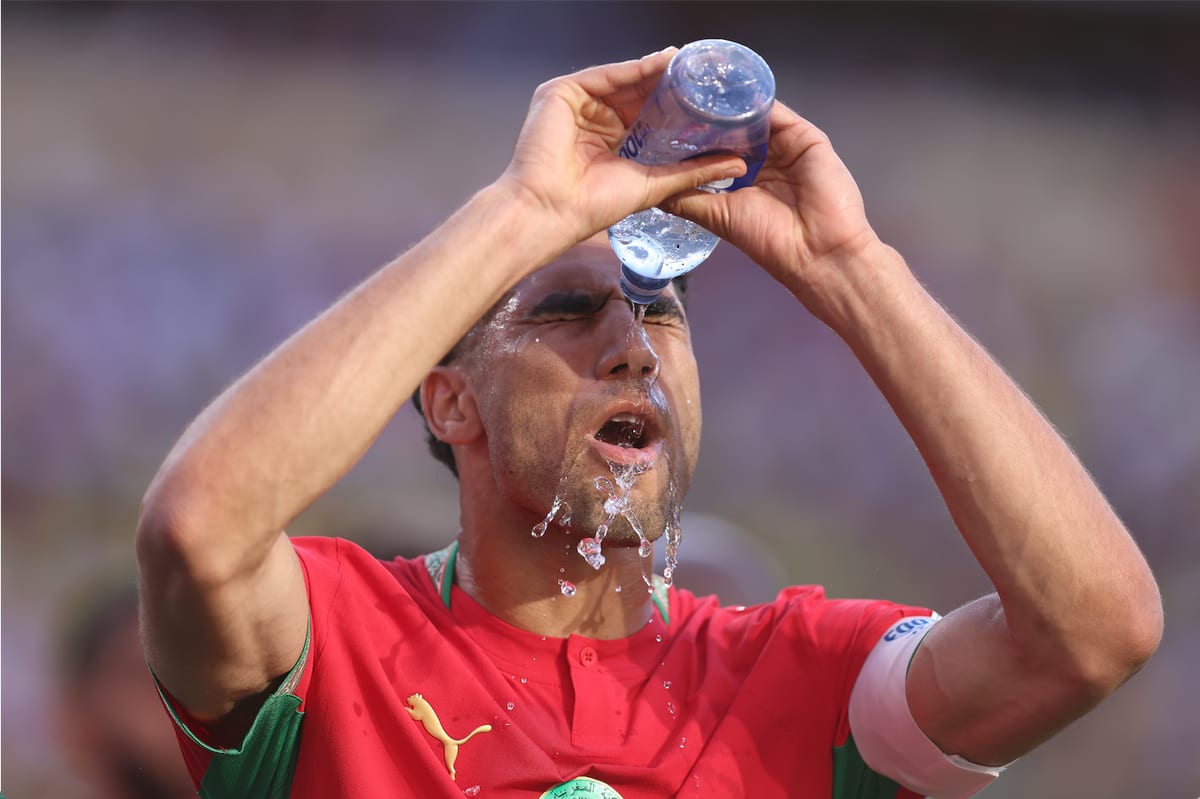
When FIFA introduced mandatory three-minute hydration breaks at every 2026 World Cup match, fans booed at what felt like unnecessary interruptions. But the science behind player safety tells a different story about our warming world.
Around a quarter of this year's matches are expected to reach dangerous heat levels above 79 degrees Fahrenheit on a scale measuring humidity, sunlight, wind and actual temperature. Heat reshapes how soccer is played. Players run less in the second half, pass more often, and ration their energy just to finish the game.
The challenge has sparked an arms race of cooling technology. Teams now arrive at stadiums with ice baths, cooling vests, cold towels, ice bags and specialized sprays. But scientists studying heat stress have discovered something surprising: feeling cooler and actually cooling your body are two different things.
Ice bags and cold towels might feel refreshing, but they only chill a small patch of skin without pulling much heat from your body's core. Jonas Werner, team physician for Sweden's national team, calls them "mostly for comfort" and notes "the scientific evidence for both tools is scarce."
Even high-tech solutions fall short. Adidas developed cooling vests filled with special gel that can lower core temperature by nearly one degree, but they require 12 to 15 minutes of use. Werner says that's "something no one does" because the equipment needs heavy, battery-powered coolers to stay frozen during transport.
The real breakthrough isn't equipment at all. Scientists agree the most powerful tool is acclimatization, which means training your body to handle heat over time. Sweden's team prepared at home in climate-controlled rooms and saunas. Living and training in hot conditions increases blood volume, improves sweating, and helps athletes perform closer to their normal capacity.
Why This Inspires
This isn't just about soccer. As Ollie Jay, a professor of heat and health at the University of Sydney, explains: "Heat waves are more frequent, more intense, they last longer, and they happen earlier in the season." His research tracking three decades of data shows rising heat stress affecting everyone who exercises or plays sports outdoors.
The World Cup has become an unexpected laboratory for protecting people in our warming world. What teams learn about keeping players safe could help construction workers, outdoor laborers, and weekend athletes everywhere adapt to rising temperatures.
Science is proving that preparation beats technology when it comes to extreme heat. That knowledge could save lives far beyond the soccer field.
More Images


Based on reporting by Scientific American
This story was written by BrightWire based on verified news reports.
Spread the positivity!
Share this good news with someone who needs it